Flippa Scraper for Structured Business Listing Data
Nenodata scopes and manages workflows that turn agreed public or permissioned marketplace business listings into structured acquisition records for deal sourcing, screening, comparable-multiple research, listing-change monitoring, and delivery into research systems.
- Sample-first schema review
- Source context preserved
- Financial claims kept in context
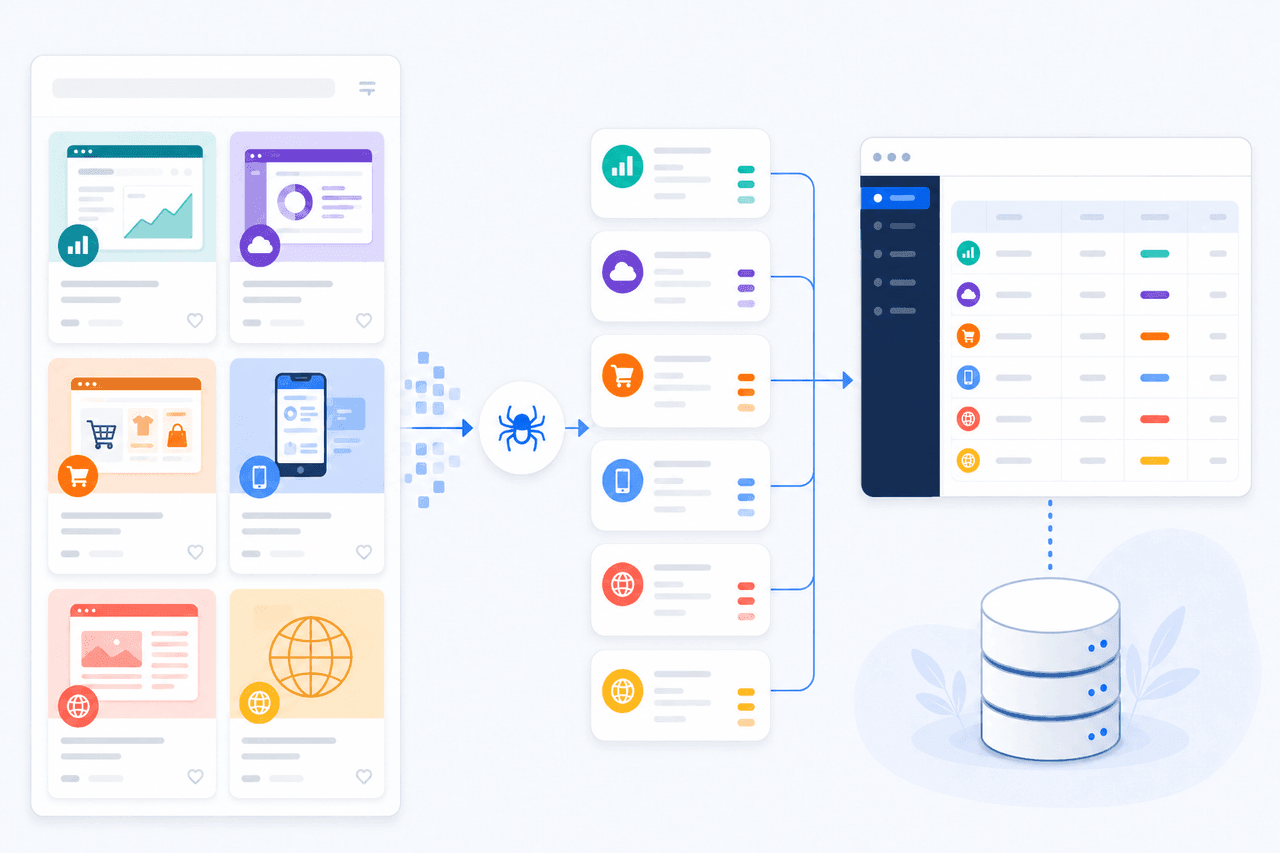
Replace Manual Listing Collection with a Maintainable Workflow
Acquisition teams often track marketplace listings through manual searches, copied spreadsheets, and repeated checks that fall behind when prices change, listings are removed, or price-on-request records sit beside numeric asks.
Inconsistent specifications, duplicate records, dynamic pages, pagination shifts, and missing values make fragile one-off scripts difficult to trust in production research workflows.
A managed workflow reviews the approved listing set first, then maps available identity, financial, traffic, seller, status, and collection fields into a maintainable schema with explicit handling for seller-submitted claims.
What the Flippa Scraper Provides
Nenodata reviews representative listing URLs, publicly displayed fields, listing type, filters, validation rules, refresh needs, and delivery destinations before production collection begins.
Engagements may include listing identity, asset classification, pricing and sale method, financial signals, traffic and operating signals, seller context, source-displayed verification indicators, listing status, and collection metadata when those elements are publicly visible and included in the agreed schema.
Coverage and schedule are agreed during scoping. This page does not claim unrestricted marketplace access, protected seller data, or independent audit of seller-submitted financial claims. Broader extraction capability remains available through enterprise web scraping.
Flippa vs other business-for-sale sources
Use this page for Flippa online-business listings. Use BizQuest for US main-street listings, or Benchmark International for M&A advisory listings.
| Source | Best for | Learn more |
|---|---|---|
| Flippa | Online businesses: asking price, revenue signal, category, site age | This service |
| BizQuest | US main-street and franchise business-for-sale listings | BizQuest scraper |
| Benchmark International | M&A advisory listings with industry and deal context | Benchmark International |
Representative Sample Output
Review an illustrative schema for source links, listing identity, financial fields, listing status, source-displayed verification indicators, and collection timestamps. Nenodata does not independently audit seller-submitted claims.
Illustrative example

| Source URL | Listing ID | Asset type | Asking price | Reported revenue | Reported profit | Listing status | Source-displayed verification indicators | Collection timestamp |
|---|---|---|---|---|---|---|---|---|
| https://flippa.com/10884201-content-site | 10884201 | Content site | 125000 | 480000 | 95000 | Active | Verified listing | 2026-08-12T14:22:08Z |
| https://flippa.com/10884318-saas | 10884318 | SaaS | null | null | null | Price on request | null | 2026-08-12T14:22:08Z |
JSON structure
{
  "source_url": "https://flippa.com/10884201-content-site",
  "listing_id": "10884201",
  "asset_type": "Content site",
  "asking_price": 125000,
  "price_status": "numeric",
  "reported_revenue": 480000,
  "reported_profit": 95000,
  "listing_status": "Active",
  "source_verification_indicators": "Verified listing",
  "collected_at": "2026-08-12T14:22:08Z"
}
Potential Fields, Filters, and Outputs
Field groups depend on the approved listing set and agreed schema.
Illustrative example. Availability depends on the approved listing set, filters, and agreed schema.

Listing identity
Listing identifiers, source URLs, and titles where publicly displayed and included in scope.
Asset classification
Asset type, category, and related classification labels when shown on the approved pages.
Pricing and sale method
Asking price, price-on-request status, currency, and sale-method labels when publicly visible.
Financial signals
Reported revenue, profit, and related seller-disclosed financial fields preserved as source-displayed values.
Traffic and operating signals
Traffic, operating, or performance fields when publicly shown and requested in the schema.
Seller context
Seller type and publicly displayed seller context where permitted for the approved use case.
Verification indicators
Source-displayed verification labels retained with their original meaning rather than treated as independent audit results.
Listing status
Active, sold, removed, or other status labels when available on the approved listing set.
Collection metadata
Collection timestamps and source metadata retained for lineage, monitoring, and review.
Example filter inputs
- Asset type
- Country or region
- Brand or niche
- Price band
- Listing status
- Verification label
Use Cases
Deal sourcing
Acquisition teams retain structured listing signals so sourcing workflows stay current without repeated manual marketplace checks.
Acquisition screening
Investors compare asset type, pricing status, and disclosed financial fields against internal screening criteria.
Comparable-multiple research
Research teams aggregate asking-price and disclosed financial signals for comparable-multiple views while keeping seller claims in context.
Listing-change monitoring
Operators track status changes, price updates, and last-collected timestamps when recurring delivery is in scope.
Broker research
Brokerage and advisory teams review structured listing attributes for market coverage and opportunity research.
Market trend analysis
Strategy teams aggregate asset-type and pricing signals over time for marketplace trend views.
Database enrichment
Data teams load validated listing records into research databases and warehouses with explicit null handling.
Internal research products
Product teams enrich acquisition or marketplace-intelligence applications with normalized listing fields from approved sources.
Who This Service Is For
This service is for search funds, acquisition entrepreneurs, corporate development teams, private investors, holding companies, business brokers, investment researchers, marketplace-intelligence products, and internal data teams that need structured public listing observations.
It fits organizations that want managed sample-first scoping rather than fragile one-off collection scripts.
It is not an official marketplace API, partnership product, or unrestricted site-access program.
How It Works
The same managed workflow pattern is described in how Nenodata works.
Four-step workflow from source requirements and sample review to structured data delivery.
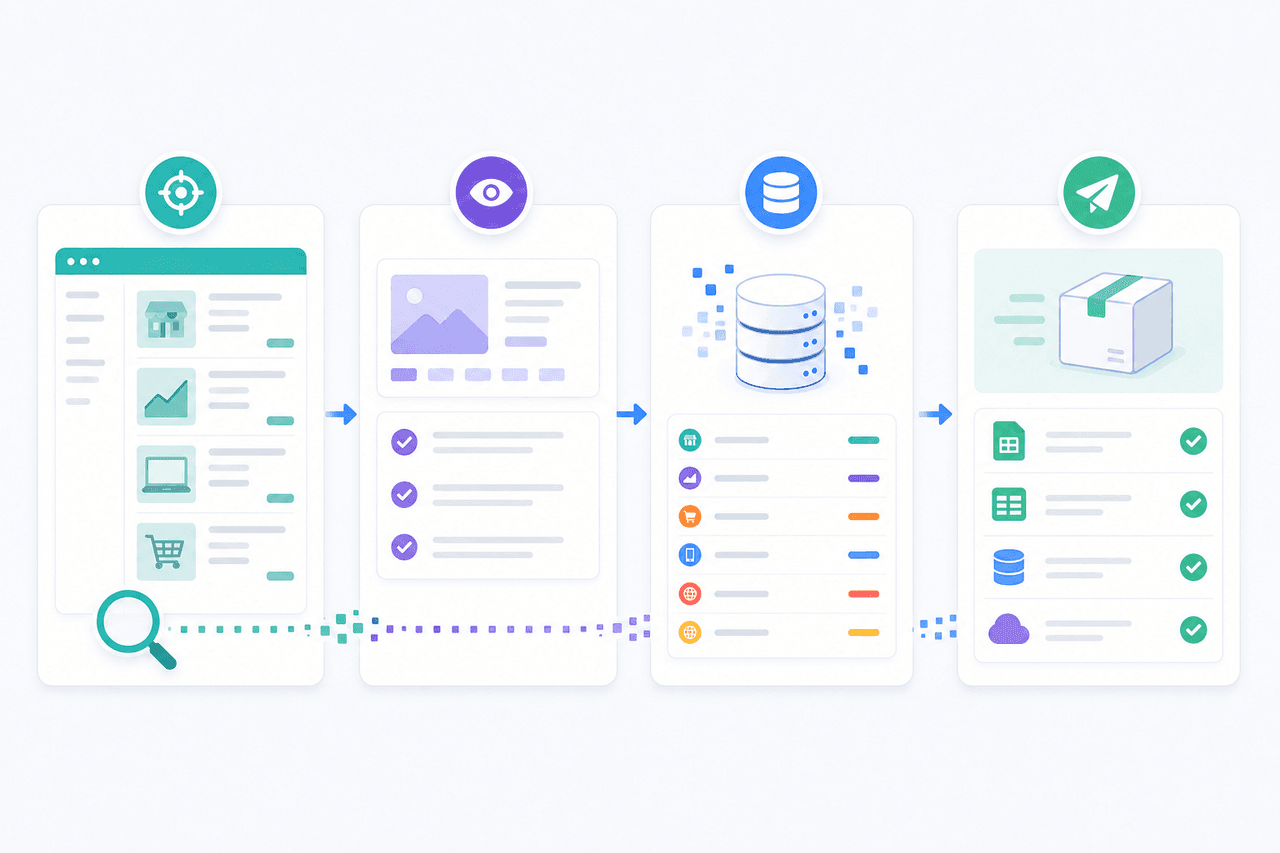
- Step 1
Share Your Requirements
Share representative URLs, required fields, filters, intended use, delivery format, and refresh needs.
- Step 2
Review Source and Sample
Nenodata reviews the approved source path and returns a representative sample before broader production begins.
- Step 3
Extract and Structure
Approved listings are collected, normalized, and validated with seller-submitted financial values preserved as source-displayed fields.
- Step 4
Review and Deliver
Structured outputs are delivered through the confirmed method, with maintenance included when contracted.
Why Choose Nenodata
Scope reviewed before rollout
Source path, listing types, and field requests are reviewed before broader production begins.
Sample-First Schema Review
A representative sample shows which fields are available, optional, or unavailable before wider rollout.
Source Context Preserved
Source URLs, collection timestamps, and source-displayed verification labels remain attached for traceability.
Financial Claims Kept in Context
Reported revenue and profit values are structured as seller-disclosed fields rather than treated as independently verified facts.
Delivery Designed Around the Workflow
Field names, null handling, and destination mapping are planned around CRM, warehouse, spreadsheet, or application workflows.
Maintenance Requirements Defined Upfront
When included in scope, Nenodata maintains agreed handling for source-layout and delivery changes.
Integrations and Delivery
Delivery formats may include CSV, Excel, JSON, and API-oriented structures when confirmed for the engagement.
An API-oriented delivery model for Flippa listing data can be considered where that delivery method is confirmed, without implying a public, unrestricted, or ready-made endpoint. Pipeline extensions may also use custom data pipelines.
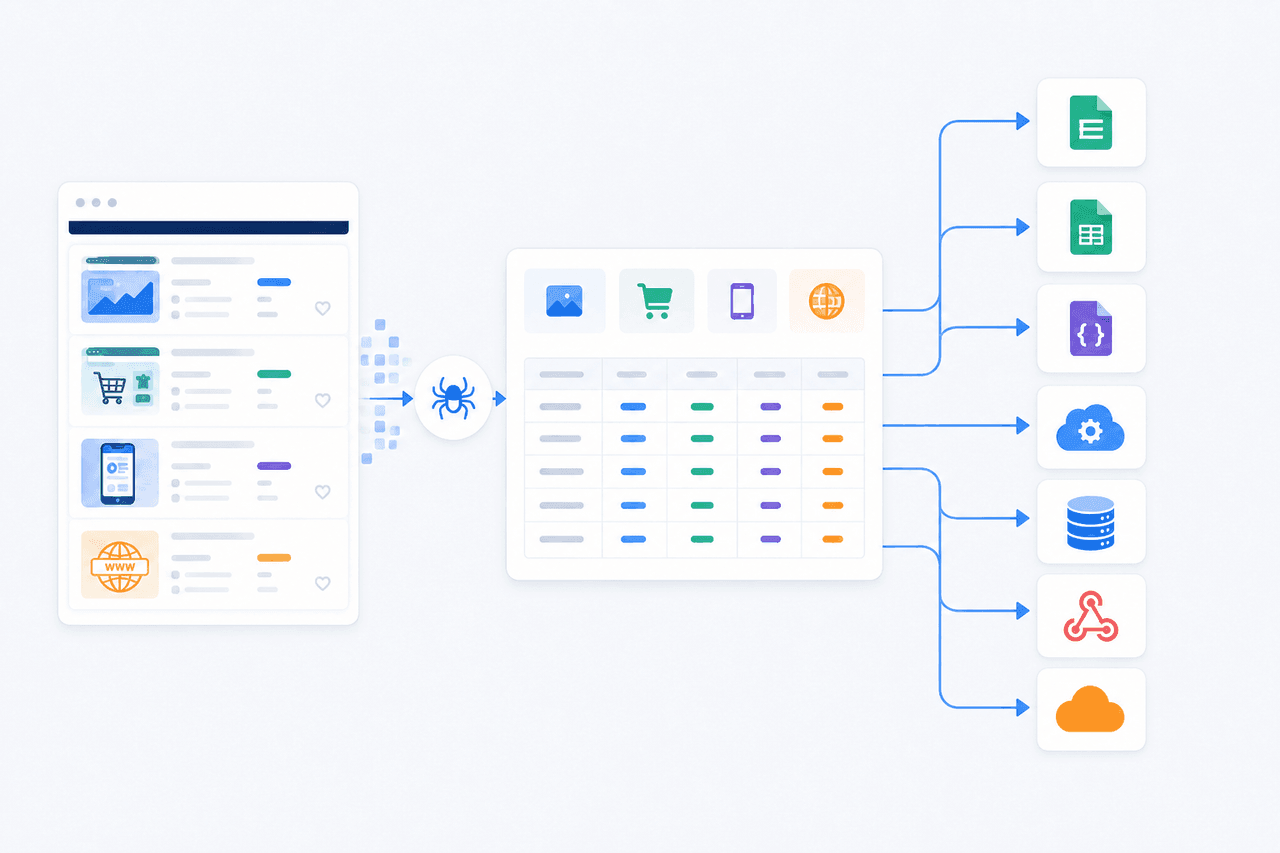
- CSV
- Excel
- JSON
- API-oriented structures
- Database delivery
- Warehouse delivery
- Scheduled file delivery
- Webhooks
- Custom downstream pipelines
Related resources: Benchmark International listing scraper, BizQuest business listing scraper, enterprise web scraping, and contact Nenodata.
Frequently Asked Questions
Nenodata is not affiliated with Flippa. This service describes a managed workflow for agreed public or permissioned listing pages and does not claim official marketplace partnership or unrestricted access.
Review Your Listing Data Requirement
Share representative listing URLs, required fields, filters, estimated volume, preferred format, and one-time or recurring delivery needs so Nenodata can scope the next step.
Include business contact details with your request when you contact Nenodata.