Catalog Data Harmonization Services
Nenodata maps approved supplier, marketplace, API, and internal product records into an agreed target schema, with validation and exception reporting so teams can stop rebuilding cleanup in spreadsheets. For category hierarchy crosswalks, see Product Taxonomy Mapping Services.
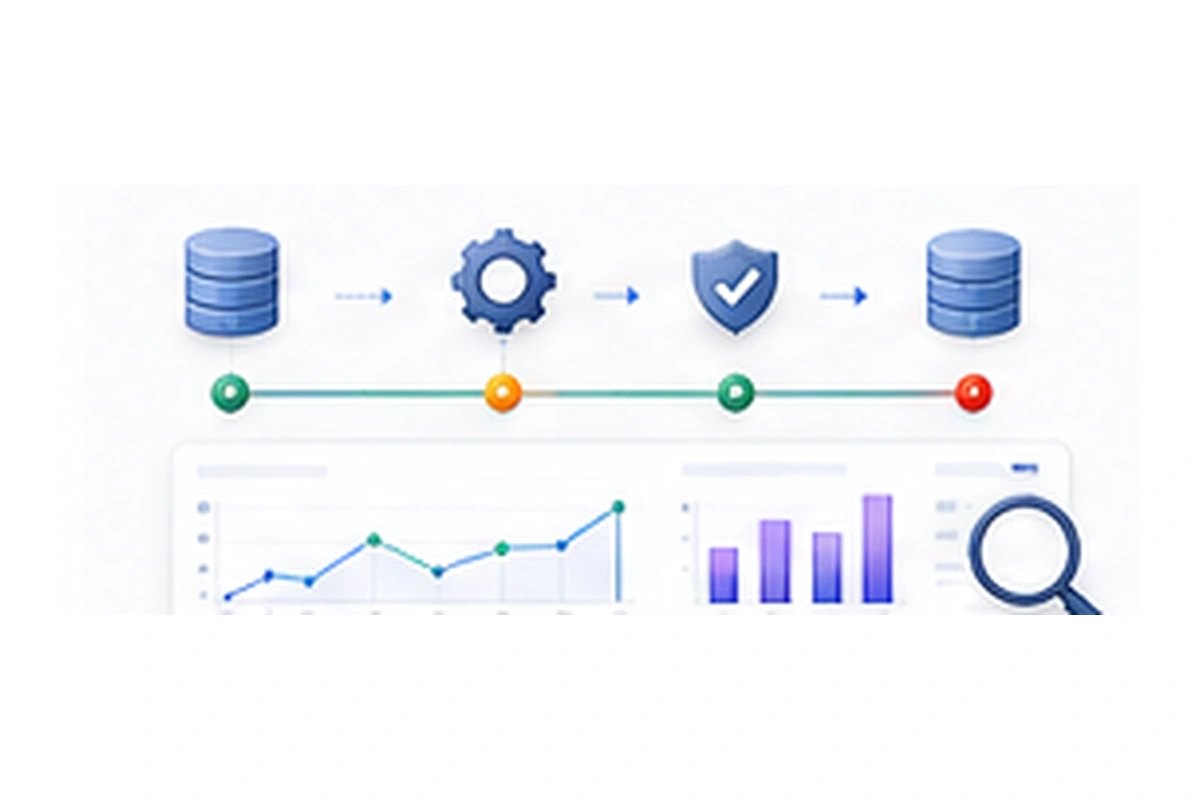
Replace repeated catalog cleanup with a defined workflow
Supplier files, marketplace exports, API payloads, and internal catalog extracts rarely share the same field names, units, identifiers, or category labels. Teams that reconcile those differences by hand each week lose time and introduce inconsistent values into PIM, ERP, search, and analytics workflows.
A defined harmonization workflow reviews representative source samples first, documents mapping and validation rules, and returns structured records with visible exceptions. External retail listing collection remains a separate capability under retail and ecommerce data solutions. This page covers reconciliation of approved catalog records, not public marketplace scraping or competitor price monitoring.
What Our Catalog Data Harmonization Services Include
Nenodata scopes representative source samples, the target schema, mapping and normalization rules, validation checks, duplicate-handling preferences, and delivery destinations before production processing begins. Accepted inputs may include customer-supplied files, API extracts, database exports, and similar approved catalog records, subject to project confirmation.
Work may include cleaning inconsistent values, mapping source fields to the agreed model, normalizing attributes and units, reducing duplicates under defined matching rules, validating required fields, and delivering structured outputs with exception notes for unresolved values.
Values that cannot be resolved safely are flagged for review rather than silently overwritten. Coverage of specific taxonomies, standards, languages, and system connectors is confirmed during scoping rather than assumed.
For dedicated category hierarchy crosswalks, see product taxonomy mapping.
See how source records can map to a canonical structure
Illustrative example
This table is illustrative and is not an approved Nenodata deliverable or customer result. Final fields, rules, statuses, and formats depend on project scope.
Illustrative source fields mapped to canonical fields with validation and exception statuses.
Swipe horizontally to review all sample columns.
| source_name | source_record_id | source_field | source_value | canonical_field | canonical_value | rule_applied | validation_status | exception_note | processed_at |
|---|---|---|---|---|---|---|---|---|---|
| Supplier A | SUP-1001 | color | Midnight Blue | color_family | navy | controlled_value_map | Pass | — | YYYY-MM-DDTHH:mm:ssZ |
| Supplier B | SUP-2044 | weight | 2 lb | weight_grams | 907.18 | unit_conversion_lb_to_g | Pass | — | YYYY-MM-DDTHH:mm:ssZ |
| Marketplace Export | MKT-8891 | sku | — | sku_primary | — | identifier_required_check | Review | Missing source identifier; possible duplicate of SUP-1001 | YYYY-MM-DDTHH:mm:ssZ |
Data operations and output groups
Source and schema mapping
Document how supplier, marketplace, API, and internal fields map into the agreed target schema, including fields that remain unmapped pending review.
Product catalog normalization
Normalize titles, attributes, units, currencies, and related packaging labels according to the rules approved for the engagement.
Identifier and duplicate handling
Apply agreed matching and precedence rules for SKUs and related identifiers, and route uncertain matches into exception review rather than forcing merges.
Category and attribute alignment
Align source categories and attributes to the customer’s approved controlled vocabulary where those mappings are defined and confirmed. For dedicated hierarchy crosswalk programs, see Product Taxonomy Mapping.
Validation and exception reporting
Validate required fields and allowed values, then return exception notes for missing, conflicting, unsupported, or unmapped records.
Delivery formats and destinations
Prepare structured outputs for the agreed file, API-ready, database-ready, or warehouse-ready destination after scoping confirmation.
Use cases
Supplier catalog onboarding
Operations teams receive supplier files with inconsistent attributes and need mapped, validated records before those products can enter the shared catalog.
PIM or ERP migration preparation
Migration teams need legacy catalog extracts cleaned and aligned to a target model so import cycles do not stall on format and identifier conflicts.
Multi-marketplace catalog alignment
Channel teams reconcile marketplace-specific titles, categories, and identifiers into one internal product record set for shared reporting.
Distributor and manufacturer feed consolidation
Wholesale and brand teams combine multiple manufacturer or distributor feeds into one comparable catalog structure with visible exceptions.
Search and filter attribute preparation
Merchandising and search teams need consistent attribute values so filters and facets behave predictably across the catalog.
Catalog analytics preparation
Analytics teams require normalized product fields before assortment, margin, and performance reporting can run without repeated cleanup.
Recurring catalog-update processing
Catalog operations need a maintained workflow that reprocesses approved updates on an agreed schedule instead of rebuilding spreadsheet cleanup each cycle.
Who this service is for
This service is for catalog, merchandising, operations, data, ecommerce, and analytics teams that need approved product records mapped into a shared target schema.
It fits retailers, brands, manufacturers, distributors, marketplaces, and software platforms that reconcile supplier or multi-channel catalog inputs.
It is not positioned as public marketplace scraping, competitor price monitoring, or a guaranteed connector to every PIM, ERP, or marketplace system. For competitive listing monitoring, see price intelligence.
How the catalog workflow works
Four-step catalog workflow from source samples to structured delivery.
- Step 1
Share source samples and requirements
Provide representative source files or schemas, the target model, known issues, required validations, and the destination that will consume the records.
- Step 2
Define mappings and normalization rules
Agree field mappings, controlled values, unit handling, duplicate criteria, and what should be flagged instead of auto-corrected.
- Step 3
Process, validate, and review exceptions
Apply the approved rules, validate required fields, and separate records that need exception review before acceptance.
- Step 4
Deliver and maintain the agreed workflow
Deliver structured outputs in the confirmed format and maintain the workflow when one-time or recurring processing is included in scope.
The same feasibility-first approach is outlined in how Nenodata works.
Why choose Nenodata
Built around your target model
Mappings follow the schema your downstream systems expect rather than forcing every catalog into a generic template.
Transparent mapping logic
Source values, applied rules, and canonical outputs remain visible so teams can inspect how records were transformed.
Visible exceptions
Uncertain, missing, or conflicting values are flagged for review instead of being silently overwritten.
Flexible delivery categories
Outputs can be prepared for the file, API-ready, database-ready, or warehouse-ready destination confirmed during scoping.
One-time or recurring scope
Use a single harmonization project for a migration or establish recurring processing for ongoing catalog updates.
Managed pipeline support
When included in scope, Nenodata can maintain the agreed transformation workflow as source layouts and rules evolve.
Delivery and destinations
Delivery categories describe how records can be prepared. Exact connectors, authentication, scheduling, and import mechanisms are confirmed during scoping. An API-ready record is not the same as a hosted endpoint unless that endpoint is separately agreed.
CSV
Flat files for analyst review, catalog QA, and spreadsheet workflows.
Excel
Workbook-friendly outputs for merchandising and operations collaboration.
JSON
Structured records for engineering pipelines and transformation jobs.
API-ready records
Field names and types prepared for programmatic consumption. Confirm whether your project needs file delivery or API-ready data delivery.
Database-ready files
Schema-aligned files prepared for loading into approved databases when the destination format is confirmed.
Warehouse-ready files
Analytical table structures prepared for warehouse load processes scoped during delivery design.
Scheduled handoff
Recurring file delivery or scoped webhook-style handoff where included in the engagement and confirmed during scoping.
Ongoing transformation and delivery design can also use custom data pipelines when that workflow is in scope. Related: multi-source data aggregation, custom data pipelines, and Product Taxonomy Mapping.
Frequently Asked Questions
Define the workflow around your catalog
Share representative source samples, your target schema, known mapping issues, and the destination that will consume the records. Nenodata will review feasibility before broader processing begins.
Include source samples or schemas, required fields, validation preferences, preferred format, and whether processing should be one-time or recurring when you contact Nenodata.