Take over
Maintain the current workflow when the codebase, access model, tests, and documentation are sufficient for ongoing support.
Managed Scraper Operations
Nenodata’s Web Scraper Maintenance and Monitoring Services monitor, diagnose, repair, validate, and maintain recurring extraction workflows as sources and downstream requirements change. Responsibilities and service expectations are scoped around your codebase, sources, data-quality rules, and delivery systems.
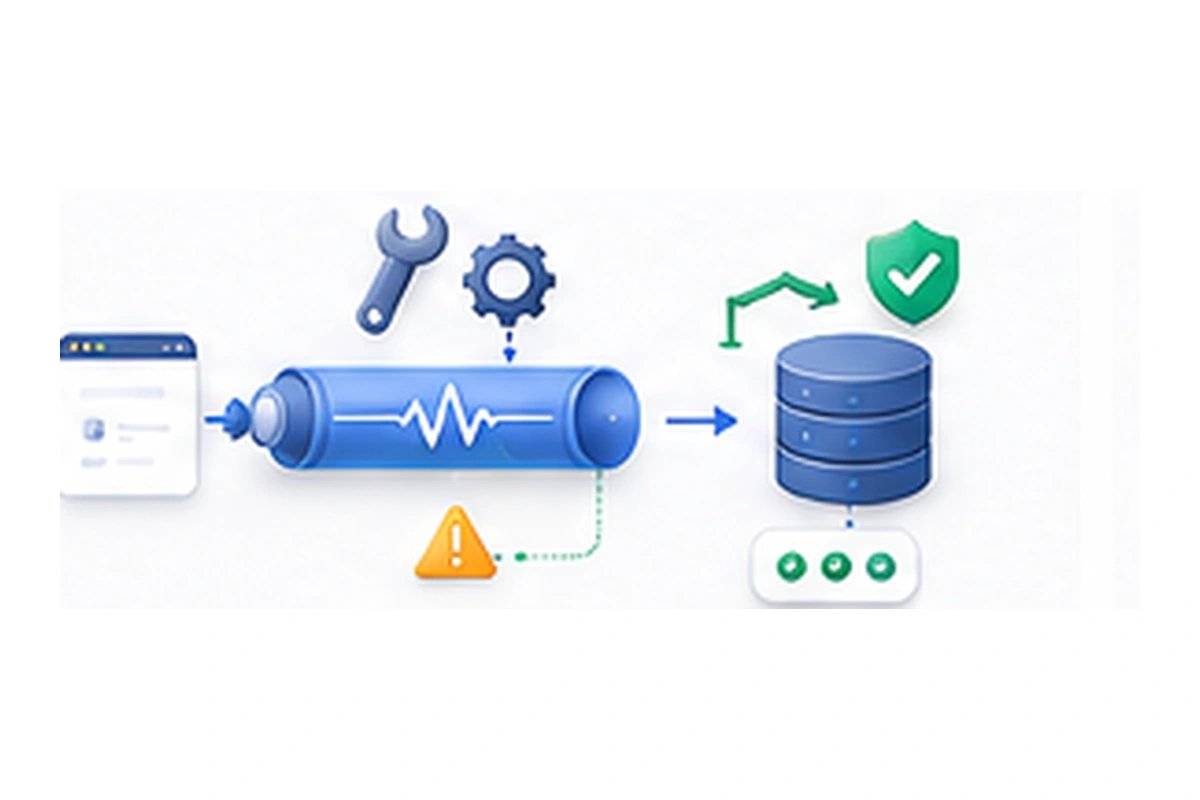
The Operational Challenge
Recurring extraction workflows break when source layouts change, selectors drift, validation rules fail, or delivery destinations reject incomplete records.
Without monitoring and maintenance ownership, teams discover failures only after reports, pricing decisions, or downstream systems have already used stale or missing data.
A managed operations model watches agreed signals, diagnoses exceptions, repairs scoped workflows, validates outputs, and resumes delivery under documented responsibilities.
Stale or missing data reaches reports or downstream systems
Failure chain
Source layout changes
Selector drift
Required fields disappear
Incomplete dataset
Downstream impact
Managed operations scope
Nenodata scopes monitoring, diagnosis, repair, validation, and maintenance around your codebase, approved sources, data-quality rules, reporting needs, and delivery systems.
Where the engagement allows, the service can include job and data-quality monitoring, source-specific repairs, validation before delivery resumes, and operational reporting.
Support windows, monitored signals, severity handling, environments, and change-request boundaries are defined during scoping. The service does not promise automatic repair of every failure or successful collection from every website.
Managed operations lifecycle
Monitor
Diagnose
Repair
Validate
Report
Maintenance Event Example
The example shows how an anomaly can move through diagnosis, repair, validation, and resumed delivery in a structured maintenance record.
Illustrative example
This maintenance event is illustrative and is not an approved Nenodata deliverable or customer result. Final fields depend on the approved monitoring specification.
01
Anomaly detected
02
Diagnosis completed
03
Repair deployed
04
Validation passed
05
Delivery resumed
Anomaly detected
Diagnosis completed
Repair deployed
Validation passed
Delivery resumed
{
  "workflow_id": "scraper-workflow-1048",
  "incident_id": "inc-2026-07-13-01",
  "detected_at": "YYYY-MM-DDTHH:mm:ssZ",
  "signal": "required_field_missing",
  "source_url": "https://example.com/item/1048",
  "status": "validated",
  "repair_summary": "Updated field mapping after layout change",
  "delivery_status": "resumed"
}
Operations matrix
| Observed signal | Possible exception | Agreed response |
|---|---|---|
| Job completion and retries | Failed or incomplete runs | Investigate run logs and restart or repair within agreed scope |
| Source accessibility | Blocked, unreachable, or changed access conditions | Diagnose access impact and update scoped collection logic where allowed |
| Extraction volume | Unexpected record-count drops or spikes | Review thresholds, source changes, and validation outcomes |
| Required-field completeness | Missing or null required fields | Trace field mapping failures and repair selectors or transforms |
| Schema drift | Unexpected field shape or type changes | Confirm schema impact, update mapping, and revalidate samples |
| Delivery status | Failed file, API, webhook, or destination handoff | Restore delivery after validation under the documented approval process |
Job completion and retries
Possible exception
Failed or incomplete runs
Agreed response
Investigate run logs and restart or repair within agreed scope
Source accessibility
Possible exception
Blocked, unreachable, or changed access conditions
Agreed response
Diagnose access impact and update scoped collection logic where allowed
Extraction volume
Possible exception
Unexpected record-count drops or spikes
Agreed response
Review thresholds, source changes, and validation outcomes
Required-field completeness
Possible exception
Missing or null required fields
Agreed response
Trace field mapping failures and repair selectors or transforms
Schema drift
Possible exception
Unexpected field shape or type changes
Agreed response
Confirm schema impact, update mapping, and revalidate samples
Delivery status
Possible exception
Failed file, API, webhook, or destination handoff
Agreed response
Restore delivery after validation under the documented approval process
Existing scrapers
Nenodata reviews an existing workflow before accepting ongoing responsibility. The assessment may lead to takeover, targeted refactoring, or a partial or full rebuild.
Existing scraper assessment flow leading to takeover, refactoring, or rebuild recommendations.
Existing workflow
Technical assessment
Maintain the current workflow when the codebase, access model, tests, and documentation are sufficient for ongoing support.
Stabilize selected components—such as selectors, validation, retries, or delivery—before recurring maintenance begins.
Recommend a partial or full rebuild when the existing implementation cannot be supported reliably within the requested scope.
Operational reporting
Practical Applications
Monitor and repair recurring price and promotion workflows when source layouts or field availability change.
Catch volume drops, missing attributes, and schema drift before incomplete catalogs reach downstream systems.
Support listing and offer extraction after marketplace page or taxonomy changes within the agreed scope.
Validate repaired outputs before files, APIs, webhooks, or warehouse loads resume.
Assess another team’s workflow and determine whether takeover, refactoring, or rebuild is the responsible next step.
Watch completeness, duplication, freshness, and schema signals so teams are not surprised by empty or degraded datasets.
Audience
This service is for data, engineering, pricing, product, and operations teams that run recurring extraction workflows and need monitored maintenance ownership.
Good fit
It fits organizations that want assessment before takeover, explicit monitoring coverage, and validated repairs rather than ad-hoc script fixes.
Not designed for
It is not a fit for guaranteed collection from every website, undefined SLAs presented as universal commitments, or unmanaged access to private or restricted systems.
Process
See also how Nenodata works.
Review the codebase, sources, monitoring needs, validation rules, delivery systems, and support expectations.
Define monitored signals, thresholds, reporting, repair boundaries, and approval steps for the engagement.
Diagnose exceptions, update scoped workflow logic, and validate outputs before delivery resumes.
Continue monitoring, maintenance, and operational reporting according to the agreed support terms.
Differentiators
Existing workflows are reviewed for maintainability before Nenodata accepts ongoing operational responsibility.
Service model
Support windows, exclusions, and ownership are scoped up front instead of implied as unlimited coverage.
Repairs are checked against agreed quality rules so silent failures are less likely to reach downstream systems.
Repair work stays tied to approved sources, fields, and change-request boundaries rather than open-ended fixes.
Incident and monitoring outputs help teams see what failed, what changed, and what was validated.
Delivery destinations and schema expectations are considered so repairs do not break downstream handoffs.
Integrations
Depending on the approved scope, validated outputs may be delivered through structured files, APIs, webhooks, databases, warehouses, spreadsheets, CRM systems, or ERP destinations.
Validated scraper output
Files
Interfaces
Business systems
Data infrastructure
Not every option is available for every engagement. Final formats and destinations are confirmed during technical scoping.
Related: custom data pipelines and web scraping API.
Questions
Potentially. Nenodata first reviews the available code, framework, dependencies, repositories, infrastructure, logs, documentation, access requirements, output schema, and test coverage. That assessment determines whether the workflow can be maintained in its current form, requires targeted refactoring, or should be partially or fully rebuilt before ongoing support begins.
Monitoring may be scoped around job completion, retries, source accessibility, extraction errors, record-count changes, required-field completeness, schema drift, duplicate or stale records, validation exceptions, and delivery status. The applicable signals, thresholds, reporting method, alert destinations, and escalation process must be agreed for the specific workflow and service tier.
Nenodata reviews the detected exception, determines how the source change affected extraction or delivery, and updates the relevant source-specific logic when the work falls within the agreed scope. The revised workflow is tested, and its output is validated before deployment or delivery resumes under the documented approval process.
Incident handling is defined during scoping. Relevant factors may include affected workflows, business impact, delivery timing, data-quality consequences, source availability, and whether a workaround exists. Support windows, severity levels, communication channels, response expectations, deployment approvals, and escalation responsibilities must be confirmed before the engagement begins.
Support cannot be assumed for every language, framework, repository, cloud platform, or self-hosted environment. Nenodata reviews the technical environment, access model, dependencies, deployment process, security boundaries, documentation, and existing test coverage before accepting responsibility for an externally developed workflow.
Validation can be scoped around agreed field, schema, volume, freshness, duplication, and formatting requirements. Delivery frequency and format depend on the source, workflow, destination, and contracted requirements. Potential options include structured files, APIs, webhooks, databases, warehouses, spreadsheets, CRM systems, and ERP destinations, subject to technical scoping.
Pricing depends on factors such as scraper count, code condition, source complexity, run frequency, infrastructure, validation rules, delivery requirements, monitoring coverage, reporting needs, support expectations, and the likely volume of source-specific change. Review view Nenodata pricing and use the demo flow for a scoped review rather than inventing a maintenance SLA.
No provider should promise collection from every website. Feasibility depends on technical restrictions, access conditions, the intended data, permitted use, and acceptance criteria. Projects should be assessed against source terms, applicable law, data sensitivity, and the buyer’s authority to use the data. Buyers should obtain appropriate legal advice for their use case.
Share the workflows, sources, monitoring needs, and delivery systems you want covered. Nenodata will assess feasibility and recommend the next step. discuss your scraper requirements.
Include repositories or architecture notes, monitored sources, quality rules, destinations, and support expectations so we can discuss your scraper requirements.
Scoping checklist
Tell us what you need. We'll build a custom scraping solution and deliver a free proof-of-concept within 48 hours.