Tender and Government Contract Data for Notice, Deadline and Award
Nenodata’s Tender and Government Contract Data Scraping Services collect bid, award, deadline, buyer, and supplier fields from agreed publicly accessible procurement sources and deliver them as structured records for opportunity, monitoring, and research workflows.
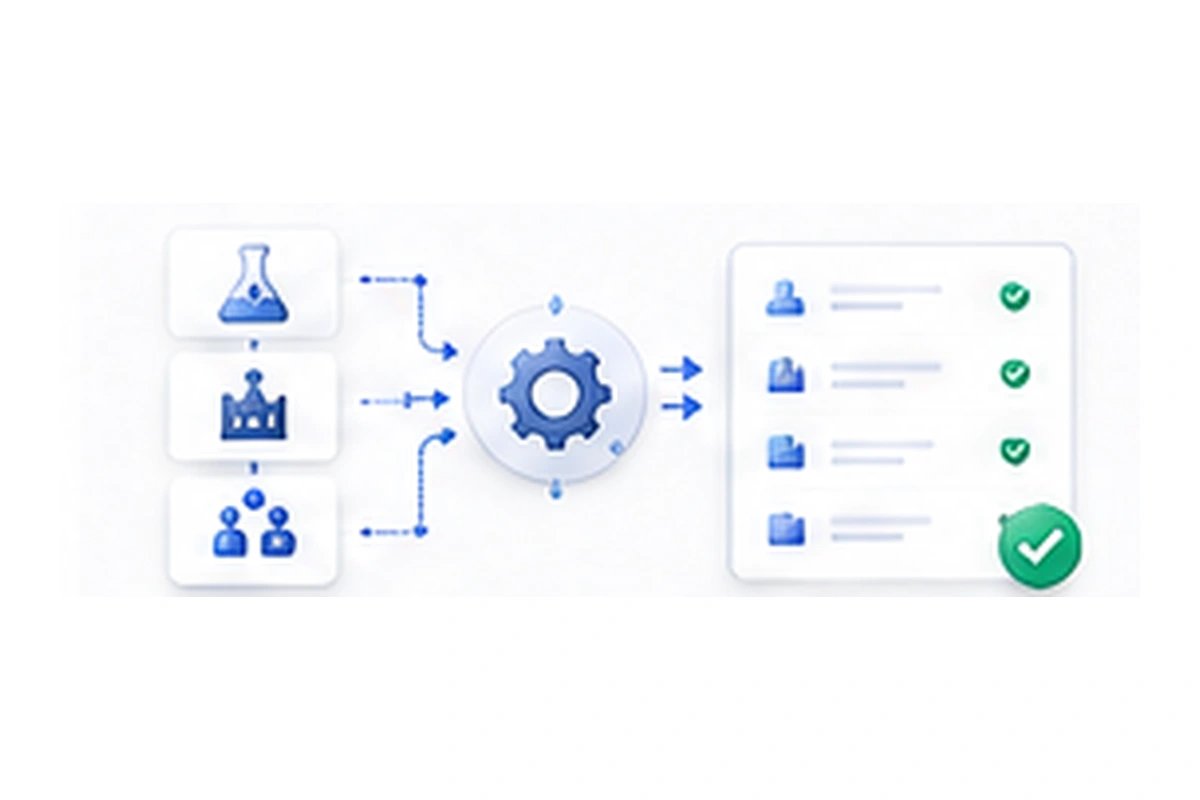
Procurement records are fragmented and time-sensitive
Public tenders, solicitations, amendments, cancellations, and awards are published across portals that use different layouts, labels, and update patterns.
Teams that rely on manual checks often miss deadline changes, struggle to compare notices across sources, and lose provenance when records are copied into spreadsheets.
A managed extraction workflow reviews approved public sources first, maps available fields into a consistent schema, and delivers records that can support discovery, monitoring, and analysis.
What Tender and Government Contract Data Scraping Services Provide
Nenodata scopes approved public procurement sources, required fields, volume expectations, refresh needs, and delivery destinations before collection begins.
Engagements can include opportunity notices, amendments, cancellations, and contract-award records when those page types are publicly accessible and approved for the project.
Collection uses managed enterprise web scraping services configured around the selected portals rather than a generic one-size workflow.
Field availability varies by source. Private, restricted, or login-protected content is excluded unless separately authorized and reviewed.
Tenders vs GSA eLibrary and business directories
Use this page for procurement notices, deadlines, and award status across public portals. Use GSA eLibrary for federal Schedule/SIN contractor listings, or business-directory extraction for company listings — not bid notices.
| Source | Best for | Learn more |
|---|---|---|
| Tender and contract data | Notice title, buyer, deadline, status, award | This service |
| GSA eLibrary | Federal Schedule, SIN, and contractor listings | GSA eLibrary scraper |
| Business directory | Company listings and local business records — not tenders | Business directory extraction |
Illustrative sample procurement-data output
Illustrative example
This sample is illustrative and is not an approved Nenodata deliverable or customer result. Field availability varies by source. Final schema depends on project scope and what approved public pages display.
authority,notice_title,deadline,status,source_url,collected_at
U.S. Department of Veterans Affairs,Medical supplies solicitation,2026-09-30,open,https://sam.gov/opp/va-medical-supplies-2026,2026-08-13T14:00:00Z
Crown Commercial Service,IT managed services framework,2026-10-15,amended,https://www.contractsfinder.service.gov.uk/Notice/ccs-it-2026,2026-08-13T14:00:00Z
City of Austin,Fleet maintenance award summary,2026-07-22,awarded,https://financeonline.austintexas.gov/afo/account_services/solicitation/solicitations.cfm,2026-08-13T14:00:00Z| Authority | Notice title | Deadline | Status | Source URL |
|---|---|---|---|---|
| U.S. Department of Veterans Affairs | Medical supplies solicitation | 2026-09-30 | open | https://sam.gov/opp/va-medical-supplies-2026 |
| Crown Commercial Service | IT managed services framework | 2026-10-15 | amended | https://www.contractsfinder.service.gov.uk/Notice/ccs-it-2026 |
Data fields and delivery outputs
Formats and fields are qualified possibilities confirmed during scoping. Availability depends on what approved public sources display.
Opportunity identity
- • Notice title
- • Opportunity or reference identifier where shown
- • Notice type where shown
- • Source portal label
Buyer and issuing authority
- • Issuing authority or buyer name
- • Buyer organization type where shown
- • Contact office where publicly shown
- • Buyer location where shown
Dates and tender status
- • Publication date where shown
- • Submission deadline where shown
- • Status label
- • Amendment or cancellation signal where shown
Category and geography
- • Category or CPV-style label where shown
- • Keywords where shown
- • Region or place of delivery where shown
- • Country or market label where shown
Value and award information
- • Estimated value where shown
- • Currency where shown
- • Awarded supplier where shown
- • Award date where shown
Documents and source references
- • Source URL
- • Document or attachment links where publicly listed
- • Collection timestamp
- • Validation note
Delivery outputs
- • CSV
- • Excel
- • JSON
- • Database-ready files
- • Structured import files
Use cases
Opportunity discovery
Procurement and business-development teams often miss relevant notices across portals. Structured discovery records help teams find opportunities that match approved category, geography, and buyer filters.
Deadline and amendment monitoring
Deadlines and amendments change without a single inbox for every portal. Scoped monitoring helps teams review status changes and updated dates on agreed sources.
Contract-award analysis
Award pages can reveal supplier, value, and buyer patterns when publicly displayed. Structured award records support research into who wins work in a category or market.
Agency-spend and demand research
Research teams need consistent buyer and category fields to compare demand across authorities. Normalized records support spend and demand analysis without rebuilding spreadsheets by hand.
Supplier and incumbent research
Teams evaluating competition need structured award and notice context. Publicly displayed supplier names and related fields can be prepared for incumbent and competitive review.
Tender aggregation products
Product teams building tender aggregation experiences need repeatable feeds from approved sources. Managed extraction prepares consistent records for product and reporting workflows.
CRM and pipeline enrichment
Sales and BD pipelines often lack tender provenance. Structured notice fields can enrich CRM or pipeline records when the destination format is confirmed during scoping.
Who this service is for
This service is for business-development, bid, procurement-intelligence, research, and product teams that need structured tender and contract records from agreed public sources.
It also fits data and analytics teams supporting opportunity monitoring, award research, and procurement-market analysis.
It is not positioned for private portal access, guaranteed coverage of every government source, or legal advice about procurement eligibility.
How it works
Four-step procurement data workflow from source review to scheduled delivery. See also how Nenodata works.
- Step 1
Share sources and requirements
Define target portals, notice types, required fields, geography or category filters, refresh needs, and the system that will use the records.
- Step 2
Confirm feasibility and sample
Nenodata reviews source accessibility and field availability, then provides a representative sample for approval before broader production collection.
- Step 3
Extract, normalize, and validate
Approved public notices are collected and mapped into the agreed schema. Normalization and validation rules are applied without inventing missing values.
- Step 4
Deliver and maintain the feed
Structured records are delivered through the confirmed method. Maintenance continues where included in the agreed support scope as supported portal layouts change.
Why choose Nenodata
Source-specific scoping before commitment
Target portals and page types are reviewed before production promises are made.
Sample-first field validation
Teams can review a representative sample structure before approving broader collection.
Custom schema and normalization rules
Inconsistent labels and structures across portals are mapped according to rules defined during scoping.
Defined freshness and exception handling
Refresh expectations and exception handling are confirmed for the approved sources and service scope.
Delivery designed for your workflow
Output format and destination are confirmed so records can fit analysis, CRM, product, or reporting systems.
Clear public-data boundaries
Collection stays within approved public or permissioned boundaries. Private or restricted access is not assumed.
Integrations and delivery
Delivery destinations and formats are confirmed during scoping based on the approved dataset and the systems that will consume the records.
Prepared import files are commonly discussed for spreadsheet and structured-file workflows. Direct loading into databases or downstream systems is included only when separately confirmed for the engagement.
- CSV
- Excel
- JSON
- Database-ready files
- Structured import files
Related: supplier and vendor data scraping, GSA eLibrary scraper, business directory data extraction, custom data pipelines, and enterprise web scraping.
Frequently asked questions
Request a representative procurement-data sample
Share the portals, notice types, fields, and markets you need. Nenodata will review feasibility and recommend the next sample or demo step.
Include representative source URLs, required fields, geography or category filters, preferred format, and whether the need is one-time or recurring.