YATCO Yacht Listing Scraper for Length, USD Ask and Marina
Nenodata scopes, builds, and maintains the YATCO Yacht Listing Scraper as a managed workflow that turns approved public yacht-listing pages into structured vessel records—length, asking price, builder, and marina—not luxury cars or commercial real-estate listings.
- Source-specific feasibility before scope
- Normalized records with documented field rules
- Delivery mapped to your approved systems
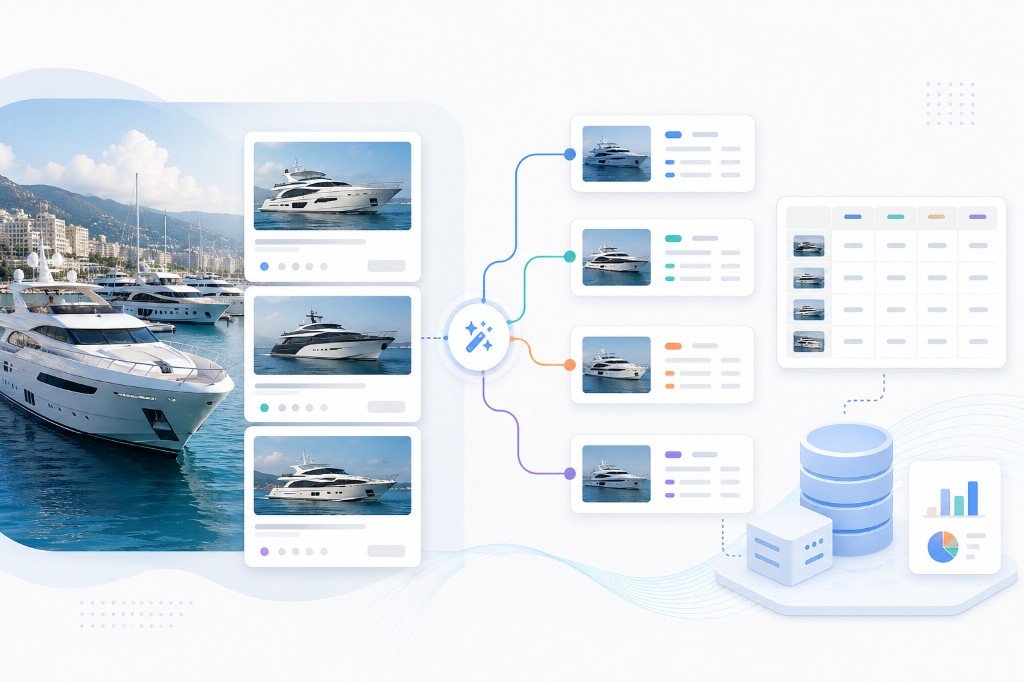
Keep changing yacht listings usable
Yacht listing pages change vessel details, asking prices, locations, brokerage attribution, and availability status as inventory moves between markets and brokers.
Teams that rely on screenshots, exports, or one-off scripts lose consistency when dimensions use mixed units, currencies differ, media links expire, or the same vessel appears under overlapping listings.
A managed collection workflow reviews the approved source path first, then maps available identity, specification, price, location, and brokerage fields into a maintainable schema for monitoring and analysis.
What the YATCO Yacht Listing Scraper provides
Nenodata reviews representative listing URLs or authorized-feed descriptions, confirms permitted use, and scopes the required vessel, price, location, brokerage, and delivery fields before production collection begins.
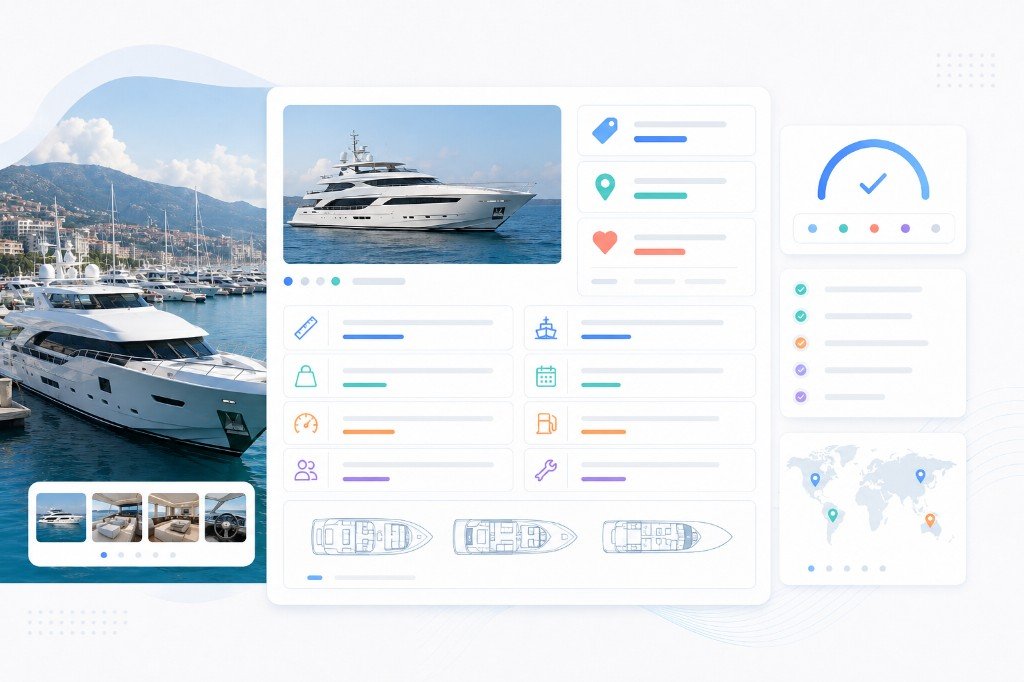
Engagements may include listing identity, vessel and build details, dimensions and specifications, price and listing status, location, brokerage context, media references, and delivery formatting when those elements are available on approved public pages or authorized feeds and included in the agreed schema.
Broader extraction capability remains available through enterprise web scraping.
Support is subject to source feasibility. Collection is limited to approved public pages or authorized feeds where permitted. Nenodata is not affiliated with or endorsed by YATCO.
YATCO vs JamesEdition cars and LoopNet listings
Use this page for yacht vessel identity: length, USD asking price, builder, and marina. Use JamesEdition cars for luxury automotive listings, or LoopNet for commercial business listings—not marine vessels.
| Source | Best for | Learn more |
|---|---|---|
| YATCO yacht listings | Vessel name, length_ft, USD ask, builder, marina | This service |
| JamesEdition cars | Luxury car make, model, and asking price feeds | JamesEdition cars data |
| LoopNet business | Commercial business listing extraction | LoopNet business scraper |
Review a representative output before full implementation
A sample-first review shows how an approved yacht-listing observation can map into structured vessel, price, location, and status fields before broader production begins.
Illustrative example
{
  "listing_id": "YATCO-MY-78-FT-2018",
  "source_url": "https://www.yatco.com/yacht/2018-sunseeker-predator-74-1234567/",
  "vessel_name": "Sunseeker Predator 74",
  "builder": "Sunseeker",
  "year_built": 2018,
  "length_ft": 74,
  "beam_ft": 18.2,
  "asking_price": 2450000,
  "currency": "USD",
  "listing_status": "For sale",
  "location": "Fort Lauderdale, FL",
  "brokerage_name": "Northrop & Johnson",
  "media_url": null,
  "collected_at": "2026-08-17T14:00:00Z",
  "validation_status": "pass"
}
Field dictionary
| Field | Note |
|---|---|
| listing_id | Synthetic listing identifier for planning |
| source_url | Approved public page or feed reference |
| vessel_name | Displayed vessel name when available |
| builder | Build yard or manufacturer label when shown |
| year_built | Build year when present on the source |
| length_ft / beam_ft | Dimension fields with agreed units |
| asking_price / currency | Displayed price and currency codes |
| listing_status | For-sale or other visible status labels |
| location | Berth, marina, or geographic label when shown |
| brokerage_name | Brokerage attribution when publicly listed |
| media_url | Public media reference when permitted |
| collected_at | Collection timestamp for lineage |
| validation_status | Pass, review, or exception status |
Validation notes
- Missing values stay visible rather than invented.
- Dimension and currency handling follows documented transformation rules.
- Duplicate listing candidates can be flagged when rules are scoped.
Data fields and delivery outputs
Field groups depend on the approved source and agreed schema.
Listing identity
- • Listing ID where shown
- • Source URL or authorized-feed reference
- • Listing title or vessel name
- • Collection timestamp
Vessel and build details
- • Vessel name
- • Builder or yard
- • Model label where shown
- • Year built
Dimensions and specifications
- • Length
- • Beam
- • Draft where shown
- • Other agreed specification fields
Price and listing status
- • Asking price
- • Currency
- • Listing status
- • Price-change context when available
Location
- • Marina or berth label
- • City or region
- • Country where shown
- • Location text as displayed
Brokerage context
- • Brokerage name
- • Broker contact fields where public
- • Attribution text where shown
- • Office or market label when available
Media references
- • Public media URLs where permitted
- • Gallery references when available
- • Source media identifiers when shown
- • Collection context for media links
Delivery formats
- • CSV
- • JSON
- • Excel
- • API-ready structures where confirmed
- • Webhook, database, or warehouse delivery where confirmed
Media references are limited to public links or otherwise permitted source references. Image files, proprietary creative assets, and restricted media are not treated as freely reusable assets.
Use cases
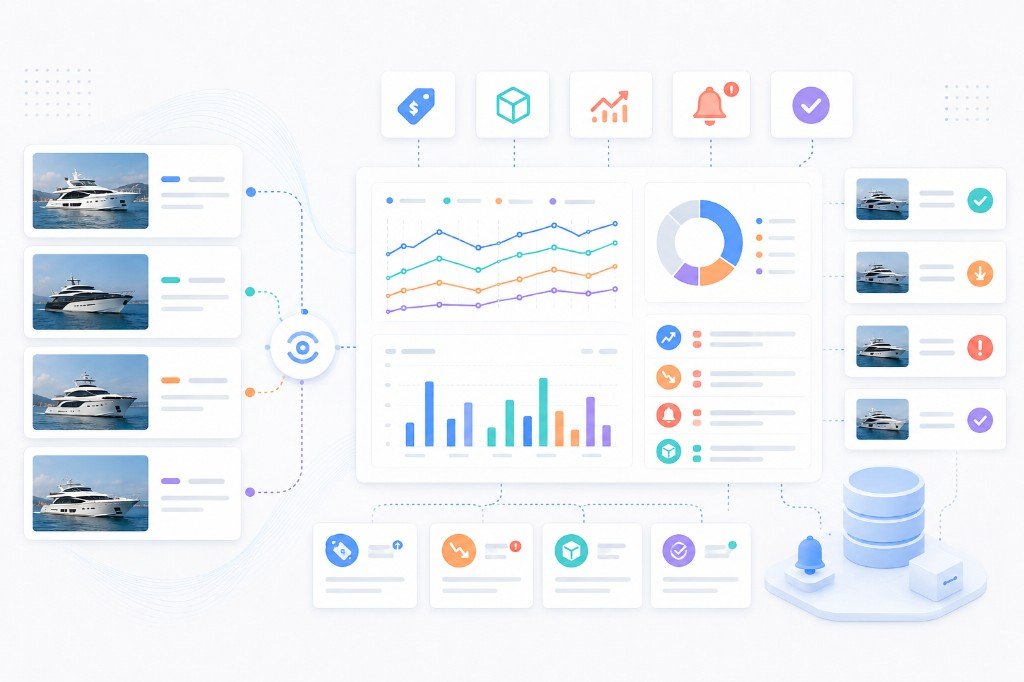
Inventory monitoring
Track approved listing sets so inventory teams retain vessel, status, and location fields without repeated manual checks.
Comparable-vessel research
Compare similar vessels across length, builder, age, location, and asking-price fields for research and valuation work.
Price and status change tracking
Monitor asking-price and listing-status movement over time for selected vessel sets when refresh is included in scope.
Marketplace or search-product enrichment
Enrich internal search or marketplace products with structured yacht-listing fields from approved sources.
Brokerage intelligence
Retain brokerage attribution and listing context for market and competitive research where fields are publicly available.
Historical market analysis
Accumulate timestamped observations for historical views of inventory, pricing signals, and status changes.
Listing-quality and duplicate review
Flag incomplete fields and potential duplicates so teams can review listing quality before downstream use.
Price and status monitoring can also complement broader price intelligence workflows.
Who this service is for
This service is for brokerages, marine marketplaces, research teams, valuation analysts, and proptech or marketplace product teams that need recurring yacht-listing records from approved sources.
It fits organizations that want a managed workflow with documented field rules rather than a downloadable one-time scraper tool.
It is not positioned as unrestricted access to YATCO, a partnership endorsement, or a hosted public API product by default.
How the workflow operates
The same feasibility-first pattern is described in how Nenodata works.
Four-step managed yacht data workflow with a source-feasibility checkpoint.
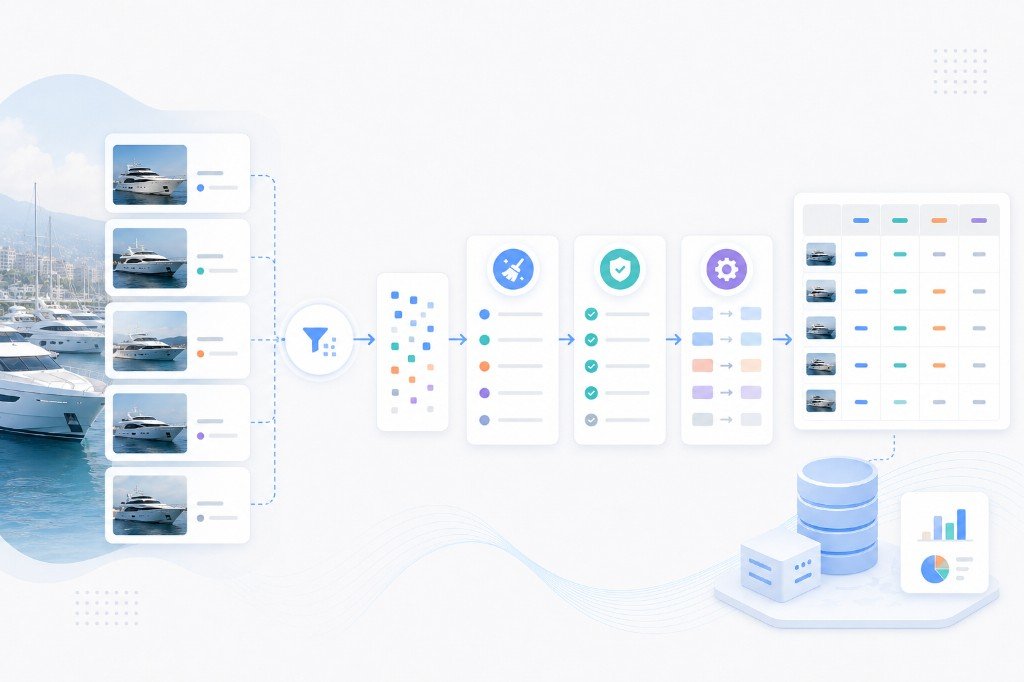
Feasibility checkpoint: after requirements are shared, Nenodata confirms technical access, permitted use, and field availability before collection begins.
- Step 1
Share the source and schema requirements
Provide representative listing URLs or authorized-feed details, required fields, intended use, and preferred delivery format.
- Step 2
Confirm feasibility and permitted use
Nenodata reviews source access, field availability, and permitted-use boundaries before production work is committed.
- Step 3
Configure, collect, clean, and validate
The workflow captures approved inputs, applies documented transformation rules, and validates records against the agreed schema.
- Step 4
Deliver and maintain the workflow
Structured outputs are delivered through the confirmed method, with maintenance included when contracted as sources change.
Why teams choose Nenodata
Scope before promises
Requested sources and fields are reviewed before broader collection commitments are made.
Sample-first schema validation
A representative sample lets teams inspect structure, missing values, and quality before wider rollout.
Documented transformation rules
Dimensions, currencies, missing values, and duplicate handling follow rules defined during scoping.
Managed maintenance
When included in scope, Nenodata handles source-layout and delivery changes for the agreed workflow.
Delivery aligned with customer systems
Outputs are planned around the spreadsheet, API-ready, database, warehouse, or webhook destination you confirm.
Responsible data-use boundaries
Work stays limited to public or permissioned sources. Restricted and unauthorized sources remain out of scope.
Delivery and integration options
Delivery formats are confirmed during scoping and may include CSV, JSON, Excel, API-ready structures, webhook, database, or warehouse-ready delivery when supported for the engagement.
API-ready does not automatically include a hosted API. Hosted or customer-facing API delivery is confirmed separately when required.
Recurring transformation and destination workflows may also use custom data pipelines.
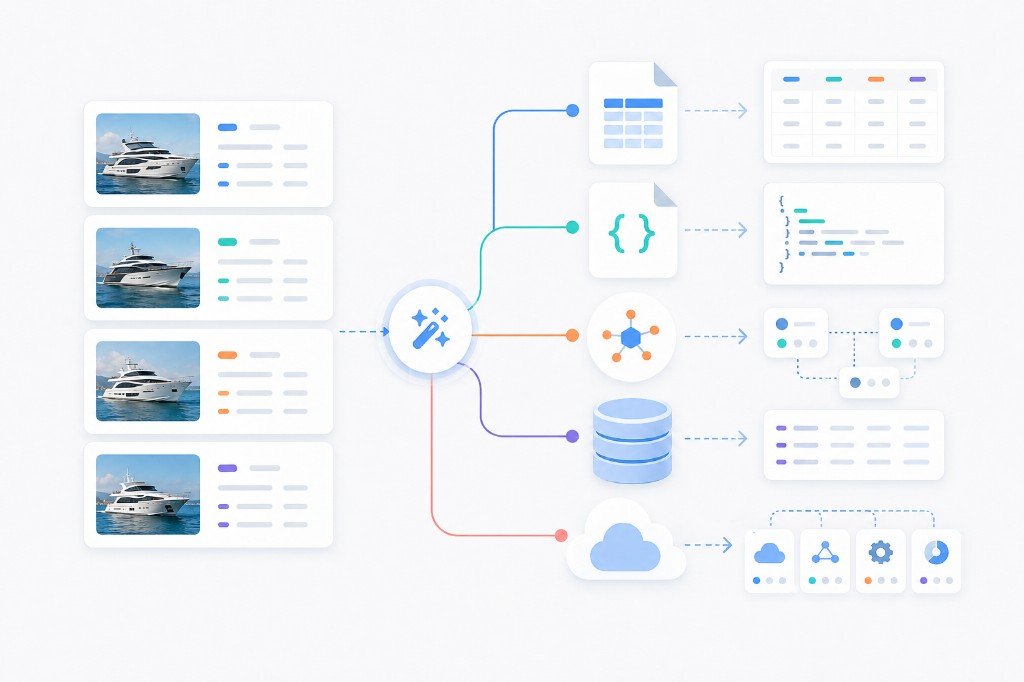
- CSV
- JSON
- Excel
- API-ready structures where confirmed
- Webhook where confirmed
- Database where confirmed
- Warehouse-ready delivery where confirmed
Related resources: enterprise web scraping, price intelligence solutions, custom data pipelines, USA real estate data scraping, and contact Nenodata.
Frequently Asked Questions
Request a source and schema review
Share a representative listing URL or authorized-feed description, required fields, intended use, and preferred delivery format so Nenodata can review feasibility before broader implementation.
Include source details, required fields, refresh needs, delivery preference, and business contact information when you contact Nenodata.