JavaScript-rendered pages
Collect fields that appear only after client-side rendering completes on approved public pages.
JavaScript-Rendered Data Extraction
Nenodata delivers Dynamic Website Scraping Services for JavaScript-rendered pages, AJAX-loaded content, and interaction-dependent workflows—scoped to approved sources and returned as clean, structured records.
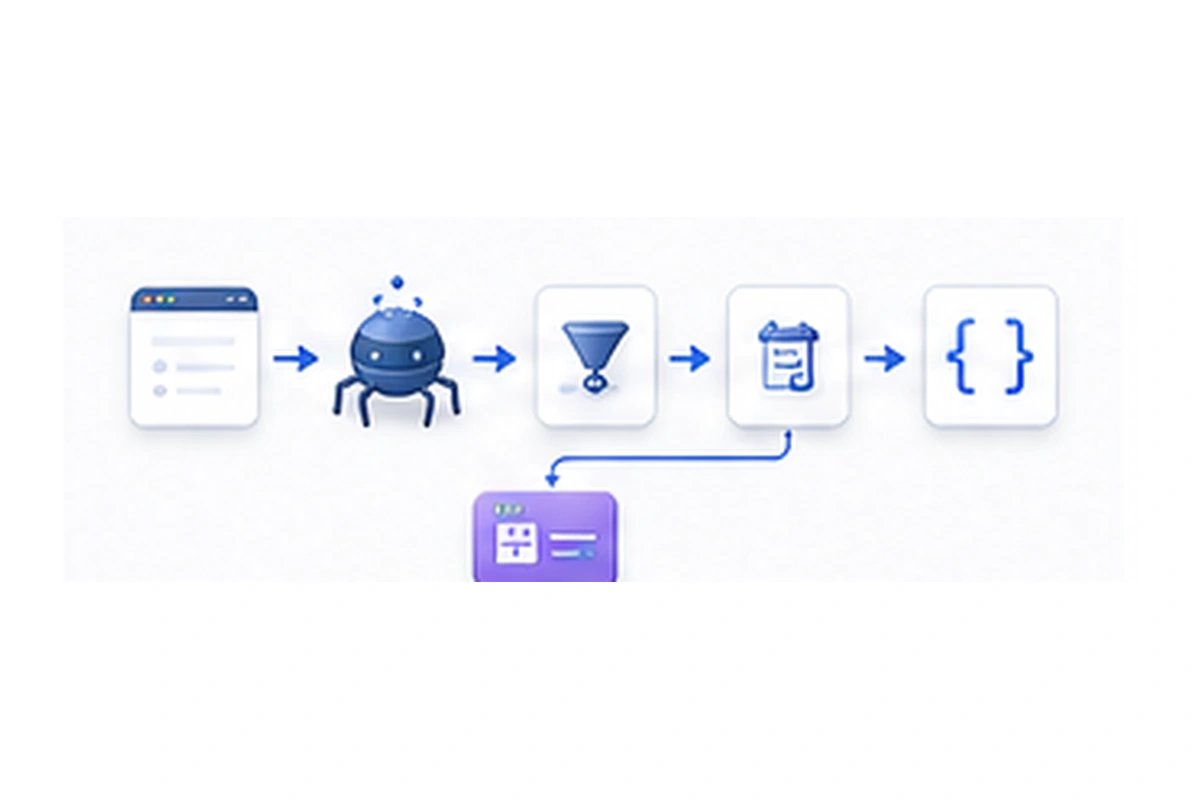
The Problem
Many websites do not expose the full dataset in the initial HTML response. Product grids, rates, listings, and filters often appear only after JavaScript runs, XHR requests complete, or a visitor interacts with the page.
Static collectors that download the first response miss those states. Teams then receive incomplete catalogs, empty result sets, or fields that only exist after a filter, tab, scroll, or click-to-load action.
A managed dynamic workflow reviews how the target pages render and navigate, then extracts the agreed fields from the relevant browser state rather than from unfinished HTML alone.
Initial HTML ≠ Final Browser State
Static Scraper
→ incomplete fields
Dynamic Workflow
→ rendered page state
The Service
Each engagement begins with source review: approved public pages, required fields, interaction steps, refresh needs, validation rules, and delivery destinations.
Where feasible, Nenodata configures rendering, navigation, and extraction for JavaScript-rendered content, AJAX-loaded results, and interactive controls defined in scope.
For broader managed extraction programs, see enterprise web scraping services.
Project Scope
Source Scope
Use this page when the dataset appears only after JavaScript, AJAX, or SPA navigation. Use AI scraping for unstructured semantic fields, or a live crawler for change-oriented recrawls.
JS/AJAX/SPA page state: filter, sort, results_loaded
This servicePage Patterns
Support for each pattern depends on source feasibility and the approved engagement scope. The service does not claim universal access, CAPTCHA bypass, or anti-bot circumvention.
Collect fields that appear only after client-side rendering completes on approved public pages.
Capture result sets and detail panels populated through asynchronous requests after the initial page load.
Follow in-app navigation states where the required records depend on client-side routing rather than full page reloads.
Advance scroll or load-more interactions when needed to reach additional records within the agreed scope.
Traverse paginated listing flows so multi-page result sets can be structured into consistent records.
Apply or observe filter states that change the visible result set before extraction begins.
Open approved interactive elements when required fields are only visible after a click or reveal action.
Assess session-dependent public views during feasibility review. Authenticated or private states require separate authorization.
Illustrative example
The example shows how an interaction-dependent page state—such as an active filter and visible result—can map into a structured record. Exact fields are confirmed during scoping.
{
  "source_url": "https://www.bestbuy.com/site/searchpage.jsp?st=anker+q30",
  "page_state": {
    "filter": "in_stock",
    "sort": "price_asc",
    "results_loaded": 24
  },
  "record": {
    "title": "Anker Soundcore Life Q30 Headphones",
    "price": "79.99",
    "currency": "USD",
    "availability": "in_stock"
  },
  "collected_at": "2026-08-12T13:28:05Z",
  "validation_status": "passed"
}
Schema & Delivery
Applications
Product → Price → Stock
Structure catalog, price, and availability fields from JavaScript-rendered retail or marketplace pages where filters and lazy-loaded grids affect what is visible.
Related: ecommerce data scraping, price intelligence.
Search → Dates → Rates
Collect rate and availability values that appear after interactive searches, calendar selections, or asynchronous result loads.
Filter → Listings → Records
Extract listing identity, price, and status fields from property sites that rely on rendered cards, maps, or filter-driven result sets.
Scroll → Jobs → Dataset
Capture job titles, locations, and posting details from boards that load results through infinite scroll, filters, or SPA navigation.
Related: lead generation data.
Tabs → Panels → Fields
Structure public market or research fields that depend on interactive tables, tabs, or asynchronously loaded panels.
Pages → Schema → Feed
Deliver schema-aligned product or SaaS listing fields from interactive public pages into product, analytics, or enrichment workflows.
Reveal → Reviews → Monitor
Collect review or content fields that appear after click-to-reveal, pagination, or deferred loading on approved sources.
Audience
This service is for data, product, pricing, research, and engineering teams that need structured fields from JavaScript-rendered or interaction-dependent public pages.
It fits organizations that want feasibility review, managed rendering logic, and maintained extraction rather than brittle static collectors.
Service Scope
It is not a fit for private or restricted collection without authorization, guaranteed access to every dynamic site, or teams seeking unrestricted anti-bot circumvention.Built for
Workflow
Four-step managed workflow from source review to structured data delivery. See also how Nenodata works.
Provide approved URLs, required fields, interaction steps, refresh needs, and the systems that will use the records.
Nenodata assesses how pages render and configures browser-state collection for the agreed interactions and fields.
Extracted values are cleaned and checked against the project’s required-field and exception rules where included in scope.
Structured outputs are delivered to the agreed destinations, with monitoring and maintenance continuing where included in the support terms.
Why Nenodata
Representative sources and interaction steps are reviewed before production commitments are made.
Rendering, navigation, and extraction logic stay under a managed workflow instead of fragile one-off scripts.
Teams receive schema-aligned records designed for analysis and integration, not unfinished HTML dumps.
Formats and destinations are planned for the systems that will consume the data when those options are supported.
Monitoring and source-change handling continue where included in the agreed support terms—not as an open-ended guarantee.
Projects stay within approved public or permissioned boundaries and agreed use. Private areas require separate authorization.
Delivery
Outputs can be prepared as JSON, CSV, Excel, XML, API-oriented delivery, webhooks, database or warehouse loads, or spreadsheet-ready files when included in scope.
Related workflows can connect this dynamic-page focus with broader extraction, API delivery, or recurring crawler programs when those services fit the engagement.
FAQ
Next Step
Share sample URLs, required fields, interaction steps, and the destination that will consume the records. Nenodata will review feasibility and recommend the next step.
Include representative pages, the filters or clicks needed to reach the data, preferred output format, and refresh needs.
Request a DemoProject Checklist
Tell us what you need. We'll build a custom scraping solution and deliver a free proof-of-concept within 48 hours.