Product and Catalog Data
Product titles, identifiers, URLs, categories, specifications, variations, and related catalog fields when publicly displayed and included in scope.
Alibaba Product and Supplier Data
Nenodata provides Alibaba Data Scraping Services that turn agreed publicly visible product and supplier pages into structured pricing, MOQ, trade-term, and supplier records for sourcing, benchmarking, enrichment, and delivery into procurement workflows.
The Problem
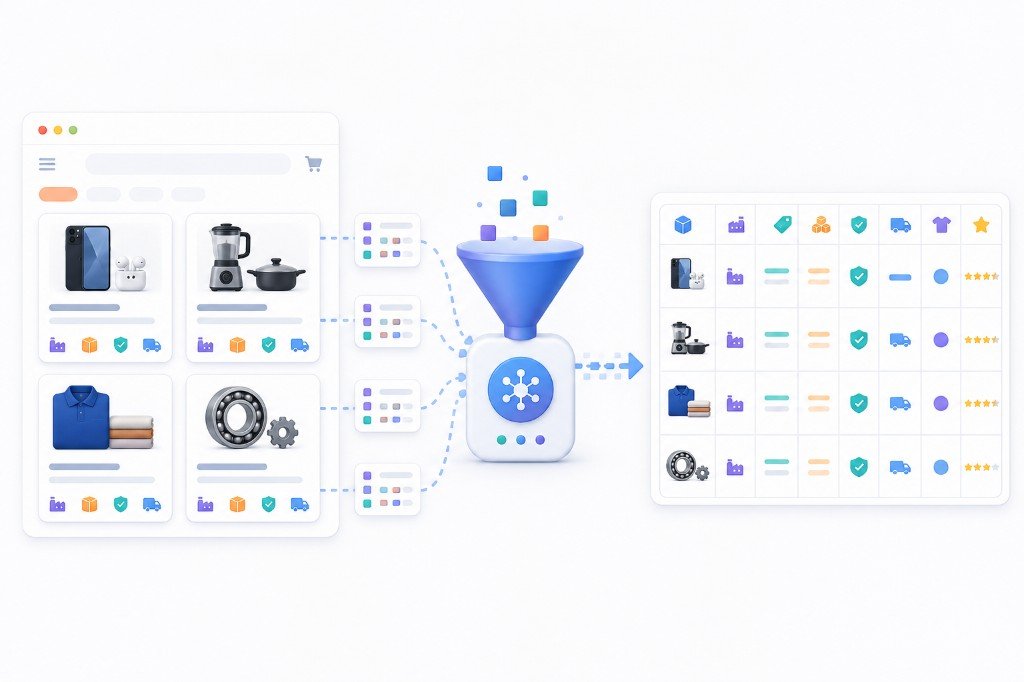
Alibaba listings can change by supplier, MOQ tier, product variation, trade terms, lead time, and verification status. A price copied into a spreadsheet this morning may no longer represent the visible offer when a procurement or category manager reviews it later.
Inconsistent page structures, duplicate reconciliation, and spreadsheet maintenance become harder when teams monitor hundreds of listings, compare multiple suppliers, or need historical context across categories.
Unmanaged scripts create a separate burden: layouts change, fields become inconsistent, and maintenance consumes engineering time instead of supporting sourcing decisions.
Manual research friction
Changing product and supplier information
Prices, MOQ tiers, trade terms, and verification signals shift across listings.
Spreadsheet reconciliation
Duplicate cleanup and inconsistent page structures slow category reviews.
Script maintenance
Layout changes consume engineering time instead of supporting sourcing decisions.
The Service
Nenodata configures a managed workflow around the publicly visible product, search, category, and supplier pages you need for sourcing, benchmarking, enrichment, or procurement reporting.
Engagements may include product and catalog fields, pricing and MOQ tiers, supplier and trade information, ratings and marketplace signals, and collection metadata when those elements are publicly displayed and included in the agreed schema.
Coverage, field availability, and refresh cadence are agreed during scoping. Private account data and restricted materials remain out of scope. Broader extraction programs may extend through enterprise web scraping.
Private data out of scope
Private account data and restricted materials remain out of scope.Collection flow
Illustrative example
Review an illustrative field set for product identity, pricing, MOQ tiers, supplier context, marketplace signals, and collection metadata. Missing optional values remain visible rather than invented.
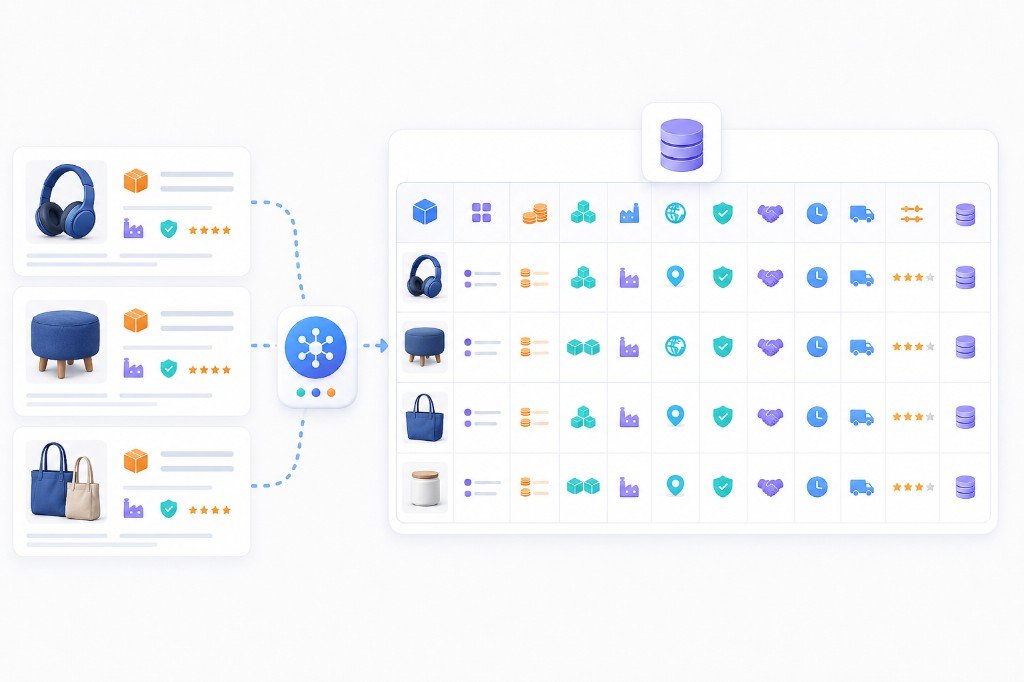
| product_title | supplier_name | unit_price | currency | moq | source_page_type | field_availability_note | collected_at |
|---|---|---|---|---|---|---|---|
| Example Industrial Widget | Example Supplier Co. | 12.50 | USD | 100 | product | optional trade terms unavailable | YYYY-MM-DDTHH:mm:ssZ |
| Example Packaging Roll | Example Trade Group | null | USD | 1000 | product | unit price shown as range only | YYYY-MM-DDTHH:mm:ssZ |
| Example Fastener Kit | Example Hardware Ltd. | 0.45 | USD | 5000 | search | null | YYYY-MM-DDTHH:mm:ssZ |
{
  "collection_timestamp": "YYYY-MM-DDTHH:mm:ssZ",
  "source_page_type": "product",
  "input_reference": "example-keyword",
  "product_title": "Example Industrial Widget",
  "product_url": "https://example.com/product/EXAMPLE-1048",
  "supplier_name": "Example Supplier Co.",
  "supplier_country": "Example Country",
  "unit_price": "12.50",
  "currency": "USD",
  "moq": "100",
  "price_tier_min_qty": "500",
  "verified_supplier_flag": null,
  "field_availability_note": "optional trade terms unavailable on this page",
  "collected_at": "YYYY-MM-DDTHH:mm:ssZ"
}
Field availability can vary by page type, listing state, and the agreed project schema.
Schema & Outputs
Potential fields depend on page type, public availability, and the agreed schema.
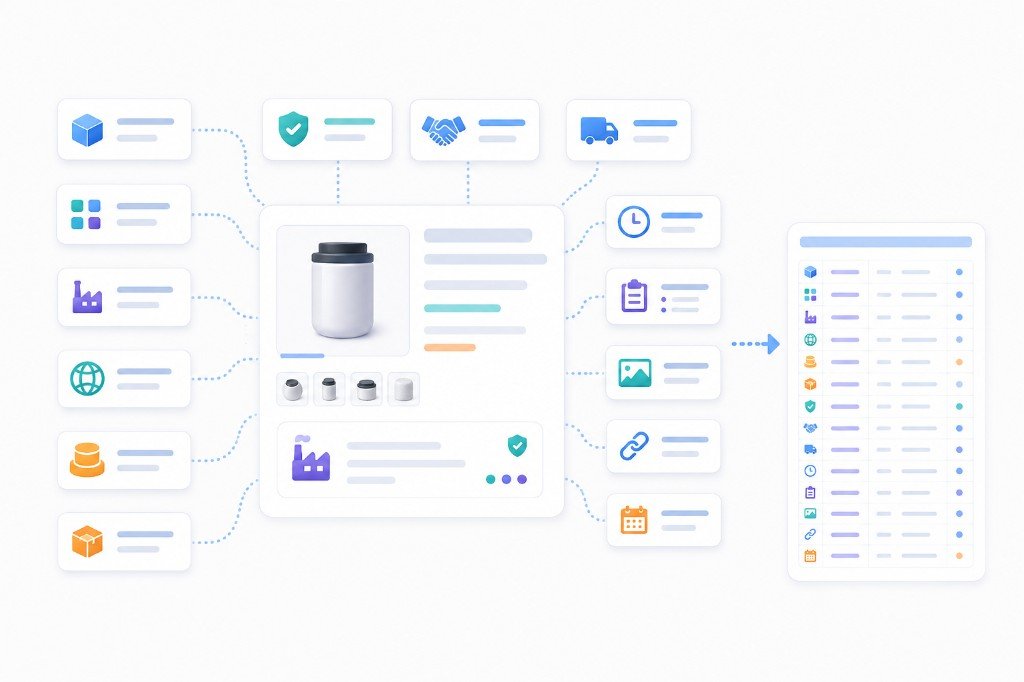
Product titles, identifiers, URLs, categories, specifications, variations, and related catalog fields when publicly displayed and included in scope.
Unit prices, tiered or volume pricing, currency, MOQ, and related pricing cues preserved as source-displayed values.
Supplier names, profile links, country or region, trade assurance and verification signals, years on platform, and related trade context where visible.
Average ratings, review counts, lead time, shipping or trade terms, and related marketplace signals when shown on approved pages.
Collection timestamps, source-page type, input references, and field-availability notes when scoped for monitoring.
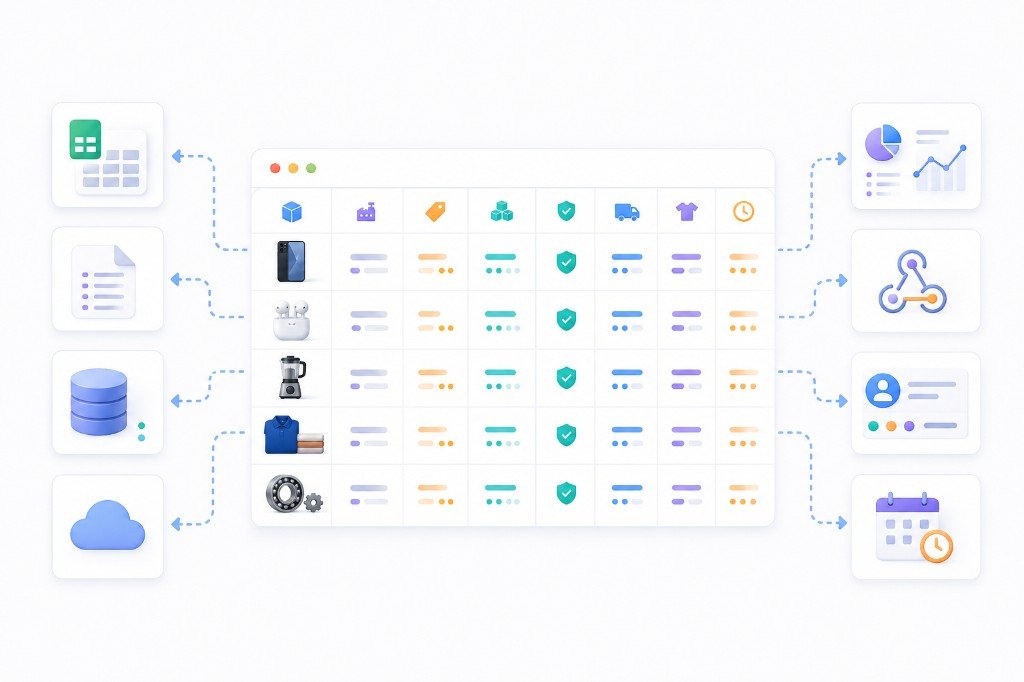
CSV, Excel, JSON, API-ready structures, cloud or database handoff, and scheduled files when supported for the engagement.
Price · MOQ · Supplier
Sourcing teams compare current prices, MOQ tiers, supplier details, and listing context in one structured dataset instead of rebuilding spreadsheets for every review. Related price intelligence solutions can support broader multi-source monitoring.
Verify · Trade · Lead time
Procurement teams review verification signals, trade terms, lead times, and supplier context alongside product offers when those fields are publicly available.
History · Snapshot · Trend
Recurring deliveries help teams retain time-series observations for price movement, MOQ changes, supplier turnover, and category behavior.
Catalog · Enrich · Match
Internal records can be enriched with product identifiers, supplier names, categories, specifications, and MOQ tiers. Related ecommerce data extraction supports multi-platform catalog programs.
Category · Research · Range
Research teams organize titles, suppliers, price ranges, MOQs, and ratings from keyword- or category-based collection into structured analysis sets.
Report · BI · Warehouse
Analysts load recurring structured records into spreadsheets, databases, warehouses, and BI workflows using an agreed reporting schema.
Audience
This service is for procurement, strategic sourcing, ecommerce, manufacturing, wholesale, category management, commercial analysis, marketplace research, and relevant software platforms that need structured observations from agreed Alibaba product and supplier pages.
It fits teams that want managed sample-first scoping rather than fragile one-off collection scripts.
Disclaimer
This page does not claim Alibaba partnership, endorsement, private console access, or unrestricted marketplace coverage.Independence
Nenodata is not affiliated with Alibaba. This service describes a managed workflow for agreed publicly visible product and supplier pages only.Built for
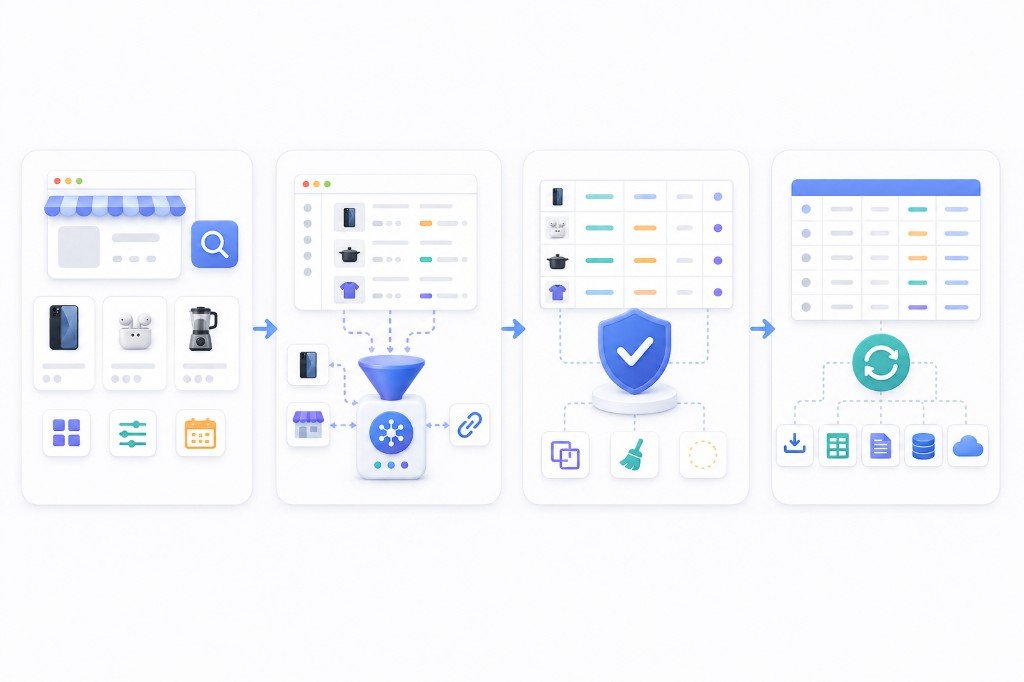
Share target product URLs, keywords, categories, supplier profiles, required fields, preferred output, and refresh frequency.
Nenodata configures extraction around the agreed input model and shares a representative sample for review.
Records are organized into consistent fields, standardized where appropriate, and reviewed so missing values stay visible.
Receive CSV, JSON, Excel, API-ready structures, or cloud- and database-ready files on a one-time or scheduled cycle.
Why Nenodata
A representative sample shows which pages and fields are available, optional, or unavailable for the agreed scope.
Nenodata maintains the configured collection and delivery process so internal engineers avoid owning fragile collectors.
Unavailable or variant-specific values remain explicit rather than being filled with invented data.
Outputs are packaged for spreadsheets, structured files, databases, warehouses, and application systems when supported.
Work stays limited to approved public sources and intended uses. Private, restricted, or personal information remains out of scope.
Delivery
CSV / Excel
CSV or Excel delivery for review, supplier comparison, ad hoc reporting, and procurement collaboration.
JSON / API-ready structures
JSON and API-ready record structures for engineering workflows and transformation pipelines.
Note: API-ready output is not automatically a hosted live API.
Warehouse, cloud, or database loads
Files prepared for loading into a database, warehouse, cloud-storage location, or reporting environment when included in scope.
Webhook or scoped endpoints
Scoped webhook, direct endpoint, or custom integration options may be discussed when supported for the engagement.
FAQ
Next Step
Share representative product URLs, keywords, categories, or supplier profiles together with required fields, expected volume, preferred format, and refresh needs so Nenodata can plan the next step.
Include business contact details when you contact Nenodata.
Project Checklist
Tell us what you need. We'll build a custom scraping solution and deliver a free proof-of-concept within 48 hours.