Geo-Targeted Web Scraping for US vs CA Price Views
Nenodata collects, structures, validates, and delivers Geo-Targeted Web Scraping Services for agreed public sources so teams can compare location-specific fields across confirmed markets.
- Markets scoped before collection
- Comparison-ready structured records
- Managed delivery into your workflows
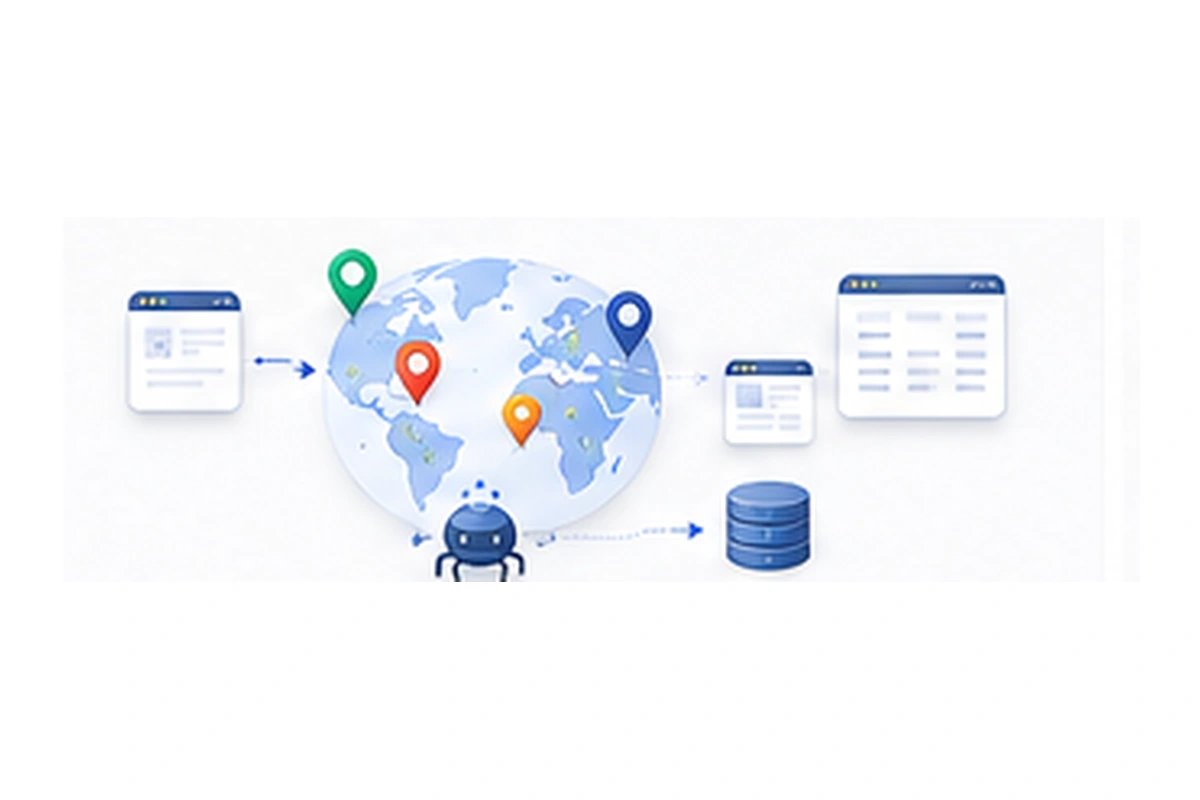
The location-data problem
The same public product or listing page can show different prices, availability, promotions, currency, or ranking signals depending on the market context presented to the source.
Teams that collect a single default view often miss regional differences and make decisions from incomplete comparisons.
A managed geo-targeted workflow defines the markets, sources, and fields first, then returns aligned records designed for side-by-side analysis rather than disconnected local page captures.
What Geo-Targeted Web Scraping Services Include
Each engagement begins with confirmed markets, approved public sources, required fields, refresh needs, validation rules, and delivery destinations.
Where source feasibility and location capability allow, Nenodata collects the agreed public content for those markets, normalizes shared schema fields, and prepares comparison-ready records.
A geo-targeted job is not a second crawler. It is the same source URL observed under two (or more) market contexts so price, currency, tax, availability, and promotion can be compared side by side.
That is the split versus a live crawler (freshness on one view) and versus enterprise web scraping (one default locale). ZIP, city, or country targeting is only included when the source actually changes the visible page by those inputs.
Geographic support, dynamic-page handling, cadence, and delivery options depend on project scope and source-specific conditions. This service is not a standalone proxy product and does not promise country-, city-, ZIP-, coordinate-, or ASN-level targeting beyond what is confirmed during scoping.
Related: enterprise web scraping services and managed crawling workflows.
Geo-targeted vs live crawls and web scraping
Use this page when the same URL must be collected in more than one market. Use a live crawler for change-oriented recrawls, or enterprise web scraping for a single default view.
| Source | Best for | Learn more |
|---|---|---|
| Geo-targeted scraping | Same URL, two markets: price, currency, availability | This service |
| Live crawler | Change-oriented recrawls of known URLs — one market | Live crawler |
| Enterprise web scraping | Selector-led extraction without multi-market views | Web scraping services |
Illustrative sample output
Illustrative example
This comparison is illustrative and is not an approved Nenodata deliverable or customer result. It does not confirm actual coverage or capabilities. Final fields and markets depend on project scope.
| Field | Market A | Market B | Note |
|---|---|---|---|
| source_url | https://www.bestbuy.com/site/anker-soundcore-life-q30-wireless-headphones/6461323.p (differs) | https://www.bestbuy.ca/en-ca/product/anker-soundcore-life-q30/15324318 (differs) | Same product, two storefronts |
| price | 79.99 (differs) | 99.99 (differs) | Differs |
| currency | USD (differs) | CAD (differs) | Differs |
| availability | in_stock (differs) | limited (differs) | Differs |
| promotion | none (differs) | 10% off (differs) | Differs |
| collected_at | 2026-08-12T13:28:05Z | 2026-08-12T13:28:05Z | Shared schema |
The example shows how one source URL can map into two market-labelled records with shared schema fields. Highlighted differences are fictional sample values for planning only.
Data fields and outputs
Market context
- • Market label
- • Requested region or locale context
- • Collection timestamp
Source identity
- • Source URL
- • Entity or listing identifier
- • Page type where identified
Observed values
- • Price
- • Currency
- • Availability
- • Promotion text
- • Ranking signal where included
Comparison metadata
- • Shared schema fields
- • Differing-field flags
- • Validation status
Delivery options
- • Delivery method confirmed during scoping based on the approved dataset and downstream requirements
Use cases
Regional competitor price monitoring
Compare price and promotion fields for the same source across confirmed markets to support pricing and commercial review.
Related: price intelligence solutions.
Market-specific availability checks
Structure availability signals by market so assortment and operations teams can review regional stock differences.
Localized promotion tracking
Capture promotion text and offer conditions that differ by market while keeping records aligned to one schema.
Cross-market catalog comparison
Deliver comparable product or listing fields so teams can review how the same source presents offers in different markets.
Currency and offer-context analysis
Include currency and related offer context where displayed so market comparisons stay interpretable downstream.
Regional ranking or placement signals
Collect ranking or placement fields where publicly shown and included in scope for market visibility review.
Who this is for
This service is for pricing, product, ecommerce, market-intelligence, and data teams that need location-specific public-web records for confirmed markets.
It fits organizations that want managed collection, normalization, and delivery rather than operating a standalone proxy or routing setup.
It is not a fit for unverified global coverage claims, private or restricted collection without authorization, or teams seeking unrestricted geographic targeting interfaces.
How it works
Four-step workflow from selected markets and public sources to validated data delivery.
Define sources and markets
Share approved public sources, confirmed markets, required fields, cadence, and the systems that will use the records.
Assess feasibility
Nenodata reviews source access and location capability for the requested markets before production configuration.
Collect, normalize and validate
Agreed fields are collected for confirmed markets, mapped into a shared schema, and checked against project validation rules where included.
Deliver and maintain
Comparison-ready records are delivered through the method confirmed during scoping, with maintenance continuing where included in support terms.
Why teams choose Nenodata
Feasibility review before geographic commitments
Requested markets and sources are assessed before production promises are made.
Managed collection instead of internal routing burden
Location-specific collection stays under a managed workflow rather than fragile in-house scripts.
Comparison-ready records across markets
Shared schema fields keep Market A and Market B outputs aligned for analysis.
Defined project scope and responsibilities
Sources, markets, fields, cadence, and delivery are confirmed during scoping so ownership stays clear.
Workflow-oriented delivery
Outputs are prepared for files, APIs, or pipelines when those destinations are included in the engagement.
Explicit exclusions and intended-use boundaries
Engagements stay within approved public or permissioned sources and do not imply unrestricted proxy access.
Delivery and integrations
Delivery methods are confirmed during scoping based on the approved dataset and downstream requirements.
Related workflows can connect geo-targeted collection with broader extraction, monitoring, API delivery, and pipeline programs when those services fit the engagement.
Related: custom data pipelines and web scraping API.
Frequently Asked Questions
Scope markets and sources with Nenodata
Share the markets, public sources, and fields you need compared. Nenodata will review feasibility and recommend the next step.
Include example URLs, market labels, required fields, preferred delivery format, and the system that will use the records.