Structured Data API Records
Return agreed fields as structured records suitable for application consumption, rather than raw HTML or unfinished page extracts.
Raw page
Structured record
Custom Web Data APIs
Get structured records from agreed sources through a managed workflow built around your schema, validation rules and downstream systems.
NenoData reviews representative sources and required fields before configuring extraction and delivery. Your team can assess the proposed record structure and exception handling before committing to an ongoing feed.
An API response is useful only when the receiving application can interpret its records.
Teams collecting information from several web sources often face inconsistent field names, missing values and changing page structures. An extraction result may technically succeed while still lacking the fields required by an analytics pipeline or application.
NenoData's Web Scraping API Services focus on approved sources, agreed field schemas, sample review and managed delivery. The service is not positioned as an unlimited endpoint for extracting from any website.
Simple endpoint
HTTP request
Page fetch
Parser
Raw / partial output
Managed data API
Approved source
Schema mapping
Extraction
Validation
Structured record
| Question | Generic extraction endpoint | NenoData's managed model |
|---|---|---|
| What is specified first? | Request and target page | Approved sources, fields and schema |
| Who defines the record? | Often the consuming team | Agreed during project scoping |
| How are missing values handled? | Depends on the API | Defined through project validation rules |
| Who manages source changes? | Depends on the provider | Responsibilities agreed within service scope |
| What is delivered? | Extraction result or raw content | Structured API-oriented or file-based records |
| Is every website supported? | Provider-dependent | No; feasibility and authorization are reviewed |
This comparison explains service models rather than claiming every competing API lacks validation or managed features.
For a broader managed extraction program, see Web Scraping Services. For product-price monitoring, see Price Intelligence.
Each engagement starts with source and schema definition: approved public pages or domains, required fields, refresh needs, validation rules, and the applications or destinations that will receive the records.
Nenodata reviews representative sources and expected outputs before production configuration. Capabilities such as JavaScript rendering, scheduled refresh, webhooks, and destination integrations depend on source-specific feasibility and the agreed scope.
API project scope
Where feasible / in scope
Depends on source-specific feasibility and agreed scope.
A useful implementation brief should specify the following requirements before production configuration begins.
| Requirement | What to agree |
|---|---|
| Sources | Approved domains, pages or datasets |
| Record identity | Stable identifiers where available |
| Schema | Field names, types and nested structure |
| Required fields | Which missing values constitute exceptions |
| Provenance | Source reference and observation timestamp |
| Response behavior | Agreed representation of incomplete records |
| Delivery mode | API response, batch, scheduled or other approved route |
| Destination | Application, database, warehouse or file interface |
| Maintenance | Source-change and schema-change responsibilities |
Authentication, error codes, rate limits and request behavior must be confirmed in an engineering-approved contract. No hypothetical endpoint should be published as operational.
Illustrative example
This response is illustrative and is not a live endpoint contract or customer result. Final fields, structure, and delivery behavior depend on project scope.
Request / source
Illustrative response
{
  "record_id":  "illustrative-record",
  "source":  {
    "name":  "approved-source",
    "url":  null
  },
  "observed_at":  null,
  "data":  {
    "item_name":  "Illustrative item",
    "price":  null,
    "currency":  null
  },
  "validation":  {
    "status":  "incomplete",
    "missing_fields":  ["price", "currency"]
  }
}
Source field → schema field
Approved source page
source.name
Observed item
data.item_name
Displayed price
data.price
Page value
Normalization
Validation
API record
The actual field dictionary and exception format will be defined for the engagement. Null values in the illustrative record demonstrate how missing fields are surfaced through the validation object rather than silently omitted.
Return agreed fields as structured records suitable for application consumption, rather than raw HTML or unfinished page extracts.
Raw page
Structured record
Map source values into the field names, types, and nesting your systems expect, based on the schema defined during scoping.
source.price
your_schema.unit_price
Apply formatting, required-field checks, and exception handling where included so incomplete or changed values are visible for review.
Support batch runs, scheduled refreshes, or on-demand requests where the engagement scope and source feasibility allow.
where scope and source feasibility allow
Deliver JSON and other agreed formats such as CSV, XML, or file export when those options are included in the project.
Surface missing, null, or changed fields according to the validation and exception rules defined for the engagement.
Deliver structured catalog, price, and availability fields from approved retail or marketplace pages into pricing and assortment workflows.
Product
Price
Availability
Pricing system
Related: price intelligence, Amazon data scraping.
Structure competitor listing, offer, and attribute fields from agreed public sources for market comparison and research pipelines.
Competitor source
Listing / offer fields
Comparison dataset
Supply schema-aligned public-web records for retrieval, enrichment, evaluation, or product features that depend on structured inputs.
Public web record
Schema-aligned data
Retrieval / evaluation
Collect listing identity, price, location, and status fields from approved property sources into aggregation or monitoring systems.
Listing
Price
Location
Status
Aggregation system
Related: Zillow scraping service.
Enrich CRM or prospecting workflows with structured company and contact fields from approved public pages when scoped for lead use.
Public company page
Structured fields
CRM
Related: lead-generation data.
Deliver article, headline, publish-time, and source fields from approved publishers for monitoring or content workflows.
Headline
Publish time
Source
Monitoring feed
Structure rate, availability, and itinerary fields from approved travel sources where collection is feasible for the engagement.
Rate
Availability
Itinerary
Structured feed
Power product features that depend on recurring structured public-web data delivered through an agreed API or file interface.
Structured web data
Product feature
This service is for product, engineering, data, analytics, pricing, and operations teams that need structured public-web data delivered into applications, databases, or workflows.
It fits organizations that want source feasibility review, schema definition, and sample evaluation before rollout, rather than an unrestricted self-serve crawler.
It is not a fit for private or restricted collection, guaranteed access to every website, or teams seeking a generic unlimited scraping endpoint without scoped sources and schemas.
Good fit
Not positioned for
01
Define
Share target public sources, required fields, refresh needs, and the systems that will consume the records.
02
Validate
Nenodata assesses source access and returns a representative sample so your team can review structure and quality before build.
Sample review checkpoint
Production configuration
Review checkpoint: confirm sample fields, validation rules, and delivery behavior before production configuration begins.
03
Configure
Approved mappings, validation rules, and delivery endpoints or file destinations are configured for the agreed workflow.
04
Monitor & deliver
Where included in scope, Nenodata monitors collection health, maintains extraction as sources change, and continues agreed delivery.
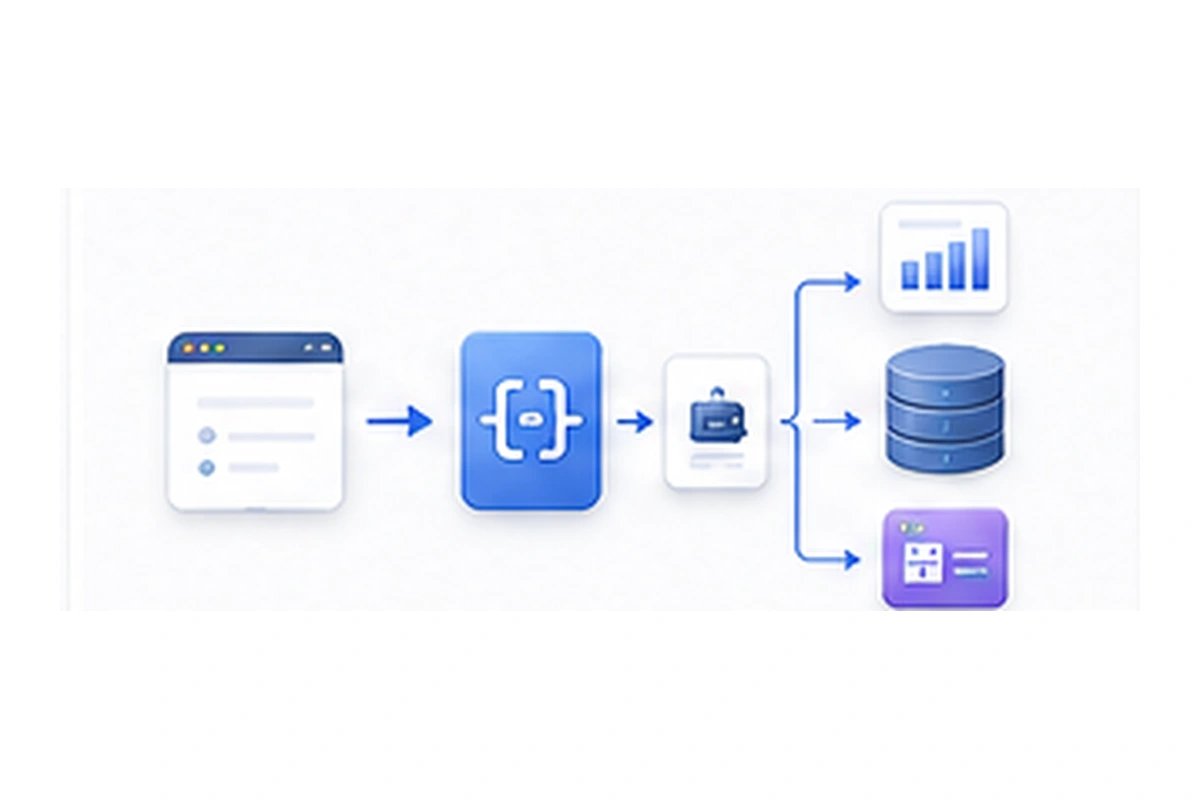
Source
Request / fetch
Render — where required & feasible
Extract
Map to schema
Validate
Respond / deliver
Representative sources are reviewed before production promises are made, so scope stays tied to what can be collected.
Field definitions come first. Records are mapped to the structure your applications and warehouses expect.
Teams evaluate illustrative or scoped sample output before committing to a recurring delivery workflow.
Monitoring, retries, and source maintenance continue where included in the agreed support terms—not as an open-ended guarantee.
Delivery is planned for the APIs, files, webhooks, or destinations your systems already use when those options are supported.
Missing, changed, or failed fields are handled according to project rules so downstream systems can respond predictably.
Delivery options are defined during scoping around the systems that will consume the records.
Response formats may include JSON and, where included, CSV, XML, Excel, or file export. Destinations can include API endpoints, webhooks, databases, data warehouses, cloud storage, spreadsheets, or dashboards when those integrations are approved and feasible.
Batch, scheduled, and on-demand patterns depend on source constraints and the final engagement scope. Real-time behavior is not assumed for every source.
| Delivery pattern | Suitable requirement | Qualification |
|---|---|---|
| Batch | Periodic dataset processing | Source and volume feasibility |
| Scheduled feed | Repeated monitoring or enrichment | Agreed collection and delivery cadence |
| On-demand | Application-triggered requests | Source behavior and project scope |
| Webhook | Event-oriented downstream notification | Only where supported and configured |
| File export | Analyst or warehouse ingestion | Confirmed format and destination |
Review pricing or discuss your data requirements.
Structured record
Delivery mode
where scoped
Format
Destination
where approved and feasible
A record can be incomplete for several reasons: the source did not display a field, its structure changed, an observation failed or a validation rule rejected the value.
These states should be handled according to the agreed contract. Null values, changed fields and collection exceptions must not silently become invented values.
Sample review gives the receiving team an opportunity to confirm field names, required attributes and exception handling before production configuration.
Valid record
All required fields present and pass validation rules
Missing field
Source did not display the field; represented as null per agreed contract
Changed structure
Source field name or location changed; flagged for project review
Failed observation
Collection or parse error; exception surfaced, not silently dropped
A record observed during a scheduled collection job may reach the receiving system later. The observation timestamp should therefore remain distinct from delivery time wherever the schema requires that distinction.
On-demand delivery also does not automatically mean every underlying source value was collected at the instant of the request. Collection timing and acceptable freshness must be agreed for the actual source and workflow.
An API delivery interface does not confer access rights to a third-party source. NenoData reviews approved public, permissioned or otherwise authorized sources, required fields and collection feasibility before configuration. Private areas, unsupported integrations and unrestricted extraction claims are outside this page's approved positioning.
For restaurant menu data, see Restaurant Menu Data Scraping. For general service overview, see Services.
No. The service is managed around approved sources and an agreed schema.
Yes, JSON is among the documented delivery formats. The actual response structure is defined during scoping.
Both patterns may be available where supported by the source and engagement scope.
Required-field checks, null representation and exceptions are agreed during sample review.
Destination and integration requirements are assessed during scoping. No named integration is guaranteed without confirmation.
Approved source URLs, sample records, required fields, refresh needs and the system that will consume the data.
Share your approved sources, required schema, sample URLs, refresh expectations and receiving system. NenoData can review the feasible managed-delivery approach.
Include approved source URLs, required fields, preferred response format and the application or warehouse that will consume the records.
API scoping checklist
Source URLs
Field schema
Sample response
Validation rules
Production delivery
Share your approved sources, required schema and receiving system. NenoData can review the feasible managed-delivery approach.
Public source
Extraction
API response
Your system