News & Event Data Scraping for Headlines and Listings
Nenodata helps teams turn public or permissioned news, media, event, venue, and ticketing sources into structured feeds for monitoring, analytics, research, and product workflows.
For live ticket inventory, see event ticketing data scraping. For Google News as a single source, see the Google News scraper. For streaming catalog signals, see media and OTT data scraping.
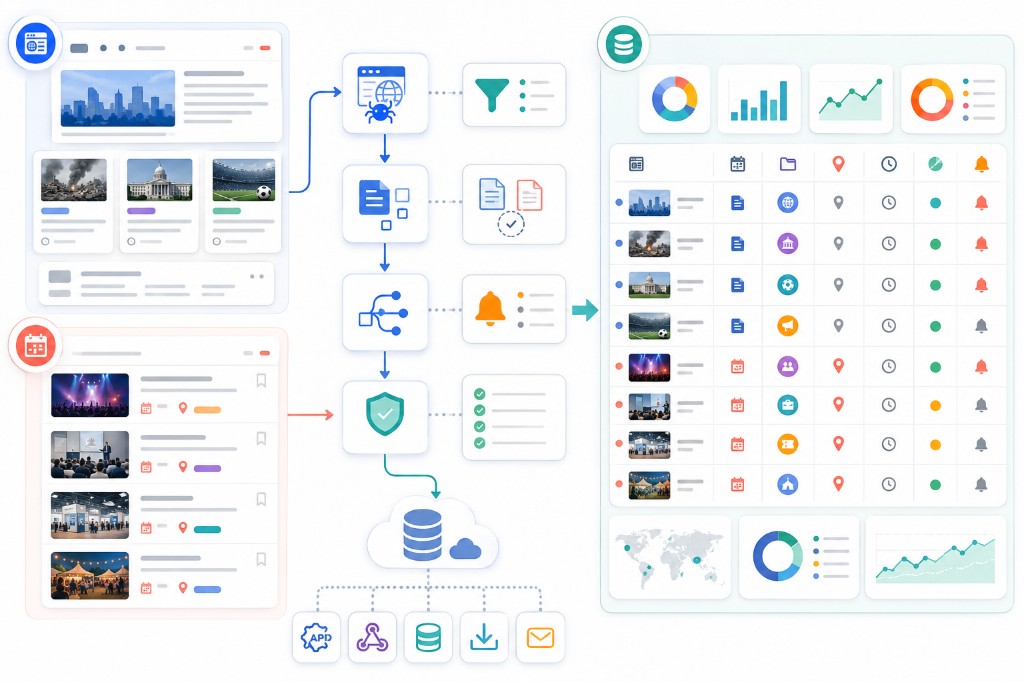
When news and event data changes faster than your team can track
News cycles, event listings, venue updates, and ticketing signals can change rapidly across sources, making manual tracking unreliable for operations and analysis.
Teams managing multiple sources often struggle with duplicate records, missing context, and inconsistent field structures that reduce downstream usability.
Without a managed extraction and validation workflow, organizations spend time fixing collection issues instead of acting on timely market, media, and event signals.
What Nenodata provides
Nenodata provides scoped extraction workflows for approved news, media, event, venue, and ticketing sources with structured output aligned to business requirements.
Projects start by confirming source feasibility, required fields, refresh expectations, and delivery destination so collection and normalization are mapped before scale.
A news record is a headline, publisher, and published time. An event record is a listing title, organizer, venue, date, and optional ticket price. Mixing those jobs in one feed is in scope only when the schema marks source_type clearly.
That is the split versus PR Newswire (official wire only) and versus event-ticketing scraping (inventory and seat/price signals). Google News-style headline monitoring is a third sibling when the job is query-based news, not venue listings.
Output coverage depends on source behavior and scoped implementation and should be validated through an illustrative sample before production commitments.
This hub service covers recurring news and event monitoring feeds—not live event ticketing inventory alone or a single named news portal scraper. Those workflows are scoped separately when a narrower source set is in scope.
Related: event ticketing data scraping, Google News scraper, media and OTT data scraping, and market intelligence.
News-event hub vs wire and ticketing sources
Use this hub for mixed news and event listing feeds. Use PR Newswire for official wire releases, or event-ticketing scraping for inventory-only programmes.
| Source | Best for | Learn more |
|---|---|---|
| News & event hub | Headline or event listing, publisher/organizer, date, URL | This service |
| PR Newswire | Official wire headline, issuer, and published time | PR Newswire scraper |
| Event ticketing | Ticket inventory, venue, and price — not news headlines | Event ticketing scraping |
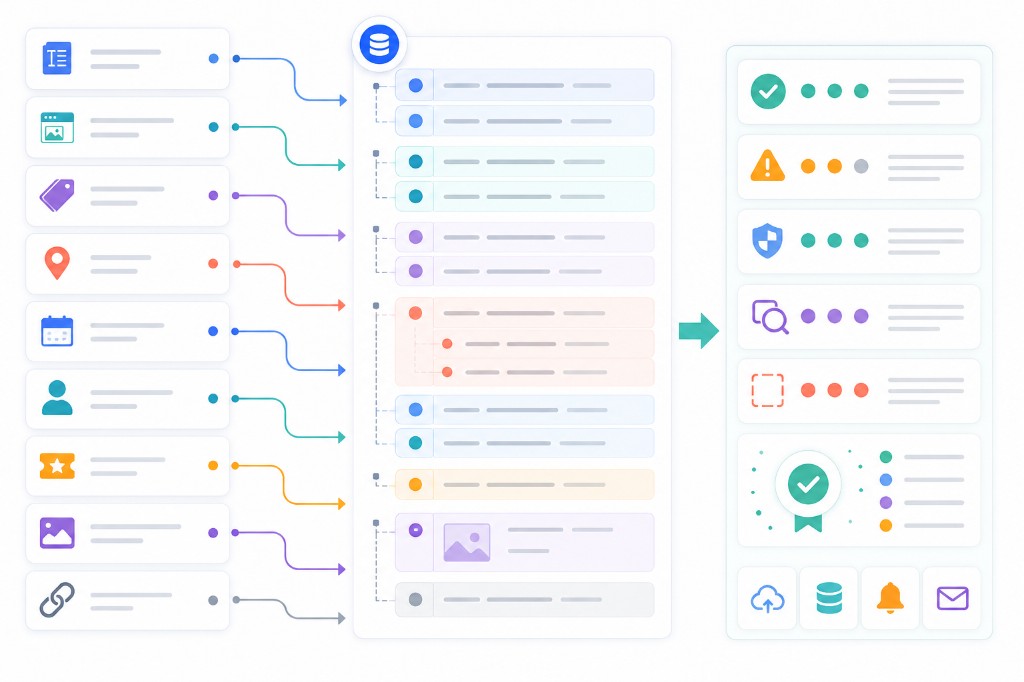
News & Event Data Scraping Services: illustrative sample output
Illustrative example
| Type | Title | Location | Price | Availability | Collected At |
|---|---|---|---|---|---|
| event | Chicago Open Air 2026 | Chicago, IL | 89.50 | available | 2026-08-12T15:10:22Z |
{
  "record_id": "chi-open-2026",
  "source_type": "event",
  "title": "Chicago Open Air 2026",
  "publisher_or_organizer": "Live Nation",
  "location": "Chicago, IL",
  "event_date": "2026-09-12",
  "ticket_price": "89.50",
  "availability_status": "available",
  "source_url": "https://www.livenation.com/event/chicago-open-air-2026",
  "collected_at": "2026-08-12T15:10:22Z"
}
Illustrative CSV-style field list
record_id,
source_type,
title,
publisher_or_organizer,
location,
event_date,
ticket_price,
availability_status,
source_url,
collected_at
Data fields and outputs
Article and source metadata
- • Headline/title
- • Publisher/source
- • Article URL
- • Published date
- • Category/topic
Event and venue metadata
- • Event name
- • Venue name
- • City/region
- • Event date/time
- • Organizer
Ticketing and availability signals
- • Listed ticket price
- • Price tier where visible
- • Availability status
- • Status changes
- • Source timestamp
Collection and delivery metadata
- • Record ID
- • Collection timestamp
- • Source type
- • Validation status
- • Batch ID
Delivery formats
- • CSV
- • Excel
- • JSON
- • API-ready output where scoped
- • Scheduled feeds where scoped
Use cases
Media monitoring
Track structured news coverage signals across scoped publishers and topics.
News aggregation
Build normalized article feeds for internal reporting and research workflows.
Event discovery
Collect event and venue records from approved sources for planning and analysis.
Ticket price and availability monitoring
Monitor ticketing changes and availability status across scoped listings.
Market intelligence
Combine news and event signals with broader market monitoring datasets.
PR and communications monitoring
Track mention context and publication patterns for communications teams.
Local events database
Create recurring structured local event feeds for directories and apps.
Research datasets
Deliver validated records for analyst, BI, and model-facing workflows.
Related workflows: market intelligence data, event ticketing data scraping, Google News scraper, media and OTT data scraping, review and social data extraction, and web scraping news guide.
Who this is for
This service is designed for market intelligence teams, media analysts, event-tech teams, ticketing operations, product teams, and data teams that require recurring structured external data.
It also supports organizations replacing ad hoc scripts with managed extraction, cleanup, and feed delivery workflows.
How it works
Share requirements
Provide sources, fields, refresh expectations, and destination needs.
Configure collection
Nenodata scopes and configures source-specific collection workflows.
Clean and validate
Records are deduplicated, structured, and validated for downstream use.
Deliver and maintain
Feeds are delivered on agreed cadence with managed workflow updates.
Why choose Nenodata
Source-specific scoping
Nenodata validates source and field feasibility before delivery commitments.
Structured output, not raw dumps
Data is normalized for monitoring, analytics, and operational use.
Flexible schema design
Field sets can align to internal naming and destination requirements.
Recurring delivery
One-time and scheduled feed workflows can be configured based on scope.
Service-led maintenance
Nenodata maintains workflows as source structures change over time.
Responsible collection boundaries
Projects are framed around approved public or permissioned sources.
Learn more about enterprise web scraping, custom data pipelines, and brand monitoring data intelligence.
Delivery and integration options
CSV and Excel
Tabular delivery for analyst and reporting workflows.
JSON
Structured JSON feeds for engineering and integration use.
API-ready outputs
Programmatic payloads where API-oriented delivery is scoped.
Scheduled feeds
Recurring update delivery aligned to approved refresh cadence.
Database and warehouse-ready files
Structured output paths for storage and analytics destinations where scoped.
FAQ
Need recurring news and event data without maintaining collection and cleanup workflows internally?
Share your target news, media, event, venue, or ticketing sources with Nenodata. Include the fields you need, how often the feed should refresh, and where the data should be delivered.
Include target sources, required fields, refresh frequency, and preferred delivery destination.