Brand Monitoring for Mentions, Ratings and Competitor Visibility
Nenodata builds and maintains custom public-data pipelines that turn brand mentions, reviews, marketplace signals, and competitor visibility into clean datasets for alerts and reporting—not product price scraping or share-of-shelf scorecards.
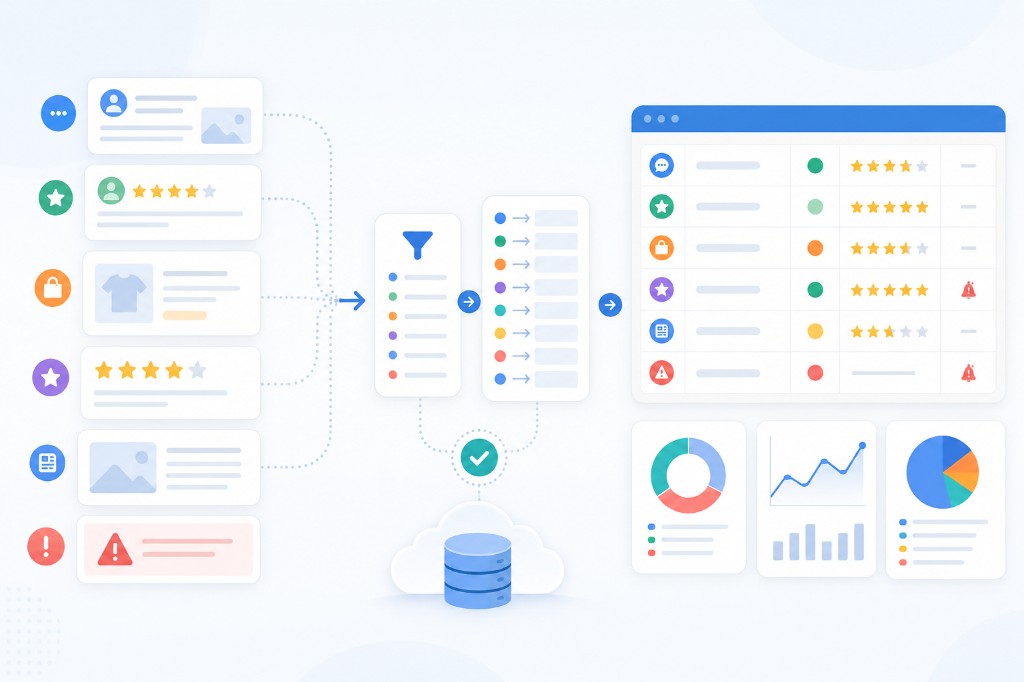
The problem: brand signals are scattered across too many sources
Brand signals are scattered across reviews, marketplaces, social pages, news sources, and competitor listings, making manual monitoring inconsistent.
Teams that rely on ad hoc scripts often miss updates, lose historical context, and struggle to normalize fields across sources.
Without managed extraction and validation, brand monitoring workflows become harder to scale for reporting, alerts, and decision-making.
What Nenodata provides
Nenodata provides Brand Monitoring & Brand Data Intelligence Services for approved public or permissioned sources with source-level scoping before delivery.
Workflows can include collection, cleaning, normalization, and structured output mapped to reputation, marketplace, and competitive intelligence requirements.
Coverage, cadence, and delivery destinations are confirmed during scoped implementation and sample review.
Related services: Review & Social Data Extraction, Price Intelligence, E-commerce Data Solutions, API delivery, and the educational enterprise brand monitoring guide.
Brand monitoring vs digital shelf and seller intelligence
Use this page for brand mentions, review ratings, and competitor visibility signals across scoped public sources. Use digital shelf analytics for product listing share-of-shelf metrics, or marketplace seller intelligence for offer price and availability.
| Source | Best for | Learn more |
|---|---|---|
| Brand monitoring | Mentions, ratings, sentiment, competitor visibility | This service |
| Digital shelf analytics | Product listing share-of-shelf and content scores | Digital shelf analytics |
| Marketplace seller intel | Offer price and availability across sellers | Marketplace seller intelligence |
What Brand Monitoring Includes
Illustrative example
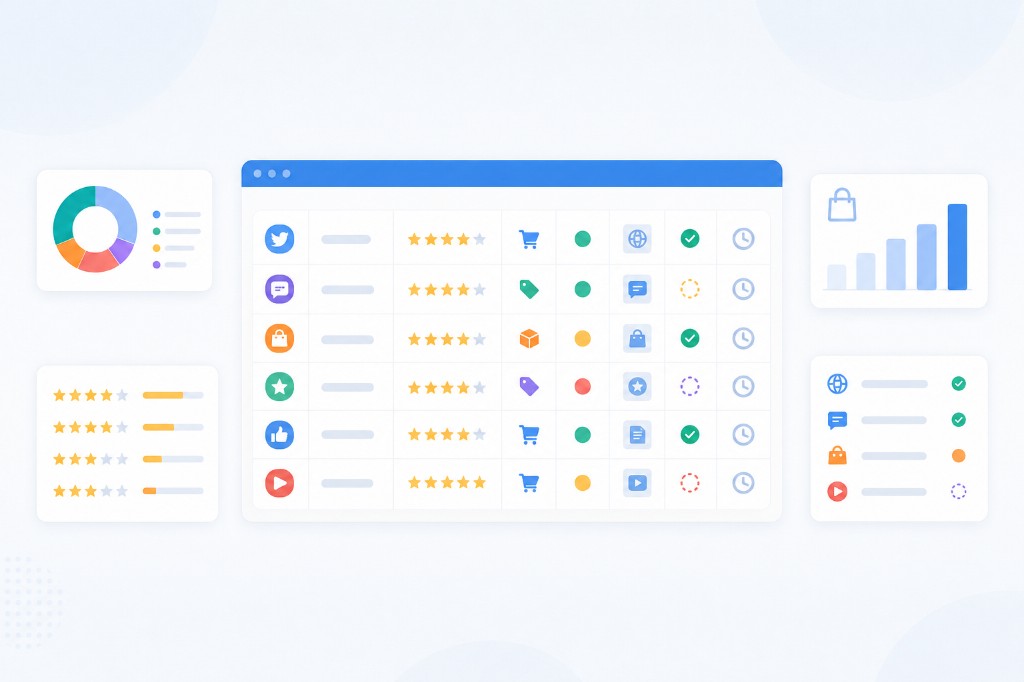
| Brand | Source Type | Rating | Marketplace Signal | Competitor Visibility | Captured At |
|---|---|---|---|---|---|
| Nike | marketplace_review | 4.2 | Listed on Amazon US | Adidas Ultraboost also in top 10 | 2026-08-17T14:00:00Z |
{
  "record_id": "bm-nike-review-20260817",
  "brand_name": "Nike",
  "source_type": "marketplace_review",
  "mention_text": "Comfortable fit but sizing runs small on the Pegasus 41.",
  "rating_value": "4.2",
  "review_count": "18420",
  "marketplace_signal": "Listed on Amazon US",
  "competitor_visibility": "Adidas Ultraboost also in top 10",
  "sentiment_label": "mixed",
  "source_name": "Amazon product reviews",
  "source_url": "https://www.amazon.com/dp/B0DXXXXXXX",
  "captured_at": "2026-08-17T14:00:00Z"
}
Illustrative CSV-style field list
record_id,
brand_name,
source_type,
mention_text,
rating_value,
review_count,
marketplace_signal,
competitor_visibility,
sentiment_label,
source_name,
source_url,
captured_at
Data fields and outputs
Mentions and source metadata
- • Brand name
- • Mention text
- • Source name
- • Source URL
- • Published/captured timestamp
Reviews and ratings
- • Rating value
- • Review count
- • Review text snippets where visible
- • Reviewer context where visible
Marketplace and ecommerce signals
- • Listing presence
- • Seller/channel context
- • Product visibility signals
- • Marketplace metadata
Competitor visibility
- • Competitor brand references
- • Share-of-shelf context where visible
- • Category/search visibility signals
Sentiment and alert labels
- • Sentiment label where scoped
- • Alert tags where scoped
- • Topic/category labels
Delivery formats
- • CSV
- • Excel
- • JSON
- • API-ready output where scoped
- • Scheduled feeds where scoped
Use cases
Brand reputation monitoring
Track public brand mentions and reputation signals across scoped sources over time.
Product launch monitoring
Monitor launch-related mentions, reviews, and marketplace visibility during rollout windows.
Review intelligence
Collect structured review and rating signals for quality and performance monitoring.
Marketplace brand visibility
Track how brands appear across marketplace listings and seller contexts.
Competitor brand benchmarking
Compare competitor visibility and public brand signals across approved sources.
Seller and channel monitoring
Monitor seller and channel context that affects brand presence in marketplace environments.
Campaign monitoring
Track campaign-related public signals for communications and marketing intelligence workflows.
Who this is for
This service is for brand teams, communications teams, ecommerce teams, market intelligence teams, product teams, data teams, and analytics teams that need recurring structured brand monitoring datasets.
It supports organizations replacing fragmented manual checks with managed extraction, validation, and delivery workflows.
How it works
Scope the sources and signals
Define target sources, brands, fields, cadence, and delivery destination.
Extract and structure the data
Nenodata configures scoped extraction across approved public or permissioned sources.
Clean and validate outputs
Records are normalized, deduplicated, and validated against the agreed schema.
Deliver where your team works
Structured feeds are delivered to agreed formats and destination workflows.
Why choose Nenodata
Custom source coverage
Scope aligns to the brand, marketplace, and review sources your team actually monitors.
Structured delivery for BI teams
Outputs are prepared for reporting, dashboards, and operational analysis workflows.
Review, marketplace, and brand signals together
Combine fragmented public signals into one structured dataset instead of separate manual checks.
Managed pipeline maintenance
Nenodata maintains extraction workflows as source structures change over time.
Flexible output options
Delivery can align to export, API, dashboard, or scheduled pipeline workflows where scoped.
Validation before delivery
Records are cleaned and validated against agreed field definitions before recurring delivery.
Integrations and delivery
CSV and Excel exports
Tabular delivery for analyst and reporting workflows.
JSON and API-ready payloads
Structured delivery for engineering and integration workflows.
Scheduled pipeline delivery
Recurring feeds aligned to scoped refresh requirements.
Dashboard-ready outputs
Structured outputs prepared for dashboard workflows where scoped.
Contact Nenodata to confirm delivery formats and integration options for your workflow.
FAQ
Ready to turn public brand signals into structured data your team can use?
Share your target sources, brands, required fields, delivery format, refresh frequency, and intended use case with Nenodata.
After submission, Nenodata can review feasibility and confirm the best sample or demo path.