- Field
- seed_domain
- Illustrative value
- example.com
- Purpose
- Record the approved starting domain
Enterprise Web Data Collection
Enterprise Web Crawling for Discovery and Revisit
Nenodata designs Enterprise Web Crawling Services around approved domains, crawl boundaries, page-relevance rules, refresh needs, and structured delivery so teams discover and revisit the right pages before extraction begins.
Crawl scope built around your target domainsRelevant pages filtered before deliveryRecurring collection with structured outputs
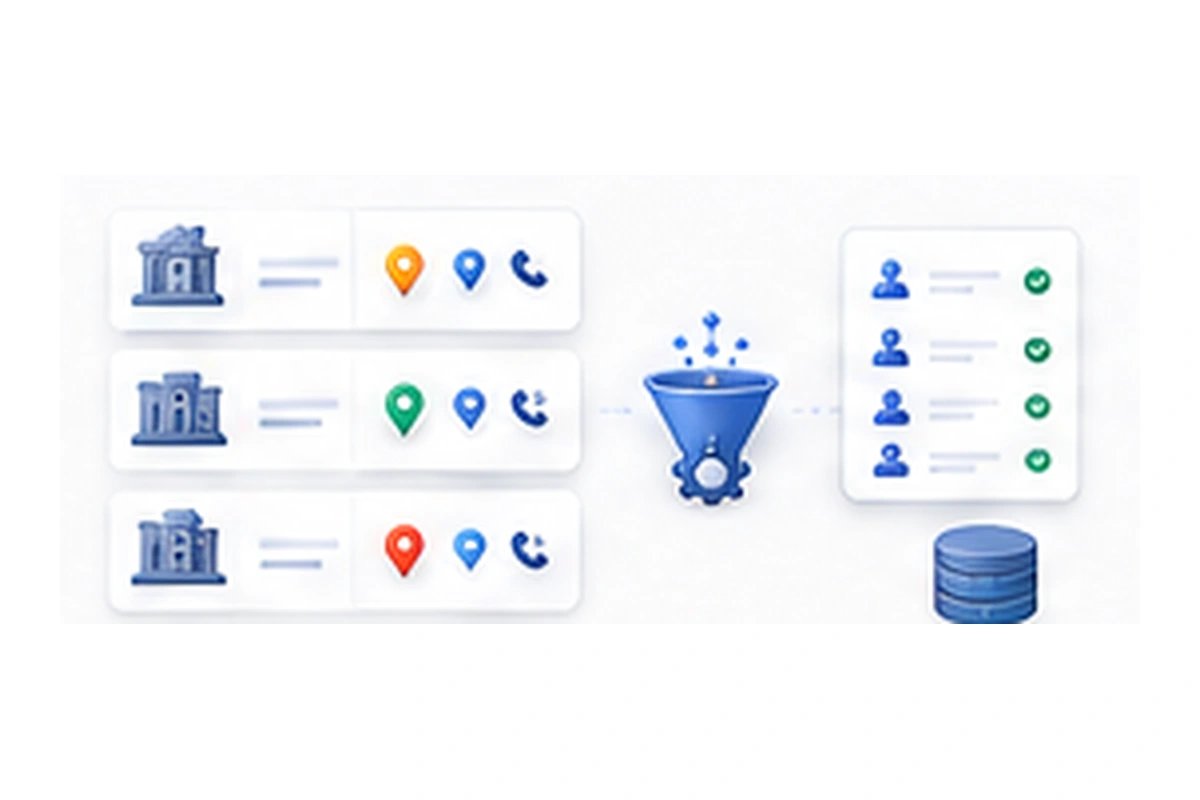
Discovering the right pages is harder than downloading more pages
Downloading more pages does not create usable coverage when crawls ignore boundaries, follow irrelevant paths, or repeat the same content under different URLs.
Governed discovery defines seed domains, path rules, filters, deduplication, and failure handling so the crawl stays aligned with the pages that matter.
Without those controls, teams receive raw URL noise instead of a reviewable set of accepted pages that can support structured extraction and delivery.
Enterprise crawl vs live crawler and the explainer blog
Use this page for governed site-wide discovery, path filters, and revisit. Use live crawler for change-oriented feeds on selected pages. Use the blog for definitions only.
| Page | Best for | Learn more |
|---|---|---|
| Enterprise web crawling | Domain discovery, path filters, revisit, and URL acceptance | This service |
| Live crawler | Scoped change checks and structured delivery on selected pages | Live crawler services |
| What is a live crawler (blog) | Education and definitions — not managed crawling | Live crawler guide |
What Enterprise Web Crawling Services Include
Collection begins with scope definition: approved domains, crawl boundaries, page-type rules, inclusion and exclusion logic, revisit needs, and delivery requirements.
Each source is assessed individually. Crawler functions such as sitemap support, classification, redirect handling, and revisit scheduling depend on approved project scope and source-specific feasibility.
Nenodata does not promise to crawl everything. The engagement focuses on discovering, filtering, classifying, and revisiting relevant pages within the agreed boundaries.
Related: enterprise web scraping, live crawler services, what is a live crawler, best website crawlers for LLMs, and data crawling guide.
Illustrative crawl report
Illustrative example
- Field
- discovered_url
- Illustrative value
- https://example.com/category/item-1048
- Purpose
- Capture a discovered page URL
- Field
- page_type
- Illustrative value
- product
- Purpose
- Classify the observed page type
- Field
- crawl_status
- Illustrative value
- accepted
- Purpose
- Show whether the URL passed filters
- Field
- exclusion_reason
- Illustrative value
- null
- Purpose
- Explain why a URL was excluded when applicable
- Field
- duplicate_of
- Illustrative value
- null
- Purpose
- Link repeated content to a canonical URL
- Field
- redirect_chain
- Illustrative value
- none
- Purpose
- Record redirect handling where observed
- Field
- http_status
- Illustrative value
- 200
- Purpose
- Capture the observed response status
- Field
- failure_reason
- Illustrative value
- null
- Purpose
- Document failed fetches for review
- Field
- first_seen
- Illustrative value
- YYYY-MM-DD
- Purpose
- Support revisit and change review
- Field
- last_crawled
- Illustrative value
- YYYY-MM-DD
- Purpose
- Track the latest crawl observation
- Field
- depth
- Illustrative value
- 2
- Purpose
- Show crawl depth from the seed path
| Field | Illustrative value | Purpose |
|---|---|---|
| seed_domain | example.com | Record the approved starting domain |
| discovered_url | https://example.com/category/item-1048 | Capture a discovered page URL |
| page_type | product | Classify the observed page type |
| crawl_status | accepted | Show whether the URL passed filters |
| exclusion_reason | null | Explain why a URL was excluded when applicable |
| duplicate_of | null | Link repeated content to a canonical URL |
| redirect_chain | none | Record redirect handling where observed |
| http_status | 200 | Capture the observed response status |
| failure_reason | null | Document failed fetches for review |
| first_seen | YYYY-MM-DD | Support revisit and change review |
| last_crawled | YYYY-MM-DD | Track the latest crawl observation |
| depth | 2 | Show crawl depth from the seed path |
This crawl report is illustrative and is not an approved Nenodata output or customer result. Final fields depend on project scope.
Crawling and scraping solve different parts of the workflow
Crawling and scraping solve different parts of the workflow. Crawling discovers and filters relevant pages. Scraping extracts selected fields from accepted pages.
Crawl
Discover and filter relevant pages within approved domains and path boundaries.
Extract
Convert accepted pages into structured fields through a separate scraping workflow.
Crawler discovering relevant web pages before selected data is extracted into structured records.
See enterprise web scraping and the data crawling guide.
Crawl capabilities and outputs
Discovery and coverage
Discover pages from approved seeds, sitemaps where supported, and link traversal within defined domain and path boundaries.
Crawl controls
Apply inclusion, exclusion, depth, parameter, redirect, and crawl-trap controls according to the agreed scope.
Dynamic website collection
Assess JavaScript-rendered pages during feasibility review. Support depends on the source and approved collection method.
Distributed collection
Scale collection across the approved domain set where distributed crawling is required and feasible for the engagement.
Data processing
Filter, classify, deduplicate, and prepare accepted pages for structured delivery or downstream extraction.
Delivery
Deliver crawl outcomes as structured files, APIs, webhooks, databases, warehouses, or custom pipelines when supported.
Enterprise crawling use cases
Marketplace and catalog discovery
Discover category and product pages across approved marketplace domains so catalog coverage can be reviewed before field extraction.
News and media monitoring
Find newly published or updated public articles within approved media sites for monitoring and research workflows.
Job-market intelligence
Discover job-listing pages across approved career sites while reviewing intended use and personal-data considerations before extraction.
Real-estate listing coverage
Identify listing pages within approved property sources so coverage, freshness, and identifiers can be reviewed over time.
Industry and supplier discovery
Traverse approved industry or supplier sites to surface relevant company, catalog, or resource pages for research.
Search and knowledge indexing
Build an approved-domain page inventory for internal search or knowledge systems without claiming open-web indexing.
Multi-domain market research
Coordinate discovery across multiple approved domains when research requires consistent coverage boundaries and reporting.
Website change monitoring
Revisit accepted pages on an agreed schedule to support change review. Exact change detection is not guaranteed for every source.
Who this service is for
This service fits data, engineering, AI and search, product, market-research, and competitive-intelligence teams that need governed page discovery across approved websites or domain sets.
It is not a fit for private or restricted collection, guaranteed indexing of the open web, guaranteed access to every source, or generic self-service crawling tools.
Explore industry data solutions, enterprise web scraping, and dynamic website scraping.
How an enterprise crawling engagement works
Five-stage enterprise crawling workflow from scope definition to structured delivery and maintenance.
- 1
Define Scope
Agree domains, boundaries, page types, filters, revisit needs, and delivery requirements.
- 2
Assess Feasibility
Review source accessibility, technical constraints, and responsible-use considerations before build.
- 3
Discover and Crawl
Run discovery within the approved boundaries and collect accepted page observations.
- 4
Filter and Structure
Classify, deduplicate, and structure crawl outcomes for review or downstream extraction.
- 5
Deliver and Maintain
Deliver structured outputs and continue monitoring or maintenance where included in the agreed support terms.
Why choose Nenodata
Scope before scale
Crawl boundaries and relevance rules are defined first so collection does not become an open-ended download.
One connected data workflow
Discovery can connect to extraction and delivery so customers receive usable structured outputs rather than raw URL lists alone.
Relevance aligned with business requirements
Filters, classification, and deduplication keep irrelevant paths and repeated content out of the accepted set where supported.
Structured output
Teams receive crawl reports and structured records designed for review, monitoring, or downstream field extraction.
Managed operational support
Monitoring, retries, escalation, and maintenance follow the support terms agreed for the engagement.
Delivery designed for enterprise systems
Outputs can enter files, APIs, webhooks, databases, warehouses, or custom pipelines when those destinations are approved.
Delivery, schedules, and integrations
Filtered crawl results delivered through files, APIs, webhooks, databases, and data warehouses.
CSVJSONXMLExcelFile export
APIWebhookDatabaseData warehouseCRM or ERP where approvedCustom delivery pipeline
Formats, destinations, and schedules depend on the final engagement scope. Real-time crawling or delivery is not assumed for every source.
Review pricing options or discuss your crawl requirements.
Define your crawl scope with Nenodata
Share the domains, page types, filters, revisit needs, and delivery destination you want so Nenodata can assess a governed crawling workflow.
Include seed URLs or domains, path boundaries, examples of relevant page types, approximate scale, cadence, and preferred output format.