Job Data Scraping Services for Hiring Intelligence
Nenodata builds multi-source Job Data Scraping Services that collect, structure, validate, and deliver job posting data from approved boards and career sites. Use recurring feeds to track hiring activity, salary signals, skills demand, locations, and posting changes without maintaining brittle internal scrapers.
For LinkedIn-specific listing workflows, see the LinkedIn Jobs scraper. For contact enrichment, see lead generation.
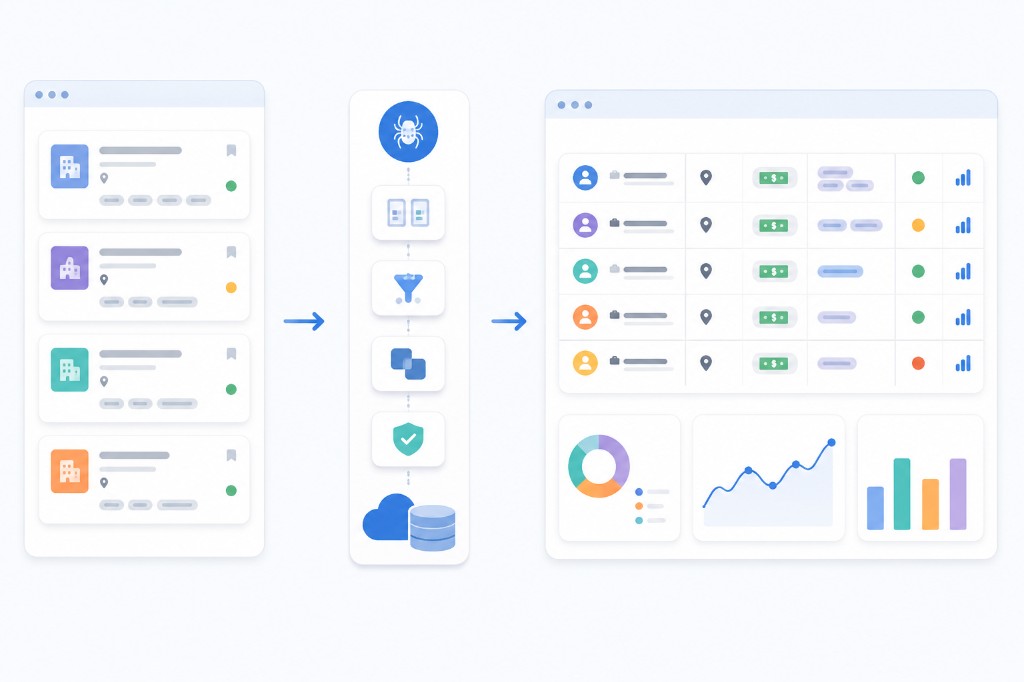
Why job posting data is hard to maintain internally
Job pages change continuously across boards and career sites, while posting structures vary by source, category, and region.
Internal scripts can break when page templates, pagination, anti-bot protections, or field labels change, creating missing and inconsistent records.
Without managed extraction and validation, teams spend time repairing data pipelines instead of using hiring intelligence for decisions.
What Nenodata provides
Nenodata provides managed Job Data Scraping Services for multi-board and career-site programs—not a single-platform scraper. Projects are scoped around approved public or permissioned sources before delivery.
Workflows can include collection, cleaning, normalization, deduplication, and structured output mapped to your analytics or product requirements—salary signals, skills demand, location coverage, and posting lifecycle fields where publicly visible.
Related services: LinkedIn Jobs scraper, enterprise web scraping, custom data pipelines, lead generation data, and market intelligence data.
Job Data Scraping Services sample output
Illustrative example
| Job Title | Company | Location | Salary | Skills | Source |
|---|---|---|---|---|---|
| Senior Data Analyst | Example Company | New York, NY | $120000-$150000 | SQL, Python, BI | Example job board |
{
  "job_id": "example-id",
  "job_title": "Senior Data Analyst",
  "company_name": "Example Company",
  "location": "New York, NY",
  "salary_range": "$120000-$150000",
  "employment_type": "Full-time",
  "skills": ["SQL", "Python", "BI"],
  "posted_at": "YYYY-MM-DD",
  "source_name": "Example job board",
  "source_url": "https://example.com/job/123",
  "collected_at": "YYYY-MM-DDTHH:mm:ssZ"
}
Illustrative CSV-style field list
job_id,
job_title,
company_name,
location,
salary_range,
employment_type,
skills,
posted_at,
source_name,
source_url,
collected_at
Data fields and outputs
Job identity and role metadata
- • Job title
- • Job URL
- • Job ID where available
- • Employment type
- • Department/function
Company and hiring entity metadata
- • Company name
- • Company profile URL where visible
- • Company type/industry where visible
Location and geography signals
- • City
- • State/region
- • Country
- • Remote/hybrid/onsite where visible
Compensation and benefits signals
- • Salary range where visible
- • Currency
- • Compensation text
- • Benefits text where visible
Skills and requirements signals
- • Required skills
- • Experience level
- • Education requirements
- • Tool/technology keywords
Posting lifecycle and source metadata
- • Posted date
- • Updated date where visible
- • Source board/site
- • Collection timestamp
Delivery formats
- • CSV
- • Excel
- • JSON
- • API-ready files
- • Database/warehouse-ready files
- • Webhook/scheduled feeds
Use cases
Hiring trend monitoring
Track role demand and hiring shifts by company, category, location, and posting velocity.
Compensation benchmarking
Collect salary signals where visible to support market benchmarking and compensation analysis.
Skills demand tracking
Measure demand patterns for technologies, certifications, and role-specific skill clusters.
Talent market intelligence
Build recurring datasets for competitive hiring intelligence and labor market analysis.
Lead generation and outreach prioritization
Use hiring activity and role expansion signals to support sales and recruiting workflows.
Job board and listing analytics
Monitor posting freshness, category coverage, and source-level changes over time.
Who this is for
This service is for recruiting teams, talent intelligence teams, workforce analytics teams, sales ops teams, and market research teams that need recurring structured job-posting datasets.
It also supports organizations replacing fragile in-house crawlers with managed collection and validated outputs.
How it works
Define scope
Share target sources, geography, role categories, fields, and delivery needs.
Collect
Nenodata configures extraction for approved public or permissioned sources.
Transform
Records are cleaned, normalized, deduplicated, and validated against the agreed schema.
Deliver
Structured job data is delivered in agreed formats and maintained on schedule.
Why choose Nenodata
Feasibility-first scoping
Source and field feasibility are reviewed before implementation commitments.
Custom schema support
Output structure is mapped to your downstream hiring intelligence workflows.
Managed execution
Nenodata handles extraction, maintenance, and pipeline reliability over time.
Responsible source boundaries
Collection is scoped around approved public or permissioned source access.
Workflow-ready delivery
Outputs are delivered for BI, product, analytics, and integration use cases.
Delivery and integrations
Job data delivery workflow from approved sources through Nenodata processing into CSV, JSON, API-ready files, databases, warehouses, and webhooks.
CSV and Excel
Tabular delivery for analyst and reporting workflows.
JSON and API-ready payloads
Structured delivery for engineering and product integration workflows.
Database and warehouse-ready files
Batch files prepared for storage and analytics environments.
Webhook and scheduled feeds
Recurring delivery aligned to scoped refresh requirements.
For implementation details, review how Nenodata works or contact Nenodata.
FAQ
Need recurring job data without maintaining brittle internal scrapers?
Share your target sources, fields, geography, delivery format, and refresh expectations with Nenodata to scope a reliable job data workflow.
Include target job sources, sample URLs, role categories, fields, delivery destination, and update frequency requirements.