Supplier and Vendor Data: One Schema From N Sources
Nenodata’s Supplier and Vendor Data Scraping Services collect and structure publicly available supplier and vendor information from agreed websites, directories, and marketplaces so procurement teams can evaluate sources with consistent, traceable records.
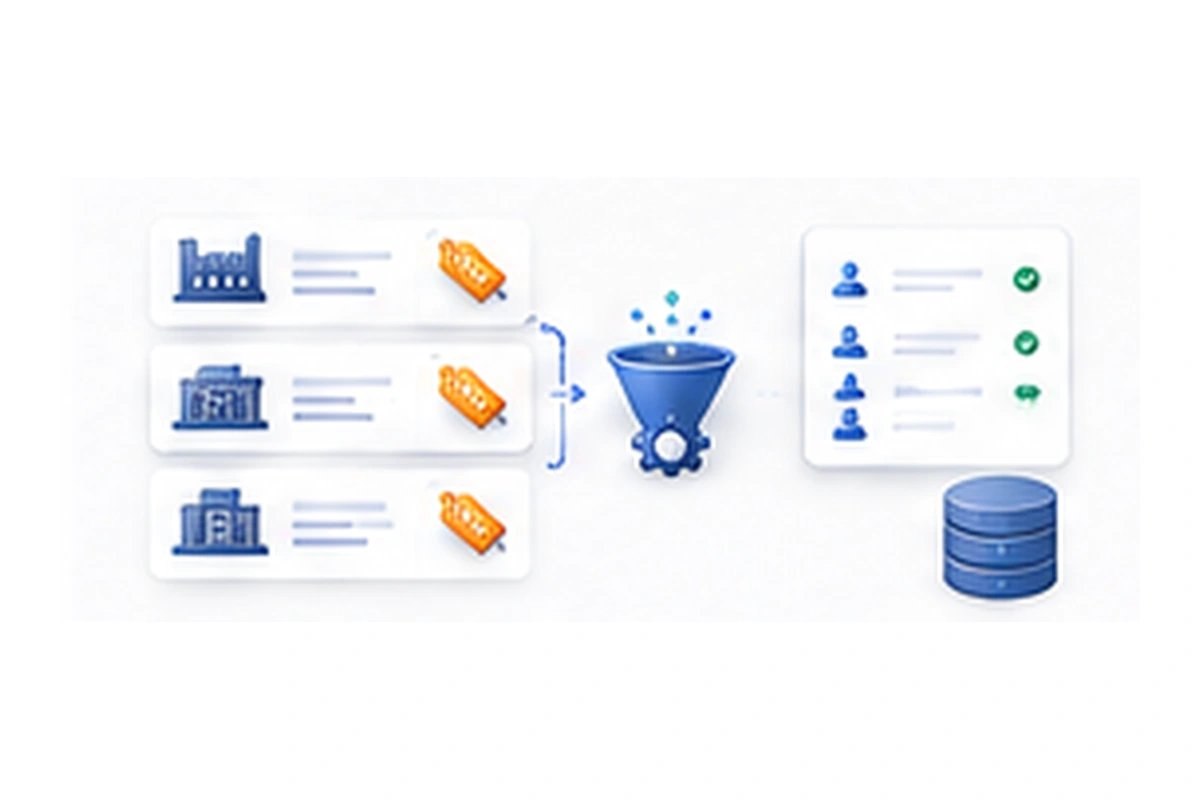
Supplier Information Is Scattered Across Incompatible Sources
Manufacturer sites, distributor catalogs, industry directories, and marketplace profiles rarely share the same field structure, naming conventions, or update cadence.
Procurement and sourcing teams that assemble vendor lists by hand often end up with duplicate suppliers, blank required fields, and records that cannot be traced back to a source page.
A managed collection workflow reviews approved public sources first, maps only the fields those pages display, and delivers structured supplier records your systems can review and maintain.
Fragmented supplier sources creating inconsistent and incomplete procurement records.
What Supplier and Vendor Data Scraping Services Include
Nenodata scopes approved public sources, required supplier fields, volume expectations, refresh needs, and delivery destinations before collection begins. This page is the multi-source hub: the same vendor observed on a company site and a directory, mapped into one schema with a survivorship rule.
It is not a ThomasNet-only directory extract and not an Alibaba wholesale catalog. Engagements focus on publicly available supplier and vendor information. Field availability depends on what approved pages display. Private, restricted, or login-protected data is excluded unless separately authorized and reviewed.
This service supports procurement, sourcing, vendor analysis, and supplier-intelligence workflows. It does not replace onboarding, approval, due diligence, or accounts-payable controls.
Supplier discovery
Identify and collect publicly listed supplier profiles that match approved categories, geographies, or capability filters.
Supplier monitoring
Revisit agreed sources on a scoped schedule so teams can review changes to listings, categories, or publicly displayed commercial details.
Vendor-record enrichment
Add source-displayed identity, capability, and provenance fields to existing vendor records without inventing missing values.
Supplier hub vs ThomasNet and Alibaba
Use this page to map manufacturer sites, directories, and marketplaces into one vendor schema. Use ThomasNet for that directory alone, or Alibaba for B2B wholesale listings.
| Source | Best for | Learn more |
|---|---|---|
| Supplier-vendor hub | Same supplier, two sources, survivorship into one record | This service |
| ThomasNet | thomasnet.com profile, capability, location, certification | ThomasNet scraper |
| Alibaba | B2B wholesale product, MOQ, and supplier listings | Alibaba data scraping |
Sample Output and Proof
Illustrative example
This schema is illustrative and is not an approved Nenodata deliverable or customer result. Final fields depend on project scope and what approved public sources visibly expose. Missing values are left empty rather than inferred.
| Field | Purpose |
|---|---|
| supplier_name | Primary supplier or vendor name as displayed |
| normalized_category | Mapped product or service category |
| source_url | Page used for the observation |
| collected_at | Collection timestamp |
| website | Public website when shown; otherwise null |
| location | City, region, or country when shown |
| marketplace_status | Source-displayed indicator only; not Nenodata verification |
{
  "supplier_name": "Parker Hannifin",
  "normalized_category": "Motion and control / industrial components",
  "source_company_url": "https://www.parker.com",
  "source_directory_url": "https://www.thomasnet.com/profile/parker-hannifin",
  "survivorship_rule": "company site name; ThomasNet category",
  "collected_at": "2026-08-13T14:00:00Z",
  "website": "https://www.parker.com",
  "location": "Cleveland, OH, USA",
  "marketplace_status": "none"
}
The example shows how a public supplier page can map into a structured record with source URL, collection timestamp, normalized category, and explicit null handling.
Supplier and Vendor Fields
Final fields depend on what approved public sources visibly expose. Missing values remain empty rather than guessed.
Supplier Identity and Classification
- • Supplier or vendor name
- • Alternate or trading name where shown
- • Normalized category
- • Business type where shown
Products, Services, and Capabilities
- • Product or service lines where shown
- • Capability keywords where shown
- • Catalog or category labels
- • Certifications where publicly displayed
Commercial and Fulfilment Information
- • Minimum order notes where shown
- • Lead-time notes where shown
- • Shipping or region notes where shown
- • Public pricing signals where shown
Public Marketplace Indicators
- • Source-displayed seller status
- • Source-displayed rating or review count
- • Source-displayed response metrics where shown
- • Marketplace profile URL
These are source-displayed indicators. Nenodata does not independently verify, approve, audit, or certify suppliers.
Provenance and Review Metadata
- • Source label
- • Source URL
- • Collection timestamp
- • Validation or review note
Delivery Outputs
- • CSV
- • Excel
- • JSON
- • Database-ready files
- • Structured files for downstream import
Supplier Data Use Cases
Supplier Discovery
Procurement teams often lack a complete view of publicly listed suppliers in a category or region. Structured discovery records help teams shortlist candidates from approved sources without rebuilding lists from scratch.
Supplier Comparison
Comparing suppliers across incompatible websites slows category reviews. Consistent fields make it easier to compare publicly displayed capabilities, locations, and commercial notes side by side.
Vendor-Record Enrichment
Existing vendor masters often miss website, category, or provenance details. Enrichment adds source-displayed fields so teams can audit and update records without inventing missing data.
Catalog and Product-Source Research
Sourcing teams researching product origins need structured catalog signals from manufacturer and distributor pages. Scoped extraction prepares those signals for research workflows.
Sourcing-Market Mapping
Category and geography coverage is hard to assess when supplier lists live in spreadsheets and bookmarks. Structured records support market-mapping across approved sources.
Supplier-Change Monitoring
Public listings change without notice. Scoped revisit workflows help teams review relevant changes to supplier profiles, categories, or commercial notes on agreed sources.
Procurement-Platform Data Feeds
Procurement platforms need consistent supplier inputs. Structured outputs can be prepared for import when the destination format and delivery method are confirmed during scoping.
Who This Service Is For
This service is for procurement, sourcing, vendor-management, category-management, supply-chain research, and operations teams that need structured supplier records from approved public sources.
It also fits data and analytics teams supporting supplier intelligence, market mapping, or procurement-platform enrichment.
It is not positioned for sales-prospecting contact harvesting, guaranteed coverage of every supplier website, or replacement of legal, compliance, or supplier-approval processes.
How It Works
Four-step supplier data workflow from source scoping to structured delivery. See also how Nenodata works.
Share Your Requirements
Define target sources, required fields, approximate volume, preferred format, intended business use, and whether the need is one-time or recurring.
Assess and Configure Sources
Nenodata reviews source feasibility, page types, field availability, and collection boundaries before configuring the extraction workflow.
Structure and Review
Collected values are mapped into the agreed schema. Normalization, null handling, and duplicate rules are applied according to the approved project rules.
Deliver and Maintain
Structured records are delivered through the confirmed method. Maintenance continues where included in the agreed support scope as supported page structures change.
Why Choose Nenodata
Source-Specific Scoping
Required fields are assessed against the approved sources rather than assumed to exist everywhere.
Sample-First Validation
Teams can review a representative sample structure before approving broader production collection.
Traceable Records
Source URLs and collection metadata help teams audit a record and return to its originating page.
Structured Quality Controls
Inconsistent names, nulls, duplicates, and candidate matches are handled according to rules defined during scoping.
Maintained Collection Workflows
When supported page structures change, maintenance continues where included in the agreed service scope.
Responsible Public-Data Boundaries
Collection stays within approved public or permissioned boundaries. Private or restricted access is not assumed.
Delivery and Integration Options
Delivery design depends on source count, source complexity, target volume, refresh frequency, schema requirements, and destination.
Formats and destinations are confirmed during scoping. Common discussions include structured files and import-ready datasets for spreadsheets, databases, and procurement workflows.
- CSV
- Excel
- JSON
- Database-ready files
- Structured import files
Related pathways: ThomasNet industrial supplier scraper, ASC Global MRO parts catalog data, Alibaba data scraping services, business directory data extraction, tender and government contract data scraping, and enterprise web scraping.
Structured supplier records delivered to files, databases, and procurement workflows.
Frequently Asked Questions
Request a Representative Supplier-Data Sample
Share the sources, fields, and delivery needs for your procurement or vendor-intelligence workflow. Nenodata will review feasibility and recommend the next sample or demo step.
Include representative source URLs, required fields, approximate target volume, preferred format, intended business use, and whether the requirement is one-time or recurring.
Or contact Nenodata.