01
Raw data is inconsistent
Raw web and app-visible data often arrives in inconsistent formats, with duplicates, missing fields, noisy text, and unstable schemas that reduce training quality.
AI & ML Dataset Pipelines
Nenodata helps AI product teams, ML engineers, and data teams build clean, structured datasets from approved public or permissioned sources for model development, evaluation, and analytics workflows.
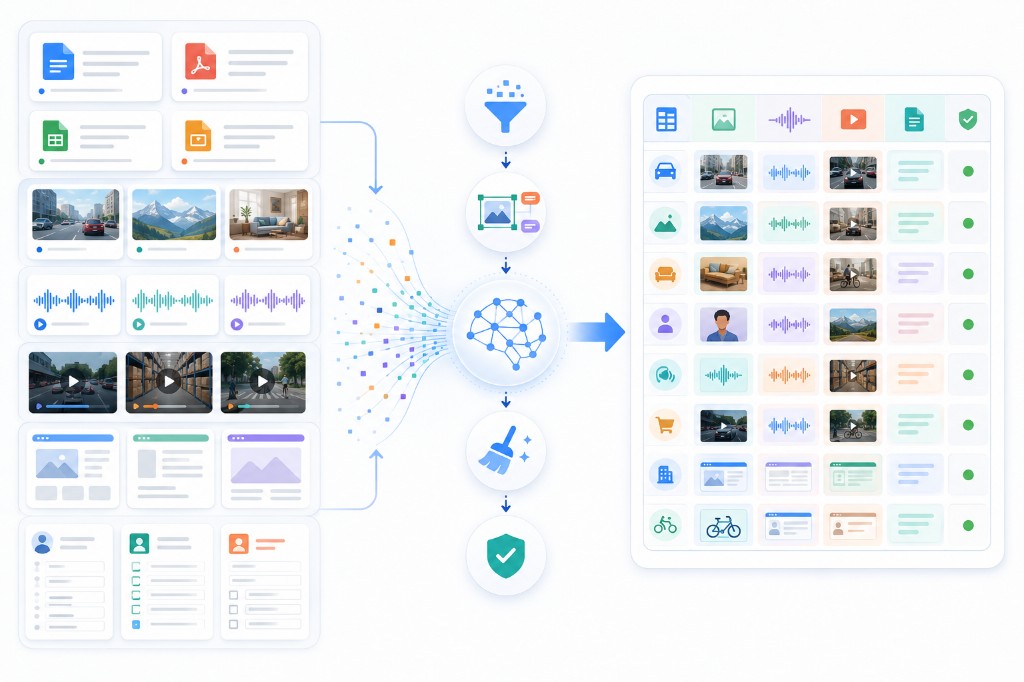
Training data quality
01
Raw web and app-visible data often arrives in inconsistent formats, with duplicates, missing fields, noisy text, and unstable schemas that reduce training quality.
02
Internal collection scripts can break as source structures change, creating dataset drift and extra cleanup effort before model teams can use the data.
03
AI teams need scoped source coverage, clear field definitions, repeatable validation, and dependable delivery pipelines to keep training and evaluation datasets usable.
RAW SOURCE DATA
CLEANING & VALIDATION
ML-READY DATASET
Service scope
Nenodata helps teams define dataset goals, map approved sources, and build repeatable collection workflows aligned to business and model requirements.
Engagements typically cover source scoping, extraction, cleanup, validation, and structured delivery so teams can focus on model performance and downstream use.
Source Scope & Planning
Projects remain within approved public or permissioned source boundaries, with delivery scope and cadence confirmed during planning.
Need website-specific AI corpus extraction?
If you specifically need website extraction for AI corpora, see our web scraping services for AI training datasets. This page focuses on end-to-end dataset collection, cleaning, validation, and delivery.
SOURCE SCOPING
EXTRACTION
CLEANUP
VALIDATION
STRUCTURED DELIVERY
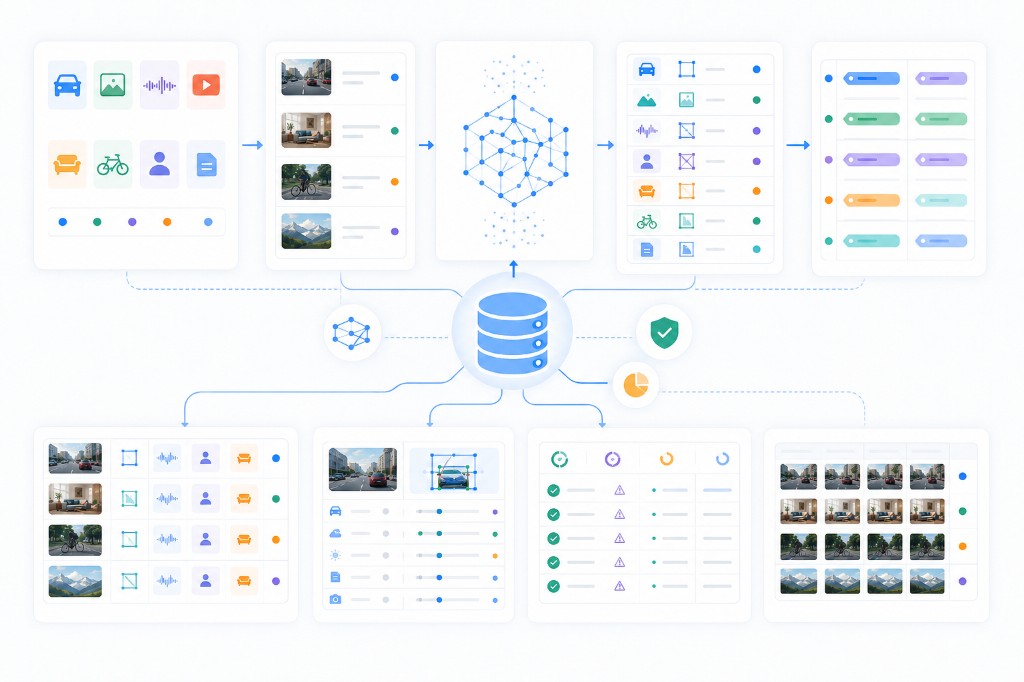
Dataset explorer
Illustrative example
| Record ID | Source | Category | Quality | Batch | Collected At |
|---|---|---|---|---|---|
| example-id | example-source | example-category | validated | batch-001 | YYYY-MM-DDTHH:mm:ssZ |
{
  "record_id": "example-id",
  "source_name": "example-source",
  "source_url": "https://example.com/item",
  "collected_at": "YYYY-MM-DDTHH:mm:ssZ",
  "normalized_text": "Example normalized text payload",
  "language": "en",
  "category": "example-category",
  "quality_status": "validated",
  "delivery_batch_id": "batch-001"
}
record_id
source_name
source_url
collected_at
normalized_text
language
category
quality_status
delivery_batch_id
Schema
Related workflows: web scraping for AI training datasets, price intelligence solutions, and review and social data extraction.
Applications
01
Build domain-focused corpora with structured and validated records for training and evaluation.
Sources → Text → Corpus
02
Create product, price, and catalog datasets for AI-driven product and pricing systems.
Products / Price / Catalog → Dataset
03
Collect and structure listing, pricing, and location data for property analytics and ML use.
Listings / Location / Pricing → ML Dataset
04
Track market-visible changes across sources for recurring model and analytics workflows.
Source → Change → Historical Feed
05
Structure public review and social-source signals for sentiment and quality intelligence.
Review / Sentiment / Signal → Dataset
06
Enrich internal datasets with external source fields under scoped collection rules.
Internal Data + External Fields → Enriched Dataset
07
Transform extracted documents and text into model-ready structured training assets.
Document → Extracted Text → Structured Record
See also grocery delivery app scraping and Real Estate API.
Audience
This service is for AI and ML teams, data engineering groups, analytics teams, product organizations, and operations teams that require dependable dataset pipelines.
It is also useful for organizations replacing brittle one-off scripts with managed collection, validation, and delivery workflows.
One-off script
Manual maintenance · Dataset drift
VS
Managed pipeline
Repeatable collection · Validation · Delivery
Workflow
Define source scope, fields, quality rules, delivery needs, and collection cadence.
Collect approved data from scoped public or permissioned sources using stable workflows.
Normalize, dedupe, and validate records against agreed schema and quality checks.
Deliver structured datasets in agreed formats and integration paths.
SOURCE SCOPE
RAW DATA
NORMALIZATION
DEDUPLICATION
VALIDATION
STRUCTURED DATASET
MODEL / ANALYTICS
Differentiators
Nenodata evaluates source and field feasibility up front to reduce delivery risk.
Dataset structure is aligned to your model and analytics requirements before scale.
Quality checks, normalization, and consistency rules are applied before delivery.
Outputs can be routed to files, APIs, webhooks, and integration-ready pipelines.
Nenodata manages recurring collection and delivery workflows as sources evolve.
Integrations
Use tabular files for analysis, QA, and business handoff workflows.
Deliver structured JSON payloads for engineering and ML systems.
Expose scoped datasets for programmatic consumption where configured.
Push update events and dataset batches to downstream listeners.
Run recurring deliveries aligned to your agreed cadence.
Connect output flows to internal analytics or data platforms.
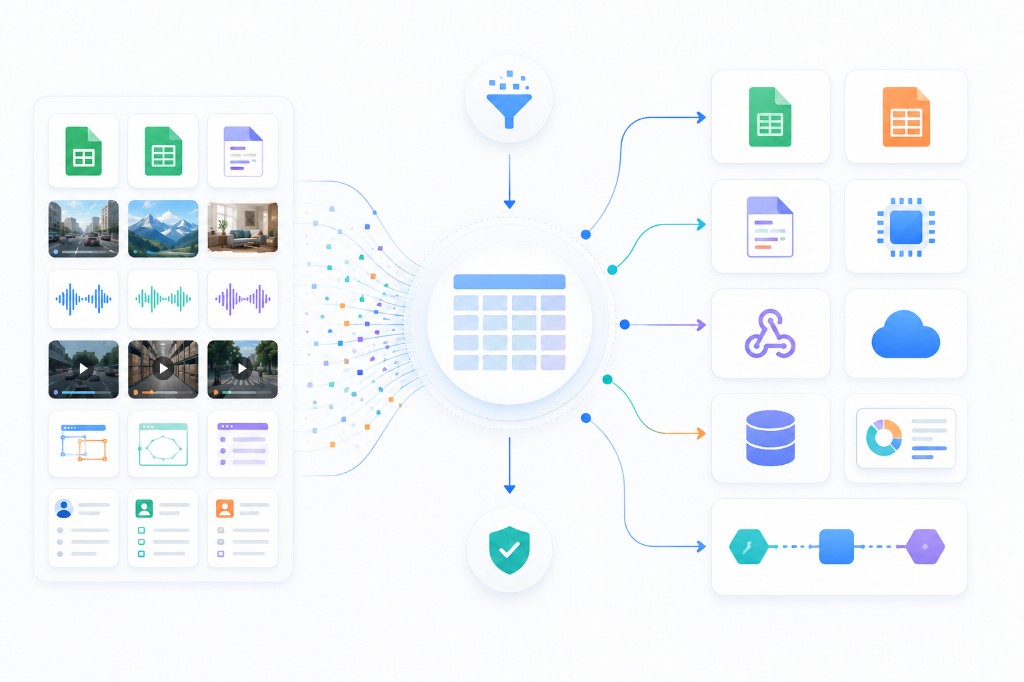
Validated dataset
Delivery layer
Model training · Analytics · Data platform
Questions
Nenodata reviews requested sources and confirms feasible, approved collection scope before production.
Delivery can include CSV, Excel, JSON, API feeds, webhook workflows, and scoped direct integrations.
Yes, recurring schedules can be configured based on approved source scope and business needs.
Nenodata applies cleanup, normalization, validation checks, and schema controls before delivery.
Yes, outputs can be prepared for analytics, warehousing, and downstream systems where scoped.
No, projects are framed around approved public or permissioned sources and defined boundaries.
Yes, schema and field plans are tailored to use cases such as ecommerce, property, travel, and reviews.
Share source targets, fields, quality requirements, and delivery needs to start a scoped plan.
Share your source scope, required fields, and delivery goals. Nenodata will review feasibility and recommend the next step for a structured dataset workflow.
Tell us what you need. We'll build a custom scraping solution and deliver a free proof-of-concept within 48 hours.