Retail Data · Updated August 2026
Grocery Chains in Florida: Structured Data Collection for Businesses
Florida hosts a mix of national and regional grocery banners—from Publix, Winn-Dixie, and ALDI to Sedano's Supermarkets and Whole Foods Market. Teams that need store location data, operating hours, or market coverage should collect structured records rather than copying directories by hand.
Accurate Florida grocery store data supports territory planning, retail media targeting, competitive research, and logistics modeling. The challenge is keeping those records current as stores open, close, and relocate.
Major Grocery Chains in Florida
The table below highlights commonly researched Florida grocery banners. Coverage varies by metro (Miami, Orlando, Tampa Bay, Jacksonville, and the Panhandle), so production datasets should always be scoped to the counties or ZIP codes that matter for your workflow.
| Chain | Overview |
|---|---|
| Publix | Headquartered in Lakeland with hundreds of locations across Florida. |
| Winn-Dixie | Jacksonville-based chain with a strong presence throughout the state. |
| ALDI | Discount grocery format with widespread Florida coverage. |
| Sedano's Supermarkets | Regional chain focused on South Florida and Hispanic grocery shoppers. |
| Whole Foods Market | Natural and organic grocery locations in major Florida markets. |
Store counts and locations change over time. For production datasets, validate records against each chain's official store locator and confirm permitted public-source boundaries during scoping.
What fields belong in a Florida grocery store dataset?
Field availability depends on the approved page type and agreed schema. Common store-directory fields include:
- Identity — store name, banner/chain, store ID where publicly shown
- Location — street address, city, county, state, ZIP, latitude/longitude where displayed
- Contact & hours — phone number, opening hours, holiday exceptions where shown
- Collection metadata — source URL, captured_at timestamp, validation status
Private, account-protected, or restricted fields should stay out of scope unless proper permission and legal review exist.
Challenges in Gathering Grocery Store Data
- Dynamic locations — Stores open, close, or relocate regularly across Florida metros.
- Dispersed sources — Public directories, chain websites, and third-party platforms vary in structure.
- Inconsistent schemas — Hours, phone formats, and store IDs rarely match across banners without normalization.
- Manual effort is time-consuming — Spreadsheets and one-off lists quickly become outdated.
Warning: Using only static lists risks inaccurate marketing or research decisions.
How Nenodata Supports Retail Data Extraction
Nenodata offers AI-powered web scraping, data pipelines, and API access to extract structured data from grocery chain websites and directories. See our solutions overview, grocery delivery scraping services, BigBasket data scraping, and Blinkit data scraping for related retail and quick-commerce workflows.
Key Capabilities
- Web scraping: Extract store names, addresses, contacts, and operating hours.
- Custom data pipelines: Automate processing and updates.
- API delivery: Send structured data directly to dashboards or internal systems.
- Monitoring: Track changes to store locations over time.
- Ecommerce data solutions: Extend from store directories into broader retail monitoring when scoped.
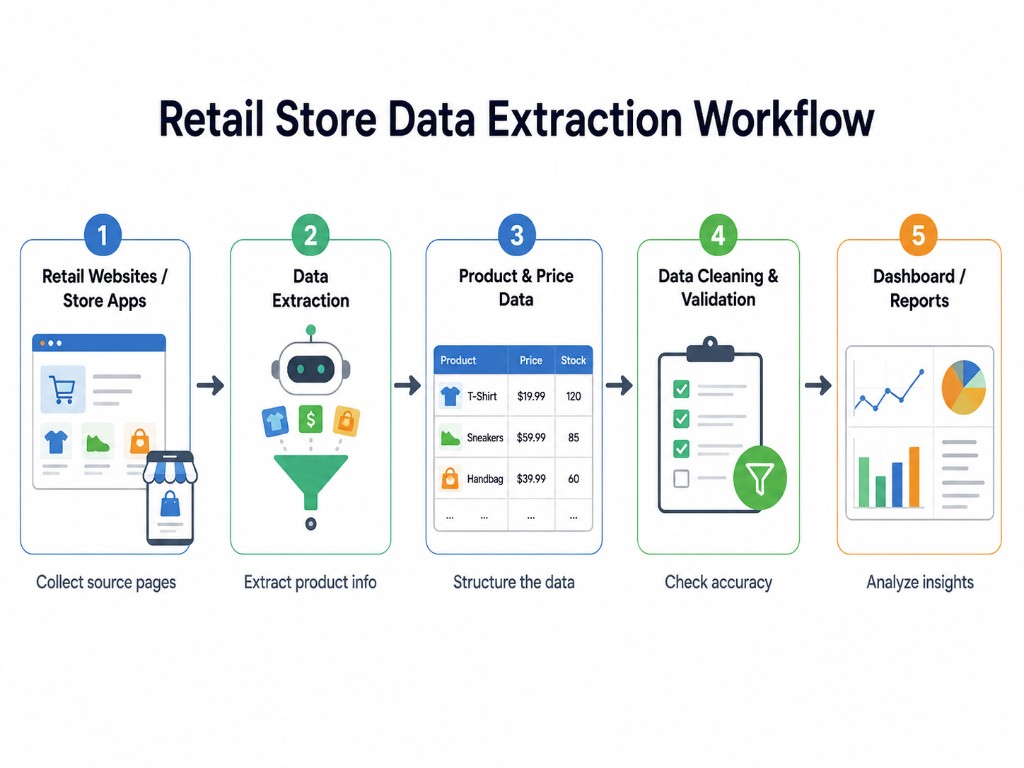
Example Workflow
- Identify target chains and geography (for example Publix, Winn-Dixie, ALDI, Sedano's across selected Florida counties).
- Confirm approved public sources, required fields, and refresh cadence.
- Collect store locator and directory pages, then normalize addresses, hours, and banner labels.
- Deliver structured CSV, JSON, database, or API-ready output with collection timestamps.
- Re-run on schedule so openings, closures, and hour changes stay visible.
Practical Next Steps for Businesses
- Define which Florida chains, counties, and attributes are critical.
- Use managed extraction instead of brittle one-off scripts when layouts change often.
- Validate sample records against official store locators before production rollout.
- Integrate the dataset into CRM, GIS, retail media, or BI workflows.
Using Nenodata allows teams to automate updates, maintain current datasets, and enrich internal analytics for marketing, logistics, and competitive insights.
Frequently Asked Questions
Which grocery chains operate widely in Florida?
Major Florida grocery operators include Publix, Winn-Dixie, ALDI, Sedano's, and Whole Foods Market, plus additional regional and national banners depending on the metro. Exact coverage should be validated against official store locators.
What store fields can a Florida grocery dataset include?
Depending on approved public sources and scope, fields may include store name, banner/chain, street address, city, county, ZIP, phone, hours, store ID where shown, and collection timestamp.
How often should Florida store location data be refreshed?
Refresh cadence depends on use case. Location intelligence and territory planning often need monthly or quarterly updates; campaign targeting may need faster refresh when openings and closures matter.
Is this the same as grocery delivery app scraping?
No. This guide focuses on brick-and-mortar store location and directory data. Delivery-app pricing and catalog monitoring is covered separately under grocery delivery scraping services.
Related Services
- Grocery delivery app scraping — Catalog, price, and availability signals from delivery platforms
- Ecommerce data solutions — Broader retail and marketplace extraction
- BigBasket data scraping — Grocery marketplace monitoring patterns
- Blinkit data scraping — Quick-commerce catalog and price feeds
- Enterprise web scraping — Large-scope collection and delivery
Related reading: ecommerce price scraping, digital shelf monitoring, and best website crawlers for LLMs.
Explore enterprise-grade data extraction for Florida grocery chain datasets.