Car Rental Price Scraping for Rental Pricing Data
Nenodata builds managed rental-rate data pipelines for publicly available rates, availability, fees, vehicle classes, and competitor changes, delivered as clean feeds for pricing, revenue, product, and analytics teams.
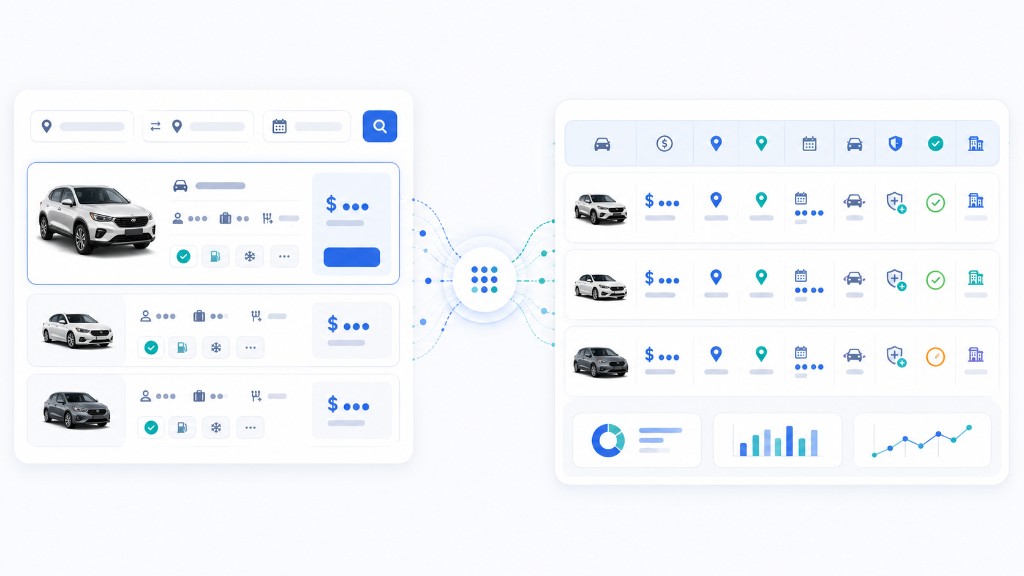
Why manual rental price tracking breaks down
Rental rates, fees, promotions, and availability change quickly across supplier sites, OTAs, and comparison platforms. A price copied manually into a spreadsheet may no longer reflect the visible offer when a revenue or pricing team reviews it later.
Manual checks become difficult when teams need to monitor competitor suppliers, compare pickup and drop-off locations, track fee breakdowns, or repeat searches across booking windows. Basic scripts struggle when search flows change, totals are displayed inconsistently, and maintenance consumes engineering time.
Pricing and revenue teams need stable field definitions, agreed refresh expectations, and rental-rate output that can move into benchmarking, analytics, and product workflows without rebuilding the dataset each cycle.
What Nenodata Provides
Nenodata configures managed rental pricing workflows around the sources, markets, locations, vehicle classes, booking windows, and fields your team defines. That includes target platforms, required rate and fee fields, refresh expectations, and delivery destination.
Depending on approved scope, outputs can include visible base rates, estimated totals, pickup and drop-off locations, rental dates, vehicle class, supplier, branch or location context, availability status, fees, add-ons, policy text where displayed, and source metadata where those elements are publicly available and included in the agreed schema.
Source feasibility, field availability, refresh cadence, and delivery formats are confirmed during scoping rather than assumed in advance.
Car Rental Price Scraping Service Scope
Use an illustrative sample to confirm field names, source coverage, booking-window logic, and output format before configuring a larger recurring workflow.
| Supplier | Pickup | Drop-off | Class | Pickup date | Return date | Base rate | Fees | Availability | Timestamp |
|---|---|---|---|---|---|---|---|---|---|
| Example supplier | Example pickup | Example drop-off | Example class | YYYY-MM-DD | YYYY-MM-DD | Example value | Example fees | Example status | YYYY-MM-DDTHH:MM:SSZ |
{
  "collection_timestamp": "YYYY-MM-DDTHH:MM:SSZ",
  "supplier": "Example supplier",
  "pickup_location": "Example pickup location",
  "dropoff_location": "Example drop-off location",
  "pickup_date": "YYYY-MM-DD",
  "return_date": "YYYY-MM-DD",
  "vehicle_class": "Example class",
  "vehicle_name": "Example vehicle",
  "base_rate": "Example value",
  "total_estimated_price": "Example value",
  "currency": "Example currency",
  "fees_text": "Example fees",
  "add_ons_text": "Example add-ons",
  "availability_status": "Example status",
  "policy_text": "Example policy",
  "source_url": "Example public URL"
}
Illustrative CSV-style field list
collection_timestamp,
supplier,
pickup_location,
dropoff_location,
pickup_date,
return_date,
vehicle_class,
vehicle_name,
base_rate,
total_estimated_price,
currency,
fees_text,
add_ons_text,
availability_status,
policy_text,
source_url
Field availability can vary by source, location, booking window, and project scope.
Data Fields and Outputs
Actual availability should be confirmed against target sources during scoping.
Rate and fee fields
- • Base rate or daily price
- • Total estimated price where displayed
- • Currency
- • Taxes and fees text where shown
- • Add-on or optional charge text where displayed
- • Promotion or discount text where shown
Location and date context
- • Pickup location
- • Drop-off location
- • Pickup and return dates
- • Rental duration
- • Branch or airport context where displayed
- • Market or search input context
Vehicle and supplier fields
- • Supplier or brand name
- • Vehicle class and vehicle name
- • Rate plan or offer type where displayed
- • Supplier branch where shown
- • Source URL
Availability signals
- • Availability status
- • Sold-out or limited indicators
- • Vehicle count signals where publicly displayed
- • Last-seen timestamp
Source and quality metadata
- • Source platform or channel name
- • Collection timestamp
- • Search or booking-window context
- • Record identifier where available
Delivery formats
- • CSV or Excel for analyst workflows
- • JSON for engineering pipelines
- • API-ready structured records
- • Scheduled feeds where scoped and confirmed
- • Warehouse-ready files where confirmed
Use cases
Competitor rate monitoring
Bring current rental rates, fees, and availability context into one dataset so pricing teams can compare suppliers and channels without manual search checks.
See the price intelligence solution for broader pricing workflows.
Dynamic pricing response
Track visible rate and fee changes across scoped markets to support revenue management decisions when competitor positioning shifts.
Fee and total-price benchmarking
Compare base rates alongside displayed fees and estimated totals where publicly shown to support fair price and margin analysis.
Market rate intelligence
Build structured datasets from scoped locations and date windows to study rental price ranges and supplier mix over time.
Revenue management reporting
Deliver cleaned rental pricing data into spreadsheets, BI tools, or internal reporting workflows on an agreed schedule.
OTA price parity review
Organize channel-level rental results into structured records that support distribution and parity review workflows.
Who This Is For
This service fits rental pricing analysts, revenue management teams, mobility product groups, travel-tech platforms, corporate travel programs, and market intelligence teams that need structured rental-rate data from publicly available sources.
It also supports organizations that want monitored rental pricing feeds without dedicating internal engineering capacity to maintaining brittle collection scripts across changing supplier and comparison-site pages.
How It Works
Define dataset
Share target sources, pickup and drop-off locations, vehicle classes, booking windows, required fields, refresh expectations, and delivery destination so Nenodata can scope the pricing workflow.
Configure collection
Nenodata sets up the extraction workflow around the agreed input model, including supplier lists, search paths, and rate context needed for usable pricing records.
Structure and review
Collected records are standardized, reviewed for completeness, and prepared in the agreed schema. Inconsistent or incomplete entries can be reduced before delivery.
Deliver data
Receive output once or on a recurring schedule via agreed formats and destinations. Nenodata maintains the configured workflow as sources and requirements evolve.

Why Choose Nenodata
Built for rental pricing markets
The workflow is scoped around rate, fee, location, and booking-window context rather than generic page scraping without pricing fields.
Structured for downstream use
Records are organized for benchmarking, analytics, and internal systems. Field naming and structure can align with your destination workflow once confirmed.
Recurring delivery when scoped
Refresh frequency and scheduled collection options are agreed during scoping based on source, market coverage, and delivery method.
Less maintenance burden
Rental search pages can change layouts and behavior. A managed workflow can include monitoring and maintenance planning beyond a one-off internal script.
Responsible public-data boundaries
The service is positioned around publicly available data. Login-protected rates, loyalty-only prices, corporate rates, and restricted systems should remain outside scope.
Integrations and Delivery
Depending on approved scope, structured rental pricing data may flow from public rental sources through Nenodata extraction and validation into CSV, Excel, JSON, API-ready records, or warehouse-ready files.
Teams often combine rental pricing workflows with price intelligence, custom pipeline delivery, and enterprise web scraping depending on the use case.
Explore enterprise web scraping, custom data pipelines, the web scraping API, and the Amazon price scraper for related delivery patterns. See the ecommerce price scraping guide for broader pricing context.
Related services: car rental data scraping, flight data scraping, travel and hospitality data scraping, and price intelligence.
Frequently asked questions
Scope your rental pricing workflow
Share target sources, markets, locations, vehicle classes, booking windows, required fields, and delivery format when you contact Nenodata so the team can scope the rental pricing workflow accurately.
Contact Nenodata to discuss sources, fields, and delivery format.