Historical Web Data Collection Services
Nenodata provides Historical Web Data Collection Services that turn accessible past web snapshots into structured, timestamped datasets for analysis, research, and operational review.
- Feasibility reviewed before collection
- Comparable multi-date records
- Documented gaps and limitations
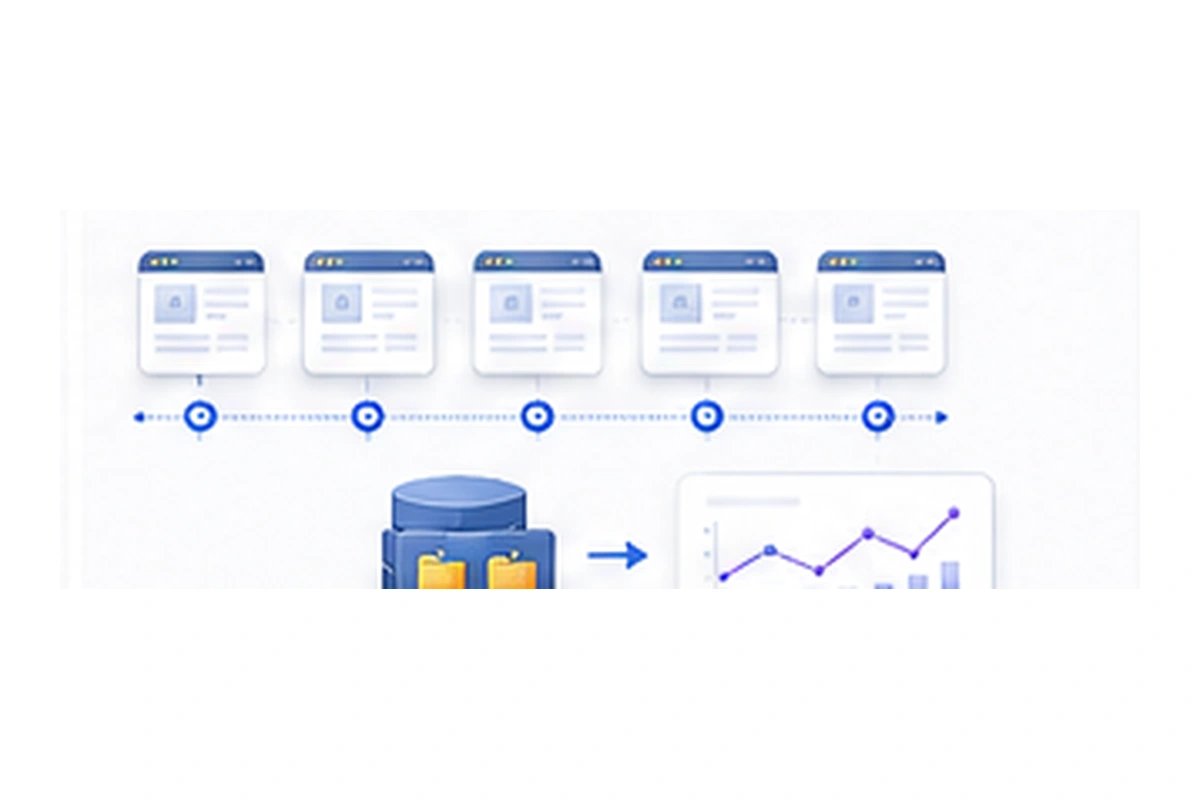
Past webpages rarely arrive ready for analysis
Historical pages may exist across different layouts, field labels, and capture conditions, which makes direct comparison unreliable without normalization.
Teams that rebuild timelines manually often lose provenance, mix capture dates, or treat missing values as complete observations.
A managed historical workflow reviews whether the requested dates and sources are accessible, then structures available observations into comparable records with documented limitations.
What Historical Web Data Collection Services Include
Nenodata scopes approved public sources, requested date ranges, required fields, and delivery needs before extraction begins.
Where past snapshots are accessible, observed values can be extracted, normalized, and delivered as timestamped records with source references.
This service focuses on historical retrieval from accessible public snapshots. Future longitudinal collection for ongoing monitoring is assessed separately during scoping and is not assumed for every engagement.
Related: enterprise web scraping. View all data extraction services.
Illustrative Sample Output
Illustrative example
This table and JSON record are illustrative and are not an approved Nenodata deliverable or customer result. Final fields, dates, and coverage depend on source accessibility and project scope.
Illustrative example
| Capture date | Source URL | Observed title | Observed price | Validation status |
|---|---|---|---|---|
| 2024-01-15 | https://example.com/item/1048 | Example Product Name | 49.99 | passed |
| 2024-06-15 | https://example.com/item/1048 | Example Product Name | 44.99 | passed |
| 2025-01-15 | https://example.com/item/1048 | Example Product Name | 42.50 | passed |
Illustrative example
{
  "entity_id": "example-item-1048",
  "source_url": "https://example.com/item/1048",
  "observations": [
    {
      "capture_date": "2024-01-15",
      "title": "Example Product Name",
      "price": "49.99",
      "currency": "USD",
      "validation_status": "passed"
    },
    {
      "capture_date": "2024-06-15",
      "title": "Example Product Name",
      "price": "44.99",
      "currency": "USD",
      "validation_status": "passed"
    },
    {
      "capture_date": "2025-01-15",
      "title": "Example Product Name",
      "price": "42.50",
      "currency": "USD",
      "validation_status": "passed"
    }
  ]
}
The example shows how three dated observations of one generic public page can map into comparable rows and a structured record. Exact fields are confirmed during sample review.
Data Fields and Outputs
Source identity
- • Source URL
- • Entity or listing label
- • Page type where identified
Capture context
- • Capture date
- • Observation timestamp where available
- • Source reference
Observed values
- • Agreed business fields
- • Normalized labels where included
- • Source-displayed attributes
Quality and gap notes
- • Validation status
- • Missing-field notes
- • Coverage limitation notes
Delivery options
- • Delivery method confirmed during scoping based on the approved dataset and downstream requirements
Use Cases
Price and promotion history
Structure dated price and promotion observations from accessible public pages for retrospective pricing analysis.
Catalog and assortment change review
Compare product or listing fields across capture dates to review how assortments evolved over time.
Competitive timeline research
Build multi-date competitor records from accessible snapshots for market and strategy research.
Content and messaging history
Extract headline, claim, or content fields from dated public pages when those snapshots are accessible.
Marketplace listing retrospectives
Assemble timestamped marketplace observations for offer, title, or availability fields shown in accessible past pages.
Regulatory or dispute support datasets
Prepare documented historical observations with provenance notes for internal review workflows where sources allow.
Model training and evaluation sets
Deliver schema-aligned multi-date public-web records for research, evaluation, or model-development use cases.
For related marketplace collection, see Amazon marketplace data collection.
Who This Is For
This service is for research, pricing, product, analytics, legal-support, and data teams that need structured historical observations from accessible public web sources.
It fits organizations that want feasibility review, comparable multi-date records, and documented gaps rather than unverified archive coverage claims.
It is not a fit for guaranteed recovery of every past page, private or login-protected archives, or teams seeking unrestricted access to protected historical systems.
How It Works
Define sources and date range
Share target URLs or domains, required fields, date windows, and the systems that will use the records.
Assess accessibility and sample
Nenodata reviews whether requested historical states are accessible and prepares a representative sample for schema validation.
Extract and normalize
Available observations are extracted and mapped into comparable fields according to the approved schema and quality rules.
Deliver documented datasets
Timestamped records are delivered through the method confirmed during scoping, with gap and limitation notes where applicable.
Why Choose Nenodata
Feasibility before scale
Source accessibility and date coverage are reviewed before production extraction begins.
Comparable multi-date records
Observations are mapped into a consistent schema so dated values can be compared without mixed layouts.
Documented gaps and limitations
Missing dates, fields, or inaccessible states are recorded rather than presented as complete coverage.
Managed extraction and transformation
Collection and normalization stay under a managed workflow instead of fragile one-off reconstruction scripts.
Sample-first validation
Teams can review a representative sample structure before committing to a larger historical extraction.
Integrations and Delivery
The delivery method is confirmed during scoping based on the approved dataset and downstream requirements.
Prepared file exports and structured handoffs are commonly discussed. Direct API, database, warehouse, or webhook delivery is included only when separately confirmed for the engagement.
Related: enterprise web scraping · live crawler services · documentation · custom data pipelines · API access. To request a historical data sample, share sources and date ranges.
Frequently Asked Questions
Request a Historical Data Sample
Share the sources, date windows, and fields you need. Nenodata will review accessibility and recommend the next step for a sample or demo.
Include example URLs, required fields, date ranges, and the destination system that will use the records.