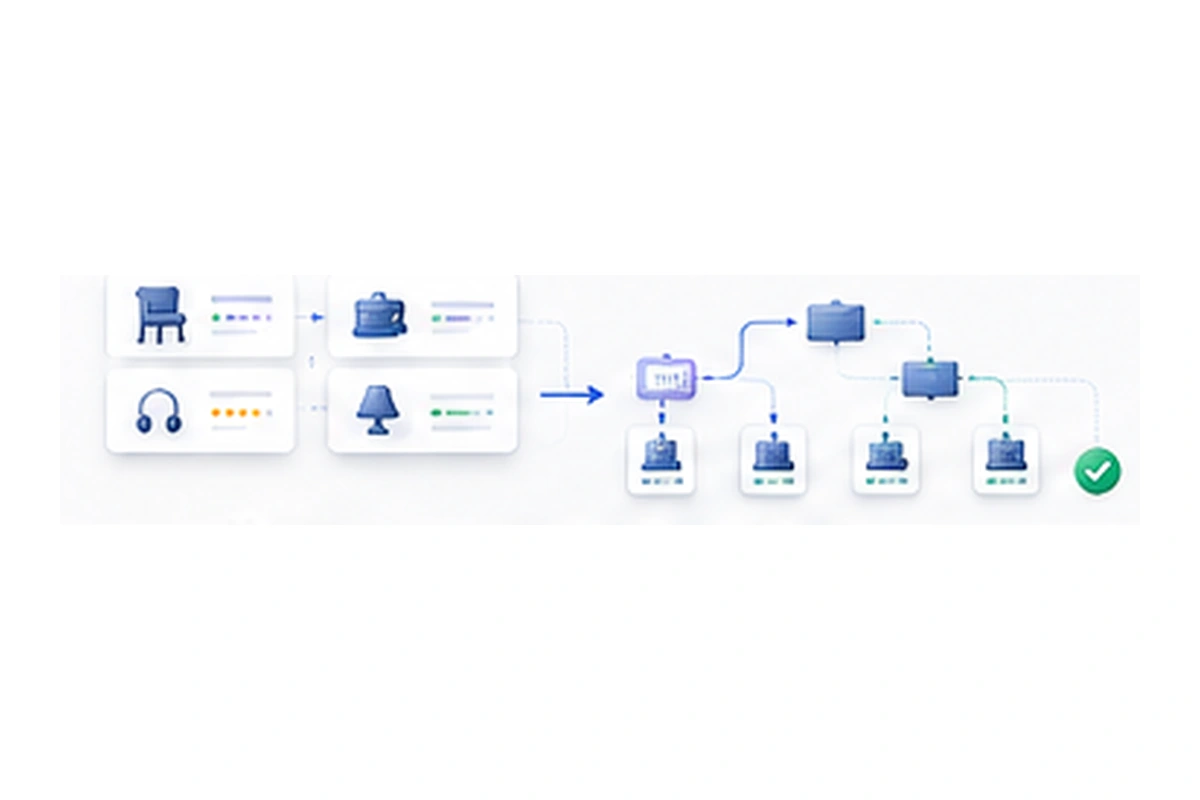
App Store Rankings and Review Intelligence Services
Nenodata builds and manages custom pipelines for App Store Rankings and Review Intelligence Services, collecting publicly visible ranking, rating, and review signals from agreed storefronts and delivering structured records for product, growth, and research teams.
- Storefront-scoped ranking and review records
- Sample-first field validation
- Structured delivery for analysis workflows

The App-Store Intelligence Problem
App visibility, ratings, and review themes change by store, country, category, chart, keyword, version, and language, so a screenshot or spreadsheet check quickly loses context.
Product and growth teams that track competitors manually struggle to retain storefront and timestamp context, compare observations over time, or separate release-impact signals from ongoing review noise.
A managed collection workflow reviews approved public store pages first, maps available ranking and review fields into a consistent schema, and delivers records that support monitoring without inventing missing values. Broader review and social programs remain available through review and social data extraction.
What App Store Rankings and Review Intelligence Services Include
Nenodata scopes approved public storefronts, countries, ranking types, apps or competitor sets, required review and rating fields, refresh needs, and delivery destinations before collection begins.
Engagements may include app identity, storefront and ranking context, ratings and reviews, version and language context, collection timestamps, and scoped analysis fields such as sentiment or topic labels when those methods are confirmed for the engagement.
Coverage, cadence, and field availability are confirmed during scoping. This service does not claim guaranteed Apple App Store or Google Play coverage, private console access, review-response functionality, or download, revenue, or engagement estimates. Larger extraction programs may use enterprise web scraping or custom data pipelines.
Sample Output and Proof
The example shows how a public store observation can map into a structured ranking and review record with storefront, source, and timestamp context.
Illustrative example
This schema is illustrative and is not a live API response, customer export, dashboard output, or confirmed Nenodata deliverable. Final fields depend on project scope and what approved public sources display.
{
"app_name": "Example Productivity App",
"app_id": "demo-app-1048",
"storefront": "example-store",
"country": "US",
"ranking_type": "free_category",
"category": "Productivity",
"rank_position": 12,
"average_rating": 4.6,
"rating_count": 12840,
"review_title": "Example review title",
"review_text": "Example public review text",
"review_rating": 5,
"app_version": "3.2.1",
"language": "en",
"source_url": "https://example.com/store/app/demo-app-1048",
"collected_at": "YYYY-MM-DDTHH:mm:ssZ"
}Data Fields and Output Options
Field and format availability depends on approved public sources. Potential options below are confirmed during scoping.
App Identity
- • App name where shown
- • App identifier where shown
- • Developer name where shown
- • App URL where shown
Storefront and Ranking Context
- • Storefront or store label
- • Country or region where scoped
- • Category or chart context where shown
- • Ranking type and position where shown
Ratings and Reviews
- • Average rating where shown
- • Rating count where shown
- • Review title and text where shown
- • Individual review rating where shown
- • Developer response text where shown and scoped
Version and Language Context
- • App version where shown
- • Language or locale where shown
- • Release or update wording where shown
Analysis Fields
- • Sentiment label where scoped and confirmed
- • Topic or theme label where scoped and confirmed
- • Issue or feature-request label where scoped and confirmed
Collection Metadata
- • Source URL
- • Collection timestamp
- • Schema or mapping reference where scoped
- • Batch or run identifier where scoped
Potential Output Options
- • CSV where confirmed
- • Excel where confirmed
- • JSON where confirmed
- • API-ready records where confirmed
- • Database- or warehouse-ready files where confirmed
Use Cases
Competitor Rank Monitoring
Product and growth teams need structured ranking observations across agreed storefronts, countries, and categories instead of ad hoc screenshots.
Review and Sentiment Trend Analysis
Research teams review rating and review changes over time, with sentiment or topic labels included only when those analysis methods are confirmed.
Release-Impact Monitoring
Release teams compare ranking and review signals around version changes when version fields are available on approved public sources.
Feature-Request and Issue Discovery
Product teams scan public reviews for recurring requests and issues when classification fields are scoped into the engagement.
Market-Entry Research
Strategy teams study category rankings and review themes in selected countries before expanding distribution or localization plans for market intelligence data workflows.
App-Portfolio Benchmarking
Portfolio owners compare ranking and rating context across owned and competitor apps using a shared schema and observation timestamps.
Who This Service Is For
This service is for product, growth, ASO, competitive-intelligence, research, and analytics teams that need structured public app-store ranking, rating, and review observations.
It fits mobile software, consumer apps, and digital-product companies monitoring agreed storefronts and competitor sets.
It is not positioned for private console access, review-response workflows, download or revenue estimation, or guaranteed coverage of every store and country. Related capabilities are listed under data extraction services.
How It Works
Four-step app-store data workflow from source scoping to validated dataset delivery.
- Step 1
Define the Required Dataset
Share target apps or competitors, storefronts, countries, ranking types, required review fields, refresh needs, and the systems that will use the records.
- Step 2
Confirm Sources and Fields
Nenodata reviews public-page feasibility and provides a representative sample so requested fields can be validated before broader rollout.
- Step 3
Collect, Normalize, and Validate
Approved public observations are collected, mapped into the agreed schema, and validated so missing values stay empty rather than invented.
- Step 4
Deliver the Agreed Dataset
Structured records are delivered through the confirmed method. Maintenance continues where included as sources and requirements change.
Why Choose Nenodata
Scope Around the Stores and Signals You Need
Collection is configured around agreed storefronts, countries, ranking types, and competitor sets rather than a fixed generic export.
Review a Representative Sample First
A sample validates source feasibility and field availability before broader production monitoring begins.
Preserve Storefront and Timestamp Context
Observations retain storefront, ranking context, source URL, and collection timestamp so teams can compare records over time.
Define Consistency Rules Up Front
Null handling, identifiers, duplicates, and field definitions are agreed during scoping so outputs stay consistent across runs.
Fit the Dataset to Your Workflow
Delivery is prepared for the spreadsheet, database, warehouse, API, or reporting destination confirmed for the engagement.
Keep Source Limitations Explicit
Public-source boundaries and layout-change maintenance remain visible so teams understand what the dataset can and cannot support.
Delivery That Fits Your Workflow
Structured app-store dataset prepared for spreadsheet, database, warehouse, API, and reporting workflows.
Delivery destinations and formats are confirmed during scoping. A dataset prepared for a reporting workflow is not the same as Nenodata providing a hosted dashboard unless that destination is separately confirmed.
CSV, Excel, and JSON are commonly discussed. API-ready records and database- or warehouse-ready files are included only when confirmed for the engagement. Dashboards, alerts, webhooks, and email delivery are not presented as confirmed capabilities unless separately approved.
For commercial packaging context, view pricing or contact Nenodata to review requirements.
- CSV where confirmed
- Excel where confirmed
- JSON where confirmed
- API-ready records where confirmed
- Database-oriented delivery where confirmed
- Warehouse-oriented delivery where confirmed
Frequently Asked Questions
Request a Representative Sample
Share the apps, storefronts, countries, ranking types, and review fields you need. Nenodata will review public-page feasibility before broader collection begins.
Include representative app or competitor lists, required fields, preferred format, and whether monitoring should be one-time or recurring. A sample does not guarantee coverage of every named store until feasibility is confirmed.