Listing identity
Listing IDs, source URLs, and related public listing identifiers where displayed and included in the agreed schema.
- listing_id
- source_url
Automotive Listing Data
Nenodata scopes and operates managed workflows that turn agreed publicly visible Autotrader vehicle listings into structured pricing, specification, inventory, and dealer records. The engagement is sample-first: fields, geography, cadence, source access, and delivery are reviewed before recurring collection is approved.
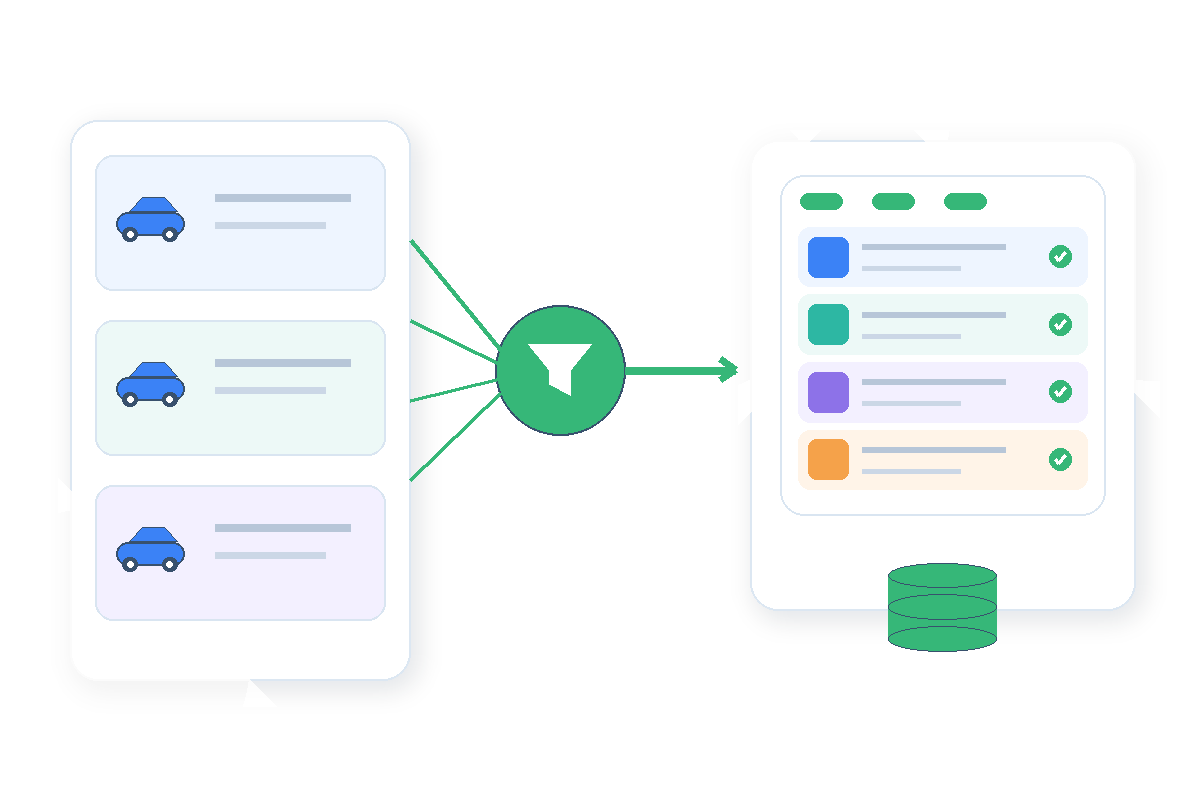
Pricing, inventory, and market-research teams often track vehicle listings through manual checks, bookmarks, and spreadsheets that fall behind as prices, status, and dealer inventory change.
Fragile scripts break when listing layouts shift, filters expand, or teams need consistent source timestamps, null handling, and exception reporting rather than silent gaps in exported rows.
A managed workflow defines approved pages, required fields, geography, and delivery first—then maps listing identity, vehicle specifications, pricing signals, dealer context, and collection metadata into a maintainable schema for research and operational use.
Manual listing research
Manual listing checks
Bookmarks
Spreadsheets
Changing prices
Changing inventory
Broken / inconsistent research
Managed structured vehicle data
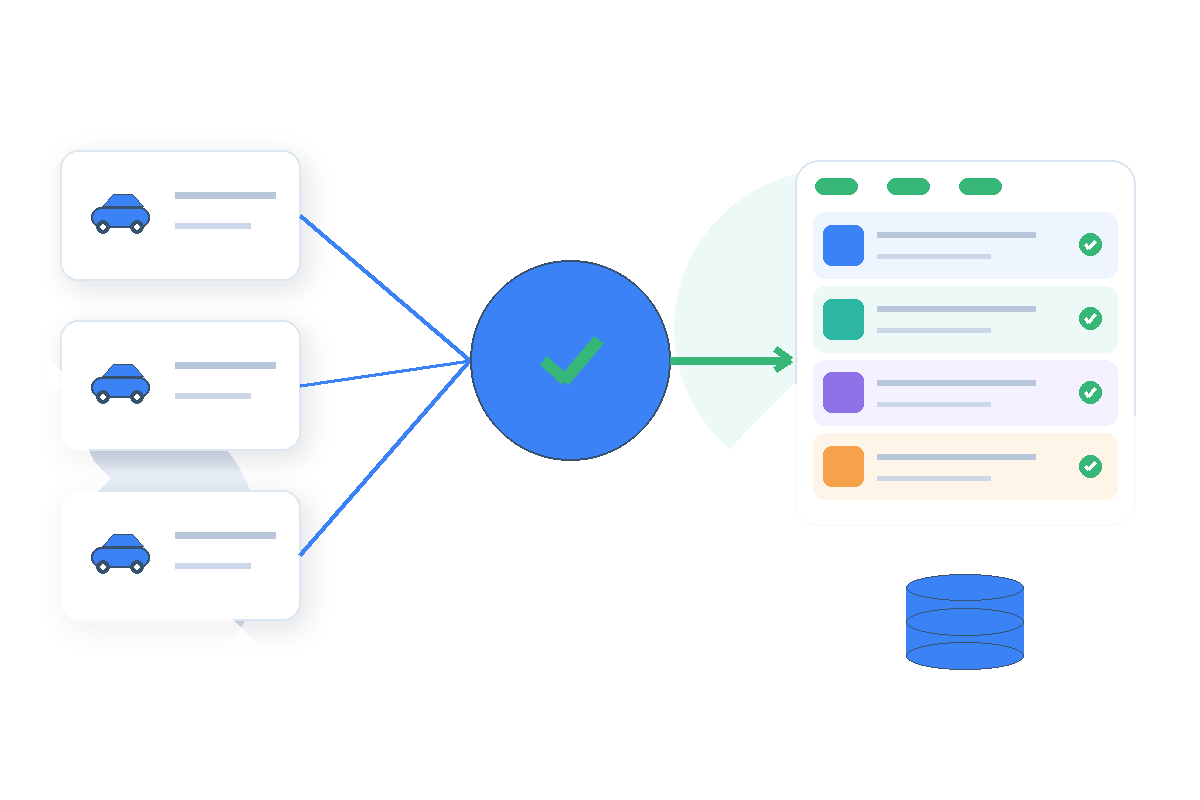
Nenodata scopes managed collection around agreed publicly visible listing pages, required fields, geography, validation rules, refresh needs, and delivery destinations before production collection begins.
Depending on approved scope, outputs may include listing identity, vehicle specifications, usage and condition signals, pricing and status fields, dealer or seller location context, source references, collection timestamps, and validation metadata when those elements are publicly shown and included in the agreed schema.
Managed collection
Approved listing pages
Vehicle & dealer fields
Normalize
Validate
Structured records
Representative Vehicle Record
Review an illustrative vehicle-listing record with source URL, listing identity, pricing, specifications, dealer context, null handling, and validation status before broader production begins.
Illustrative example
This JSON is illustrative only. It is not a live customer record or production API response. Final fields depend on project scope.
{
  "listing_id": "EXAMPLE-AT-1001",
  "source_url": "https://approved-source.example/listing/EXAMPLE-AT-1001",
  "year": 2019,
  "make": "Illustrative Make",
  "model": "Illustrative Model",
  "trim": null,
  "mileage": 45210,
  "mileage_unit": "mi",
  "body_style": "SUV",
  "exterior_color": null,
  "price_observed": 24990,
  "currency": "USD",
  "listing_status": "active",
  "dealer_name": "Illustrative Motors",
  "dealer_city": "Example City",
  "dealer_state": "ST",
  "collected_at": "YYYY-MM-DDTHH:mm:ssZ",
  "validation_status": "pass_with_exceptions",
  "exception_notes": "trim not observed on page"
}
Validation: pass with exceptions. Observed field missing → retained as null → exception recorded.
Potential field groups depend on the approved public pages, agreed schema, geography, and technical feasibility confirmed during scoping. The groups below are not guarantees of coverage.
Listing IDs, source URLs, and related public listing identifiers where displayed and included in the agreed schema.
Year, make, model, trim, body style, color, and related specification fields where publicly shown.
Mileage, condition labels, and related usage signals where publicly displayed and approved for the intended use case.
Observed prices, currency, listing status, and related pricing signals where shown—without treating every observation as a complete market feed.
Dealer or seller names, city, state, and related location context where publicly displayed and approved for delivery.
Collection timestamps, validation status, exception notes, and source references retained for audit and exception review.
CSV, Excel, JSON, API-ready records, webhooks, databases, CRM imports, and warehouse delivery when confirmed during scoping.
Automotive Intelligence Applications
01
Support pricing research with structured observed-price fields and provenance metadata for agreed geographies and listing sets.
02
Monitor dealer inventory signals on a scoped cadence with exception visibility when listings change, disappear, or lack expected fields.
03
Assemble comparable listing observations for valuation workflows without treating missing trim, mileage, or price fields as complete coverage.
04
Combine status, pricing, and geography signals for supply views where those fields are publicly shown and included in the scoped schema.
05
Append structured listing and vehicle context to internal automotive products when matching rules and intended use are approved during scoping.
06
Analyze regional availability where dealer location and listing-status fields are publicly displayed and confirmed in scope.
07
Track listing changes within agreed filters subject to source feasibility—not as a guarantee of real-time or complete market coverage.
08
Feed structured listing observations into broader price intelligence or research workflows when destination requirements and intended use are confirmed during scoping.
This service fits automotive pricing teams, inventory analysts, market-research groups, data engineers, and product teams that need structured public vehicle-listing observations with sample-first scoping and traceability metadata.
It supports organizations that prefer managed collection, normalization, and delivery over maintaining brittle internal scripts across changing listing layouts and filter behavior.
The delivery pattern supports scoped custom data pipelines when recurring transformation is required.
01
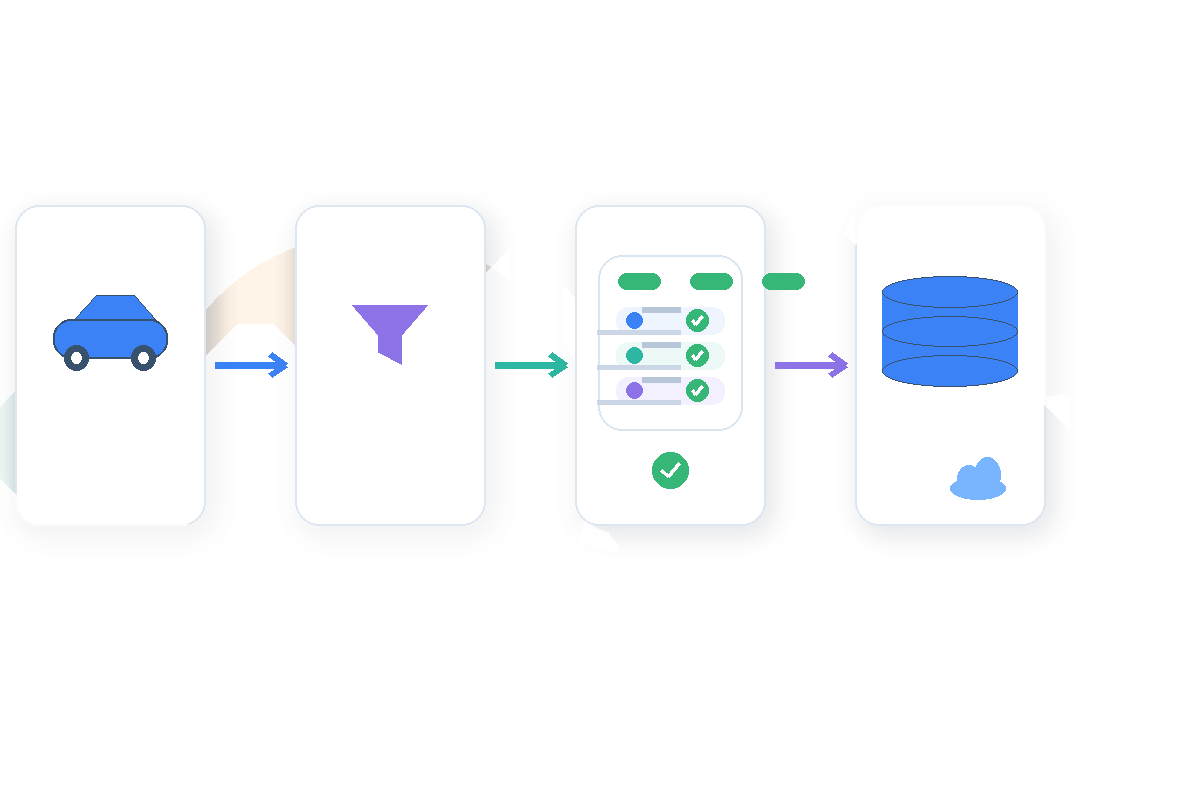
Share representative listing URLs or filters, required fields, geography, intended use, refresh need, and delivery destination.
02
Nenodata reviews source access and field availability, then collects against agreed public targets and prepares a representative sample.
03
Records are normalized and validated so missing values, nulls, conflicts, and collection timestamps remain visible rather than silently overwritten.
04
Structured outputs are delivered once or on a recurring schedule through formats and destinations confirmed during scoping and sample review.
Featured differentiator
Requested pages, fields, geography, volume, and schedule are assessed through a representative sample before production scale.
Field names, validation rules, and destination mapping are planned around your workflow rather than forcing downstream reshaping of a fixed export.
Engagements deliver cleaned, mapped records with agreed field definitions rather than unprocessed page markup.
Validation status, exception notes, and missing-value handling stay with each record when values cannot be confirmed on observed pages.
When included in scope, Nenodata maintains agreed handling for listing-layout and schema changes rather than shifting every update to internal engineering.
Outputs can be scoped for files, API-ready structures, and downstream systems through Nenodata web scraping API integrations when destination requirements are confirmed during scoping.
All formats and destinations depend on technical feasibility and agreed scope. Confirmed engagements may include CSV, Excel, JSON, API-ready records, webhooks, database delivery, CRM delivery, warehouse delivery, and scheduled feeds when destination requirements are confirmed.
Recurring transformation may extend through Nenodata custom data pipelines. Delivery formats and destinations are agreed during scoping rather than assumed from a fixed product catalog.
Delivery is scoped
Validated vehicle dataset
FilesCSV / Excel
StructuredJSON / API-ready
IntegrationsWebhooks / CRM
Data infrastructureDatabase / Warehouse
RecurringScheduled feeds
Collection depends on approved public pages, geography, requested fields, and technical feasibility. Share representative URLs or filters so Nenodata can assess supportability before production work begins.
No. Nenodata is an independent data-services provider. This page does not claim partnership, endorsement, authorization, or marketplace product status.
Nenodata reviews representative URLs, required fields, geography, cadence, and delivery destination, then determines whether a sample can be prepared for schema and usability review.
One-time and recurring schedules can be discussed. Exact cadence depends on source behavior, volume, geography, and contracted maintenance. Real-time refresh is not promised on this page.
CSV, Excel, JSON, API-ready records, webhooks, database delivery, CRM delivery, warehouse delivery, and scheduled feeds may be scoped when technically feasible. Final formats are confirmed during scoping.
Agreed validation rules and exception reporting surface missing fields and unsuccessful observations rather than silently substituting values. Handling rules are defined during scoping.
Only when those elements are publicly shown on approved pages, permitted for the intended use, and confirmed during feasibility review. They are not assumed by default.
No. Customers remain responsible for appropriate use of public listing data. Nenodata reviews intended use during scoping and does not guarantee legal or source-policy compliance on behalf of customers.
Share representative listing URLs or filters, required fields, geography, intended use, one-time or recurring need, and preferred output destination so Nenodata can scope the next step.
Include representative sources, required fields, geography, cadence, destination, and intended use when you contact Nenodata through the contact flow.
Sample request inputs
Listing
Sample record
Approved schema