Bring A Trailer Auctions Scraper
Nenodata scopes, structures, and maintains Bring A Trailer Auctions Scraper workflows that turn agreed publicly visible vehicle-auction listings into structured records for valuation, monitoring, research, and downstream data systems.
- Sample before broader rollout
- Schema built around your requirement
- Responsible public-data scope
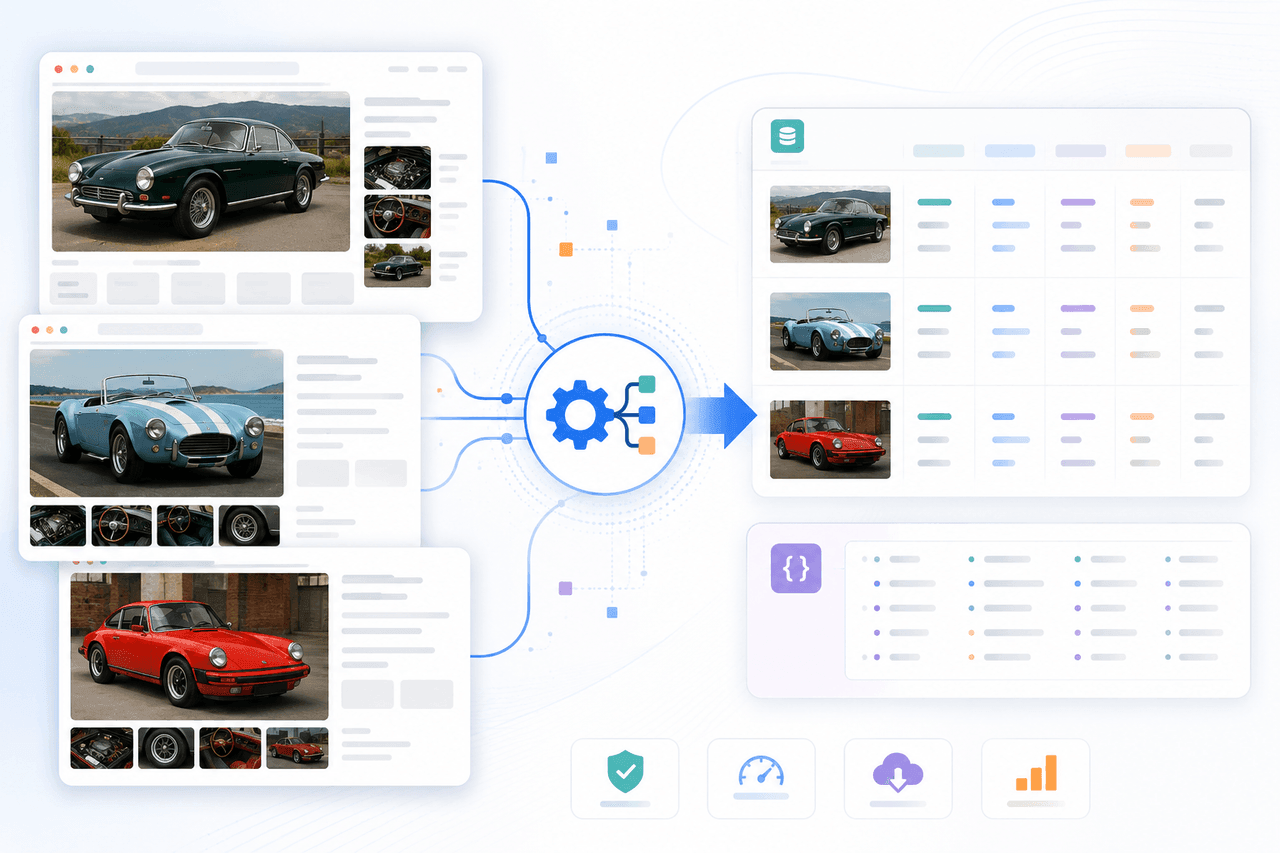
Batch Auction Research Becomes Difficult to Scale
Collector, dealer, valuation, and research teams often track auction listings through manual checks, bookmarks, and spreadsheets that fall behind as bids, status, and sale outcomes change.
When vehicle attributes, auction outcomes, engagement signals, and location context sit in inconsistent formats, comparable-sale research and recurring monitoring become fragile and hard to share across teams.
A managed workflow reviews the approved public listing set first, then maps available vehicle, auction, pricing, and collection fields into a maintainable schema for research and operational use.
What the Bring A Trailer Auctions Scraper Provides
Nenodata reviews representative auction listings or filters, required vehicle and outcome fields, validation rules, refresh needs, and delivery destinations before production collection begins.
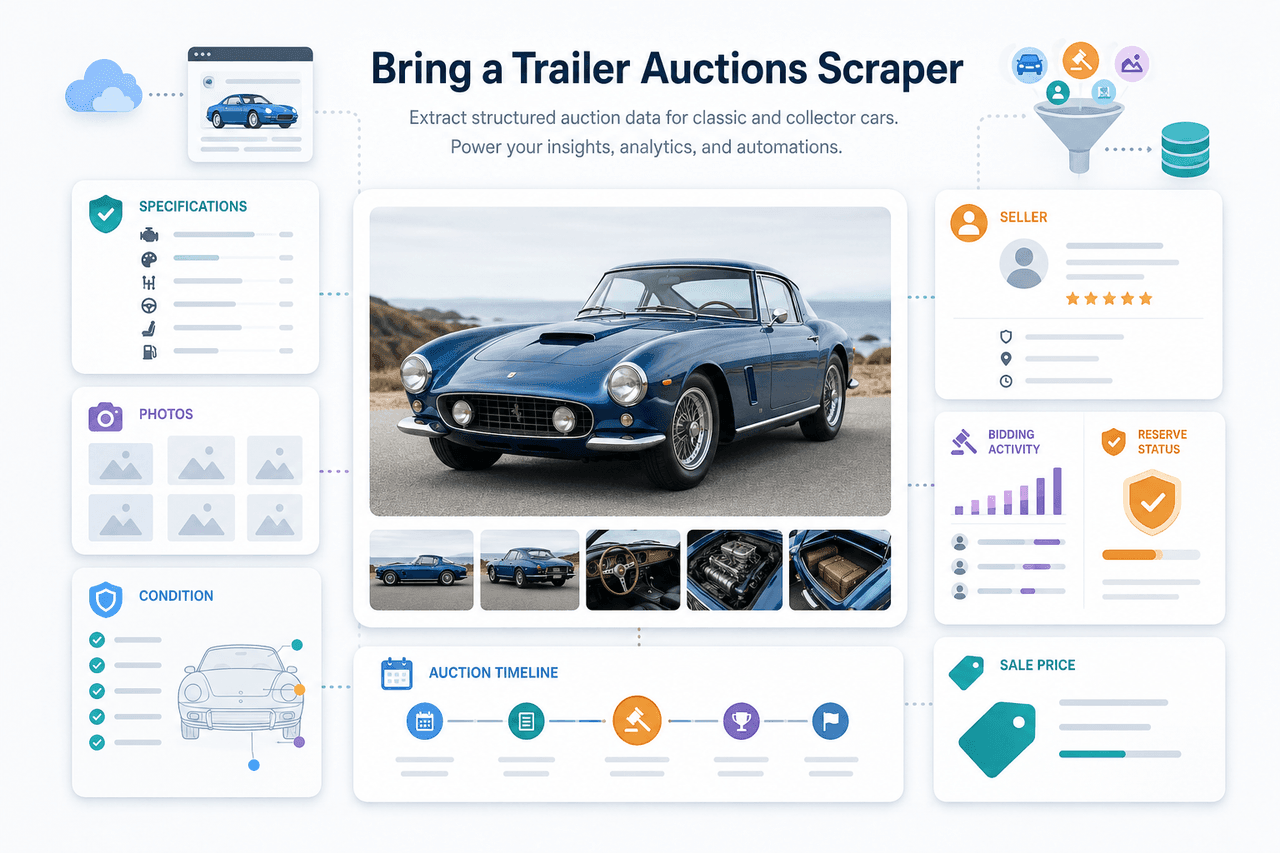
Engagements may include vehicle identity and specifications, auction status and outcome, bids and engagement, seller and location context, images and source references, and collection metadata when those elements are publicly visible and included in the agreed schema.
Source feasibility and field availability are confirmed during scoping. This service does not claim unrestricted coverage or an official auction-source relationship. Broader extraction programs may use enterprise web scraping services or custom data pipelines.
Collection is limited to agreed publicly visible auction pages and fields included in the engagement.
Representative Auction-Data Output
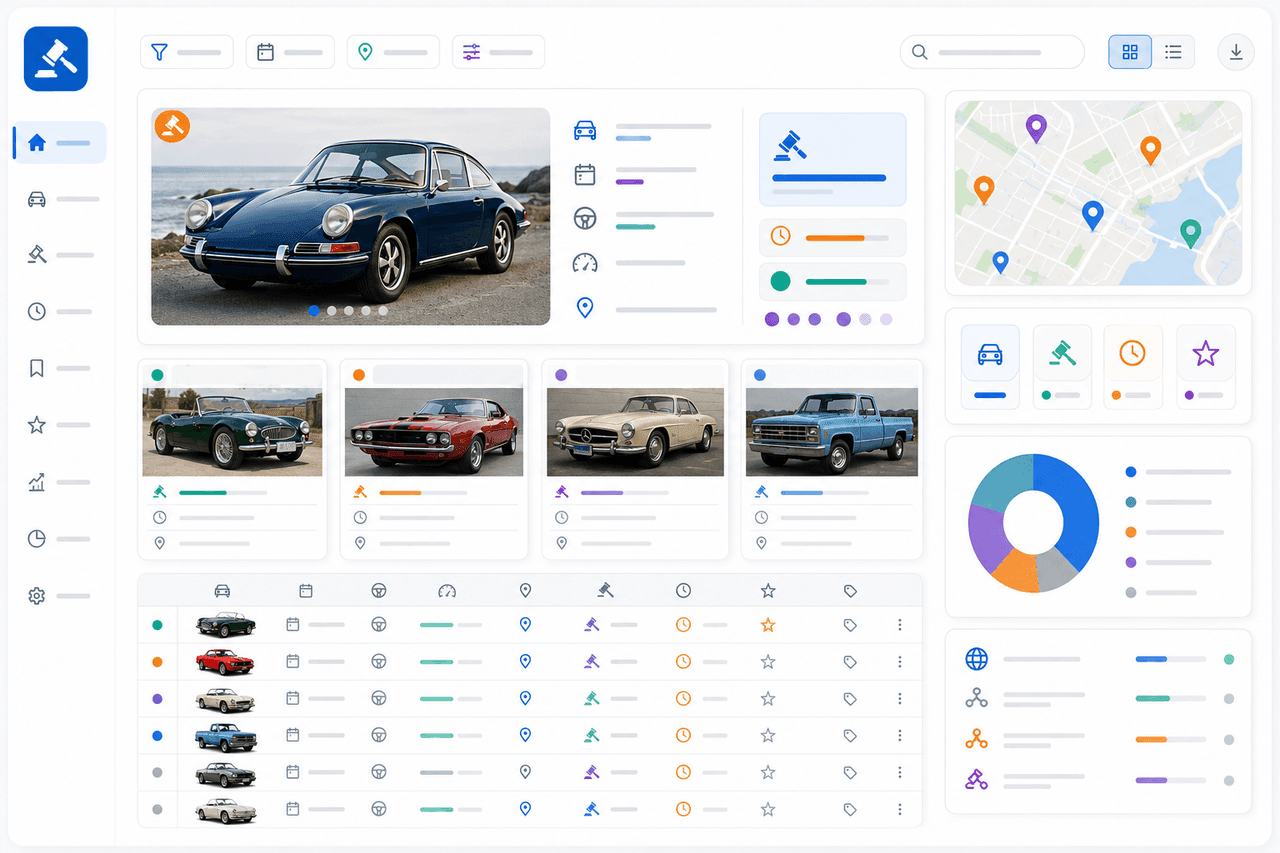
Review an illustrative schema for vehicle identity, auction status, pricing signals, location context, and collection timestamps before broader rollout.
Illustrative example
| listing_id | year | make | model | auction_status | final_price | bid_count | location | collected_at |
|---|---|---|---|---|---|---|---|---|
| EXAMPLE-BAT-1048 | 1967 | Example Make | Example Model | Sold | 42500 | 18 | Example City, ST | YYYY-MM-DDTHH:mm:ssZ |
| EXAMPLE-BAT-1049 | 1991 | Example Make | Example Coupe | No sale | null | 7 | Example Metro, ST | YYYY-MM-DDTHH:mm:ssZ |
{
  "listing_id": "EXAMPLE-BAT-1048",
  "source_url": "https://example.com/auction/EXAMPLE-BAT-1048",
  "year": 1967,
  "make": "Example Make",
  "model": "Example Model",
  "auction_status": "Sold",
  "final_price": 42500,
  "currency": "USD",
  "bid_count": 18,
  "location": "Example City, ST",
  "collected_at": "YYYY-MM-DDTHH:mm:ssZ"
}
Potential Data Fields and Outputs
Field groups depend on the approved public listing set and agreed schema.
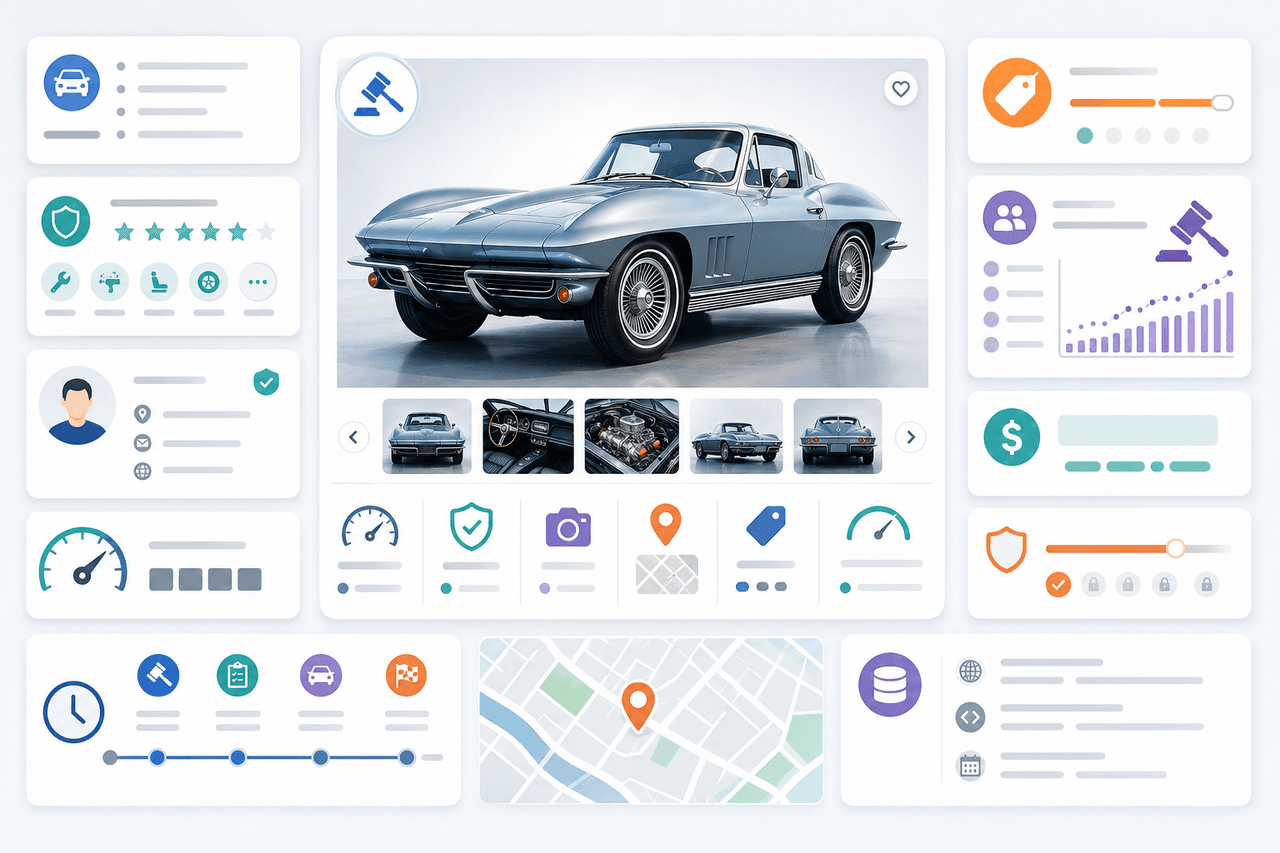
Vehicle identity and specifications
Year, make, model, and related specification fields where publicly visible and included in scope.
Auction status and outcome
Listing status, sale result, and related outcome labels when available on the approved pages.
Bids and engagement
Bid counts and other publicly displayed engagement signals when required by the schema.
Seller and location context
Seller attribution and geographic context where publicly shown and permitted for the use case.
Images and source references
Public media references and source URLs retained for review when included in the engagement.
Collection and delivery metadata
Collection timestamps, source identifiers, and delivery formatting required for downstream systems.
Use Cases
Comparable-sale research
Valuation and research teams compare structured sale outcomes and vehicle attributes across scoped auctions.
Collector-vehicle valuation
Appraisers and dealers review year, make, model, and outcome fields for collector-vehicle valuation workflows.
Active auction monitoring
Operators track status and engagement signals for selected vehicle sets without rebuilding manual watchlists.
Inventory acquisition research
Acquisition teams screen potential inventory using structured auction listings and outcome context.
Model and marque trend analysis
Strategy teams aggregate model and make signals over time for market-trend views and reporting.
Insurance and appraisal support
Insurance and appraisal teams use structured auction observations as supporting research inputs.
Automotive data-product enrichment
Product teams enrich automotive data products with agreed auction and vehicle fields from public listings.
Research databases and dashboards
Data teams load validated auction records into research databases and dashboards for recurring analysis, including price intelligence solutions where pricing research overlaps.
Who This Service Is For
This service is for dealers, collectors, appraisers, insurers, valuation analysts, automotive data products, and research teams that need structured public auction records.
It fits organizations that want managed sample-first scoping and schema design rather than fragile one-off scripts.
It is not positioned as a partnership with the auction source, an official API product, or unrestricted site access.
Managed Workflow
The same feasibility-first pattern is described in how Nenodata works.
Four-step managed workflow for collecting, reviewing, and delivering vehicle auction records.
- Step 1
Define the required dataset
Share target listings or filters, required vehicle and auction fields, intended use, delivery format, and refresh needs.
- Step 2
Configure and test collection
Nenodata configures collection against the agreed public pages and validates a representative sample before broader rollout.
- Step 3
Clean and review records
Records are normalized and reviewed against agreed quality and exception rules so missing or conflicting values stay visible.
- Step 4
Deliver and maintain the workflow
Structured outputs are delivered through the confirmed method, with maintenance included when contracted.
Why Choose Nenodata
Sample Before Broader Rollout
Representative listings and fields are reviewed before wider collection commitments are made.
Schema Built Around the Requirement
Field names, auction states, and validation rules are planned around the research or operational model you need.
Managed Operational Ownership
When included in scope, Nenodata owns agreed collection, review, and delivery operations for the workflow.
Defined Quality and Exception Rules
Missing values, status conflicts, and review exceptions follow documented rules instead of silent cleanup.
Responsible Public-Data Scope
Work stays limited to agreed publicly visible auction pages and fields. Unauthorized sources remain out of scope.
Delivery Designed for Downstream Use
Outputs are prepared for files, databases, warehouses, and analysis systems confirmed during scoping.
Delivery and Integration
Structured auction records prepared for files, databases, and data warehouses.
Delivery formats are confirmed during scoping and may include file exports, JSON, API-ready structures, database loads, and warehouse-ready delivery where supported for the engagement.
Ecommerce-adjacent enrichment programs may also reference ecommerce data extraction, while recurring transformation work may use custom data pipelines.
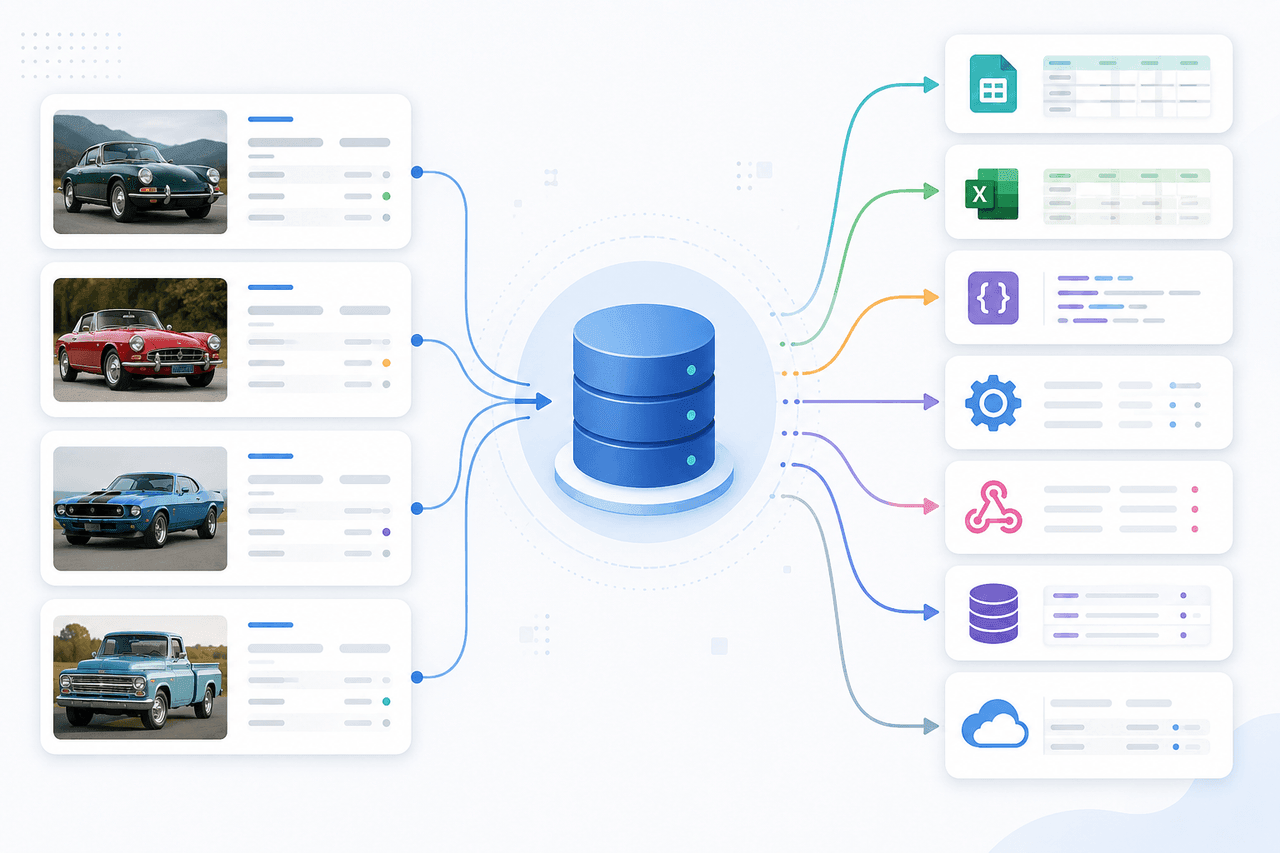
- File export
- JSON
- API-ready structures
- Database delivery
- Warehouse-ready delivery
Related resources: Autotrader vehicle listing data, price intelligence solutions, enterprise web scraping, automotive data scraping, JamesEdition cars listings data, and contact Nenodata.
Frequently Asked Questions
Start With a Representative Sample
Share representative auction listings or filters, required fields, intended use, and preferred delivery format so Nenodata can review feasibility before broader rollout.
Include listing examples, required fields, refresh needs, and business contact details when you contact Nenodata.