Wolt Restaurant & Menu Data Intelligence

Wolt Restaurant Data Scraping Services

Turn agreed Wolt restaurant listings, menu structures and publicly visible pricing information into structured datasets for competitive benchmarking, restaurant research and recurring market analysis.

NenoData offers a sample-first approach to evaluating Wolt data extraction requirements. Define your target markets, restaurants, required fields and delivery expectations before committing to a production dataset.

Wolt-specific source access, geographic coverage, field availability and recurring collection are subject to feasibility and permissions review.

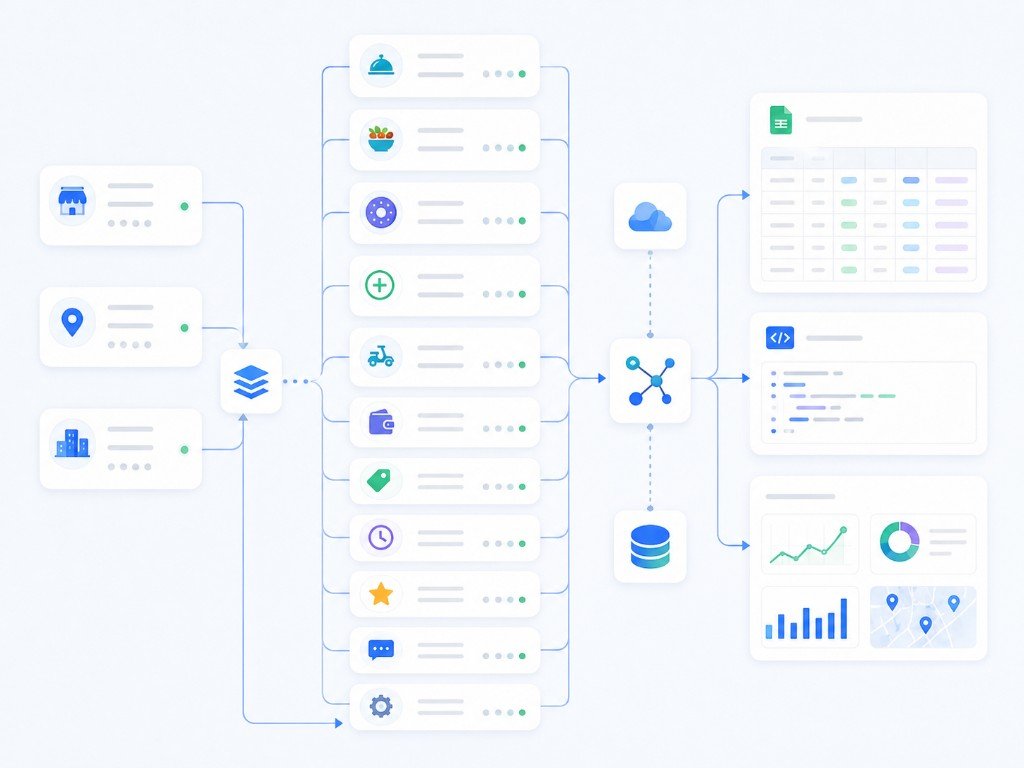
Illustration of restaurant menus and pricing information organized into structured data records
  • Restaurant, menu, item and modifier relationships.
  • Location-aware pricing and collection timestamps.
  • Structured delivery and recurring monitoring where confirmed during scoping.

Why Wolt restaurant data needs more than a basic scraper

A restaurant's menu is not simply a list of products and prices.

Categories contain individual items. Items may include selectable sizes, add-ons and other modifiers. A displayed price can also depend on the selected restaurant, delivery location, promotion and observation time.

For pricing analysts and restaurant operators, these relationships matter.

A spreadsheet containing only restaurant names, item names and prices can lose the context needed to explain differences between observations. Two similar-looking products may have different sizes, included options or location-specific prices.

Manual collection introduces additional difficulties when research spans multiple cities, restaurants or collection dates.

A useful Wolt dataset therefore needs more than extracted text. It needs an agreed structure connecting restaurants, menu categories, items, modifiers, prices and the context in which each observation was recorded.

NenoData's managed extraction approach is designed around scoped sources, structured records, validation and agreed delivery rather than leaving buyers to maintain individual collection scripts.
What is Wolt restaurant data scraping?

Wolt restaurant data scraping is the process of collecting permitted restaurant and menu information from agreed Wolt sources and converting it into structured records suitable for analysis.

Depending on source visibility and approved access, a dataset may contain restaurant profiles, menu categories, individual items, displayed prices, customization options, promotions and location-related information.

The collection method depends on the approved source and access arrangement. Public-source extraction and authenticated partner API access are separate approaches.

The objective is to make restaurant and menu observations easier to compare, validate, update and incorporate into business intelligence workflows.

Wolt restaurant and menu data categories

The following categories define the proposed extraction scope. They are candidate fields, not a guarantee that every field can be collected from every Wolt market or venue.

Candidate Wolt restaurant and menu data categories with qualifications
Data categoryCandidate fieldsImportant qualification
Restaurant informationRestaurant name, venue identifier, source URL, cuisine, locationSubject to visible listing information
Menu structureMenu name, category, subcategory, item relationshipsDepends on source representation
Menu itemsItem name, description, displayed price, currencyConfirm per venue and market
Modifiers and optionsOption group, choice, additional price, selection rulesWhere exposed by the approved source
PromotionsDisplayed discount, promotional price, offer labelPromotion eligibility may vary
AvailabilityVisible item or restaurant availabilityRepresents the observed source state
Delivery informationDisplayed delivery fee, estimated delivery time, serviceabilityDepends on delivery-location context
Restaurant reputationDisplayed rating and review countOnly where publicly visible
Collection metadataSource URL, observation timestamp, market, collection statusDefined in the approved output schema

Wolt's official menu documentation describes categories, items, options, prices and availability as elements of its restaurant-menu model. That does not mean every element is exposed through a public restaurant listing.

Restaurant and venue data

Restaurant-level records establish which business or storefront each menu belongs to.

Where available, these records can preserve the restaurant name, venue reference, source URL, city, country and displayed cuisine information.

For restaurant chains, each storefront should be treated as a separate observation unless the approved matching rules establish a reliable relationship between locations.

Wolt menu data scraping

A Wolt menu data scraping project should preserve the relationships between categories, menu items and customization options rather than flattening every value into an unrelated list.

This supports menu breadth comparisons, category analysis, item matching and assortment research.

Item pricing and modifiers

An item-level price should be distinguishable from an additional modifier charge.

For example, a displayed base price and the price of an optional topping represent different fields. Combining them without recording the selected configuration can make competitor comparisons misleading.

Modifier depth, selection rules and associated prices should be included only where available and confirmed during scoping.

Promotions and delivery signals

Promotional prices, delivery fees, estimated delivery times and availability indicators can add useful commercial context.

However, these fields may depend on delivery location, timing, source visibility or offer conditions. They should not be treated as universal restaurant attributes.

A structured Wolt restaurant-menu dataset

Proposed menu hierarchy
  1. Market and delivery context
  2. Restaurant / Venue
  3. Menu category / Subcategory
  4. Menu item
  5. Option group / Modifier

Preserve country, city, delivery location and observation timestamp alongside the relevant records.

The proposed data model connects each observation to its restaurant, menu item and collection context.

For analytical use, these relationships may be represented through separate restaurant, menu-item, modifier and observation tables or an agreed nested JSON structure.

The final design should reflect the buyer's destination system and the fields verified in the Wolt feasibility sample.

Recommended dataset fields

Recommended Wolt dataset fields and their purpose
FieldPurpose
source_platformIdentifies the marketplace
source_urlPreserves source reference
venue_idConnects observations to a venue where available
restaurant_nameIdentifies the displayed restaurant
country / cityPreserves market context
delivery_locationIdentifies the scoped delivery area
category_namePreserves menu organization
item_nameIdentifies the listed product
item_descriptionPreserves visible product details
base_priceRecords the observed item price
currencyPrevents cross-currency ambiguity
option_groupIdentifies customization groups
modifier_nameIdentifies an individual choice
modifier_priceRecords a displayed additional charge
collected_atRecords the observation timestamp
collection_statusIndicates the outcome of the collection attempt

Field names are proposed for the project schema. They are not represented as Wolt's public API response format.

Wolt pricing data scraping and recurring price monitoring

Pricing research becomes more useful when observations can be compared over time.

A proposed Wolt price monitoring workflow records the visible item price alongside the restaurant, market, delivery context, currency and collection timestamp.

Where repeat collection is feasible and approved, successive observations can be compared to identify:

  • Changes in displayed base prices.
  • Differences between scoped restaurant locations.
  • Newly visible or removed menu items.
  • Changes to modifier prices where available.
  • Promotion labels and displayed promotional prices.
  • Item availability differences between observation periods.

Price monitoring should distinguish a genuine observed price change from a difference caused by location, currency, product configuration or promotion context.

Observation timeline
  1. 1 September, 10:00 UTC

    12.50 EUR

    Example venue, location A

  2. 8 September, 10:00 UTC

    13.00 EUR

    Same venue and location

  3. 8 September, 10:00 UTC

    13.50 EUR

    Different venue, location B

Fictional demonstration only — not collected Wolt data.

Illustrative timestamped price comparison

Fictional demonstration only — not collected Wolt data.

Illustrative timestamped Wolt price comparison (fictional data)
ObservationBase priceCurrencyContext
1 September, 10:00 UTC12.50EURExample venue, location A
8 September, 10:00 UTC13.00EURSame venue and location
8 September, 10:00 UTC13.50EURDifferent venue, location B

The first two records demonstrate a possible observed price change. The third illustrates a separate location comparison, not necessarily a price increase.

A collection timestamp indicates when information was observed. It does not establish when the restaurant changed its underlying menu.

Monitoring cadence, historical retention, change-matching rules and reporting requirements must be agreed before production.

Geographic coverage and delivery-location context

Wolt operates across multiple international markets. Its country-specific services and market information should be checked against current official Wolt sources when defining a project.

A buyer's business location does not determine the geographic scope of the requested dataset.

US-based companies, for example, can inquire about data from supported international Wolt markets without assuming that Wolt operates a US consumer restaurant marketplace.

The important distinction is between the buyer's location and the location of the source observations.

Buyer location versus source observation location

Buyer location

Where your company is based. Does not set the dataset's scope.

Source observation location

The Wolt market, city and delivery area each record comes from.

For each requested market, scoping should establish:

  • Country and target city.
  • Restaurant list or discovery criteria.
  • Delivery area or other relevant location input.
  • Required language and currency.
  • Source visibility and permission boundaries.
  • Available fields and collection frequency.

Do not combine records from different delivery contexts without retaining their geographic metadata.

Proposed coverage-status representation

Proposed Wolt coverage-status reporting format (placeholder markets, not current coverage)
MarketSource reviewSample validationProduction coverage
Requested market APendingPendingNot confirmed
Requested market BPendingPendingNot confirmed
Requested market CPendingPendingNot confirmed

This is a proposed reporting format, not a statement of NenoData's current Wolt coverage.

The actual coverage matrix should be populated only after source review and sample validation.

How a managed Wolt extraction project works

NenoData's existing managed extraction and custom-pipeline services follow a source-scoping, extraction, validation and delivery approach. A proposed Wolt engagement would apply that workflow after Wolt-specific feasibility approval.

  1. 1

    Scope and confirm feasibility

    Define markets, restaurant examples, source permissions, fields, cadence and destination requirements. Review representative Wolt sources before confirming production scope.

  2. 2

    Extract and map

    Following approval, collect the agreed information and map restaurant, menu, item and modifier relationships into the proposed schema.

  3. 3

    Normalize and validate

    Review required fields, currency, location context, duplicates, relationships and missing-value conditions against agreed validation rules.

  4. 4

    Deliver and review

    Supply the confirmed output format. Where recurring extraction is approved, agree on refresh intervals, change comparisons, exception handling and maintenance responsibilities.

A representative sample is the decision point between the proposed schema and an approved production specification.

Business use cases for Wolt restaurant data

Competitor menu benchmarking

Restaurant chains and QSR teams can compare scoped competitor menus by category, item type, displayed price and available customization options.

Structured menu relationships help analysts distinguish assortment differences from differences in how menus are presented.

Restaurant price monitoring

Pricing teams can compare timestamped observations across selected restaurants and locations, provided recurring extraction and reliable item matching are confirmed.

This can support internal price reviews without implying automatic detection of every marketplace price change.

Restaurant market research

Researchers can organize available restaurant and cuisine information by target city or market to investigate competitive presence and menu positioning.

Coverage should reflect the agreed discovery criteria rather than be presented as a complete census of all restaurants.

Menu assortment analysis

Product teams can examine category breadth, item descriptions, menu variations and customization structures where visible.

Geographic intelligence

Location-aware observations can help compare restaurant presence, menu characteristics and displayed delivery-related signals across scoped markets.

Structured dataset enrichment

Data engineering teams can use approved restaurant and menu records to enrich existing internal datasets, subject to entity-matching rules and source permissions.

Delivery formats and integration requirements

The appropriate output depends on whether the buyer needs a one-time research dataset, a recurring analyst feed or structured records for an engineering pipeline.

NenoData's existing restaurant-menu and custom-pipeline services document CSV, Excel, JSON, API-ready records and additional scoped delivery options. These are general company capabilities, not pre-approved Wolt integrations.

Wolt delivery options, intended use and Wolt-specific status
Delivery optionIntended useWolt-specific status
CSVSpreadsheet analysis and tabular importsConfirm during scoping
ExcelBusiness-user reviewConfirm during scoping
JSONNested menu and modifier structuresConfirm during scoping
API-ready recordsEngineering workflowsConfirm during scoping
Database-ready filesInternal analytics pipelinesConfirm during scoping
Scheduled deliveryRecurring monitoringSubject to feasibility
Webhooks or direct destination loadingAutomated downstream workflowsSeparately scoped

For complex menu structures, a relational export or nested JSON format may preserve item-to-modifier relationships more clearly than a single flattened spreadsheet.

Delivery specifications should identify field types, currency representation, timestamp format, null handling, identifiers and expected update behavior.

For broader destination and transformation requirements, see NenoData Custom Data Pipelines.

Scope boundaries and data quality

A Wolt extraction proposal should make the collection boundaries explicit before production begins.

Source permissions
Collection must be limited to approved public, permissioned or otherwise authorized sources. Authenticated access is not assumed.
Market coverage
Countries, cities, delivery areas and restaurant lists require individual feasibility confirmation.
Field availability
A field documented in Wolt's integration model is not necessarily visible on a consumer-facing page or accessible through an approved collection method.
Freshness
Data represents an observation at a recorded time. A scheduled collection interval does not guarantee that every source-side change is captured.
Missing values
Unavailable, undisplayed and extraction-failed values should be distinguishable where the approved schema allows.
Pricing
Currency, modifier configuration, location and promotion context should remain attached to relevant observations.
Personal information
Private customer details, order histories and unrelated personal information are outside the proposed restaurant-market-intelligence scope.
Authenticated sources
Access-controlled Wolt integrations require appropriate authorization. No unrestricted API access is implied.
Maintenance
Source layout changes, altered fields and delivery failures should be addressed through agreed maintenance and exception-handling arrangements.

The purpose of validation is to produce records that are interpretable and suitable for the agreed use case, not to promise universal completeness or perfect accuracy.

Managed Wolt data extraction vs a self-service scraper

A self-service Wolt restaurant scraper may suit teams that want to operate their own collection scripts and manage downstream processing.

A managed engagement is structured differently: the buyer defines the business requirements and reviews the dataset specification, while extraction and delivery responsibilities are established through the agreed service scope.

Self-service Wolt scraper compared with a proposed managed engagement
ConsiderationSelf-service scraperProposed managed engagement
Source feasibilityBuyer evaluatesReviewed during scoping
Field schemaBuyer defines and maintainsAgreed before production
Menu relationshipsBuyer mapsIncluded in approved schema
Location contextBuyer implementsDefined as part of collection scope
ValidationBuyer-ownedScoped validation workflow
Refresh schedulingBuyer operatesAvailable where confirmed
MaintenanceBuyer-ownedDefined in service agreement
DeliveryTool-dependentAgreed output and destination

Neither approach guarantees access to restricted sources or fields that are not available through an authorized method.

NenoData's role is particularly relevant when the buyer needs structured records, validation and a defined extraction-to-delivery workflow rather than only a scraper script.

Review a sample before committing to production

The first deliverable to agree on is a representative dataset specification.

A useful Wolt feasibility sample should demonstrate:

  • A restaurant and its associated menu items.
  • Category and modifier relationships where available.
  • Price and currency representation.
  • Geographic and delivery-location context.
  • Source references and observation timestamps.
  • Missing-field and validation conventions.

Request a Wolt Data Sample

Share your target markets, restaurant examples, required fields, preferred format and expected refresh frequency.

NenoData can review your requirements and determine the appropriate feasibility and sample-validation process.

The following record demonstrates a proposed output structure. It is entirely synthetic and is not evidence of completed Wolt extraction.

Illustrative dataset record — synthetic, not collected Wolt data
{
  "source_platform": "Wolt",
  "source_url": "https://example.com/illustrative-source",
  "venue_id": "EXAMPLE-VENUE-001",
  "restaurant_name": "Example Restaurant",
  "country": "Example Market",
  "city": "Example City",
  "delivery_location": "Example Area A",
  "menu_category": "Main Courses",
  "item_name": "Example Burger",
  "item_description": "Illustrative menu item",
  "base_price": 12.50,
  "currency": "EUR",
  "options": [
    {
      "option_group": "Extras",
      "modifier_name": "Extra Cheese",
      "modifier_price": 1.50
    }
  ],
  "collected_at": "2026-09-01T10:00:00Z",
  "collection_status": "illustrative_only"
}

A genuine Wolt sample must replace this illustration before any claim of demonstrated Wolt extraction capability is published.

Frequently Asked Questions

What is Wolt data scraping?

Wolt data scraping refers to collecting permitted information from agreed Wolt sources and organizing it into structured datasets. Depending on approved access and field availability, this may include restaurant information, menu items, prices, modifiers and related marketplace observations.

Can NenoData extract Wolt restaurant menus?

NenoData provides general managed restaurant-menu extraction services. Wolt-specific extraction requires source and permissions review, an approved field schema and representative sample validation before production capability can be confirmed.

Can Wolt menu prices be monitored regularly?

Recurring price monitoring can be proposed where the source, collection method and refresh cadence are feasible. Observations should retain venue, location, currency and timestamp information so differences can be interpreted correctly.

Can modifiers and customization options be included?

Where available through the approved source, a dataset can be designed to preserve option groups, modifier names, additional prices and relationships to menu items. The available modifier depth must be verified during scoping.

How does delivery location affect the dataset?

Delivery location is part of the observation context. A project should preserve the relevant geographic input alongside restaurant, pricing and delivery-related fields rather than assuming one observation applies to every service area.

Which Wolt countries can be covered?

Coverage is determined market by market. Share the required countries, cities and restaurant examples so source visibility, permissions and field availability can be reviewed. No universal Wolt coverage is promised.

Can a US-based company request international Wolt data?

Yes. US-based companies can submit requests for datasets covering international Wolt markets. The feasibility decision depends on the requested source markets and approved collection method, not the buyer's headquarters.

What formats can I request?

NenoData's existing services describe CSV, Excel, JSON and API-ready delivery, with additional pipeline destinations available through scoped engagements. The formats applicable to a Wolt project must be confirmed in its delivery specification.

Does Wolt provide an official API for menu data?

Wolt documents an authenticated Menu API for integrated partners, including venue-menu retrieval. Access requires appropriate authorization and credentials. This is not an unrestricted public competitor-data API, and NenoData does not claim automatic access to it.

How is pricing determined?

Pricing depends on the agreed source scope, number of markets and restaurants, required fields, refresh cadence, validation requirements and delivery arrangement. Review NenoData's pricing page for general service information and request a project-specific assessment for Wolt.

General service information is on the NenoData pricing page.

Start with a scoped Wolt data sample

Tell us which Wolt markets, restaurants and menu fields matter to your business.

NenoData can review your requirements, establish the applicable source and permission boundaries, and define the next steps for sample validation.

Whether you need competitor menu benchmarking, location-aware price observations or structured restaurant data for an analytics workflow, the first step is confirming what can be collected and how it should be delivered.

Wolt-specific feasibility, coverage, delivery arrangements and recurring monitoring require approval before production commitments.