Jewelry Data Scraping for Metal, Stone & Catalog Attributes
Nenodata builds jewelry data scraping pipelines that collect, clean, and structure product, pricing, availability, review, and catalog data from ecommerce sources for pricing and merchandising teams.
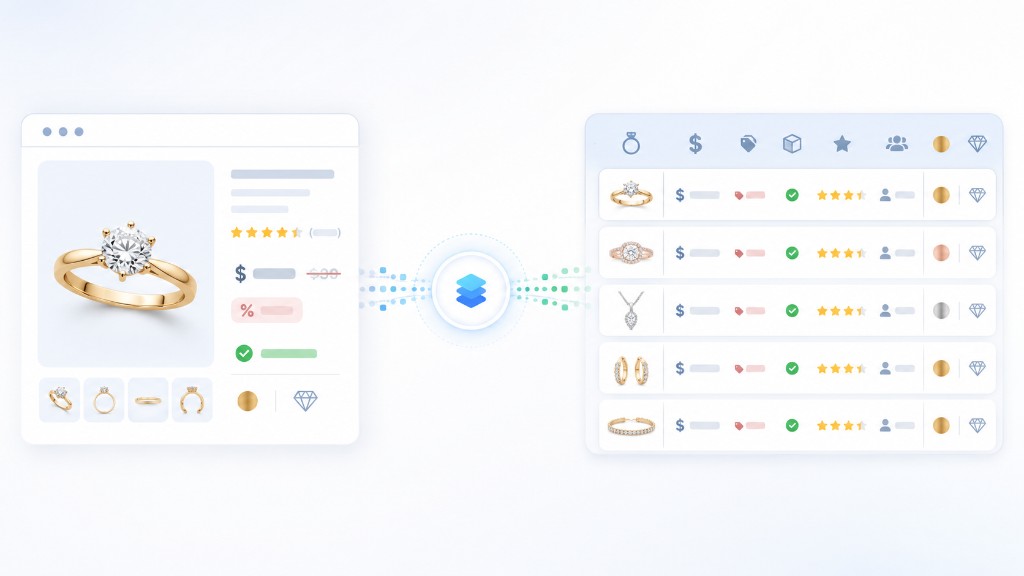
The Jewelry Data Problem
Jewelry ecommerce teams track more than a product title and price. A single listing may include metal type, karat, gemstone, cut, color, size, collection, variants, markdowns, stock status, seller details, reviews, and shipping notes. Competitors update these details across brand sites, marketplaces, and category pages faster than manual tracking can follow.
Fragile scripts often break when layouts change, variants load dynamically, or product attributes appear in inconsistent formats. Nenodata helps turn scattered jewelry listing data into cleaner, structured feeds that pricing, merchandising, catalog, and market intelligence teams can actually use.
What Nenodata Provides
Nenodata provides custom ecommerce extraction services for jewelry businesses that need structured product and market data from public web sources. The service can support product discovery, catalog tracking, competitor price monitoring, assortment analysis, and review intelligence, depending on the approved source list and data requirements.
Nenodata's broader web scraping and ecommerce data services include custom pipelines, structured data extraction, monitoring, and delivery through formats such as APIs and scheduled feeds. See also our data extraction services for related workflows.
Jewelry hub vs other product sources
Use this hub for multi-retailer jewelry catalogs (metal, karat, stone). Use Rio Grande for jewelry-supply SKUs, or Houzz for home products and professionals.
| Source | Best for | Learn more |
|---|---|---|
| Jewelry hub | Multi-retailer jewelry: metal, karat, stone, price, stock | This service |
| Rio Grande | Jewelry-supply SKU, findings, and wholesale catalog feeds | Rio Grande scraper |
| Houzz | Home products, pro profiles, and project pages | Houzz scraper |
When to use this hub instead of a named jewelry source
Choose this hub when the same schema must cover more than one jewelry retailer or marketplace. A typical program tracks metal, karat, stone type, carat, list vs sale price, and stock across brand sites and marketplaces, then writes one CSV or JSON feed.
Do not use this page for Rio Grande wholesale findings and supply SKUs — that belongs on Rio Grande jewelry supply scraping. Do not use it for home products, professionals, or project pages — that belongs on Houzz scraper.
Fields that usually differ by retailer include stone grading labels, variant size charts, and seller badges. Scoping confirms which of those stay in the shared schema so a 14K white-gold solitaire is not mixed with a sterling finding from a supply catalog.
What Jewelry Data Scraping Includes
Illustrative example — confirm actual fields during scoping.
{
  "product_name": "14K White Gold Diamond Solitaire Ring",
  "brand": "Brilliant Earth",
  "category": "Engagement Rings",
  "metal": "14K White Gold",
  "stone_type": "Diamond",
  "stone_shape": "Round",
  "carat": "0.50",
  "price": "1250.00",
  "sale_price": "1099.00",
  "currency": "USD",
  "availability": "In stock",
  "rating": "4.6",
  "review_count": "128",
  "source_url": "https://www.brilliantearth.com/engagement-rings/14k-white-gold-diamond-solitaire/",
  "collected_at": "2026-08-12T17:05:11Z"
}
This sample is for planning only. Final fields must be verified against Nenodata's actual deliverable and the approved source list.
Data Fields and Outputs
Product details
Names, categories, brands, collections, URLs, images, SKUs, and variant information.
Jewelry attributes
Metal, karat, gemstone, stone shape, size, color, style, and product-specific specifications.
Pricing and availability
Current price, sale price, discount, currency, stock status, seller, and timestamp.
Reviews and ratings
Rating, review count, review text, sentiment-ready fields, and source page references where available.
Delivery formats
CSV, JSON, API, dashboard, or scheduled feed.
Confirm supported formats during scoping.
Use Cases
Competitor price monitoring
Pricing teams can track competitor prices, discounts, and stock changes across approved jewelry sources so pricing decisions are based on current market data instead of manual checks.
Assortment intelligence
Merchandising teams can compare product ranges by metal, stone, category, style, and collection to understand where competitors are expanding or reducing catalog depth.
Marketplace seller tracking
Marketplace teams can monitor seller listings, pricing, availability, ratings, and product positioning across jewelry categories when sources allow public access.
Catalog enrichment
Catalog teams can normalize jewelry attributes from multiple public sources into cleaner internal datasets for analysis, matching, or merchandising workflows.
Review intelligence
Brand and product teams can collect review and rating signals to identify common buyer feedback around quality, sizing, packaging, delivery, and design.
Who This Is For
This service is for jewelry retailers, ecommerce brands, marketplaces, pricing teams, catalog teams, merchandising analysts, and market intelligence teams that need structured jewelry ecommerce data without relying on manual collection or brittle one-off scripts.
How It Works
- 1
Share requirements
Define sources, target categories, required fields, delivery format, and refresh needs.
- 2
Build extraction logic
Nenodata configures custom collection workflows for the approved public sources.
- 3
Clean and structure
Extracted records are normalized into consistent fields for analysis and downstream systems.
- 4
Deliver the data
Receive data through the agreed format, such as file export, API, dashboard, or scheduled feed.
Why Choose Nenodata
Built for custom data needs
Nenodata focuses on tailored extraction pipelines instead of one-size-fits-all datasets.
Structured for business use
Outputs are organized for pricing, catalog, merchandising, and intelligence workflows.
Supports scheduled monitoring
Recurring collection can be scoped where technically feasible and approved for the selected sources.
Flexible delivery options
Delivery can align with existing workflows, subject to verified supported formats.
Compliance-aware framing
Nenodata should only collect data from approved, publicly accessible sources and avoid restricted or private data.
Integrations and Delivery
Delivery may include CSV, JSON, API, dashboard, or scheduled feeds where supported. Confirm exact integration options, refresh frequency, source coverage, and field availability before implementation.
Related: Rio Grande jewelry supply scraper · ecommerce data extraction · price intelligence · ASOS data scraping
Frequently Asked Questions
Ready to turn jewelry ecommerce pages into structured market intelligence?
Share your target sources, fields, and delivery requirements, and Nenodata will help define the right extraction workflow.