Copart Public Search Scraper for Structured Auction Data
Nenodata provides a managed Copart Public Search Scraper that turns agreed publicly visible vehicle-auction search and lot records into structured data for inventory, research, valuation, and downstream systems.
- Source-specific scoping before commitment
- Sample-first schema review
- Responsible public-data boundaries
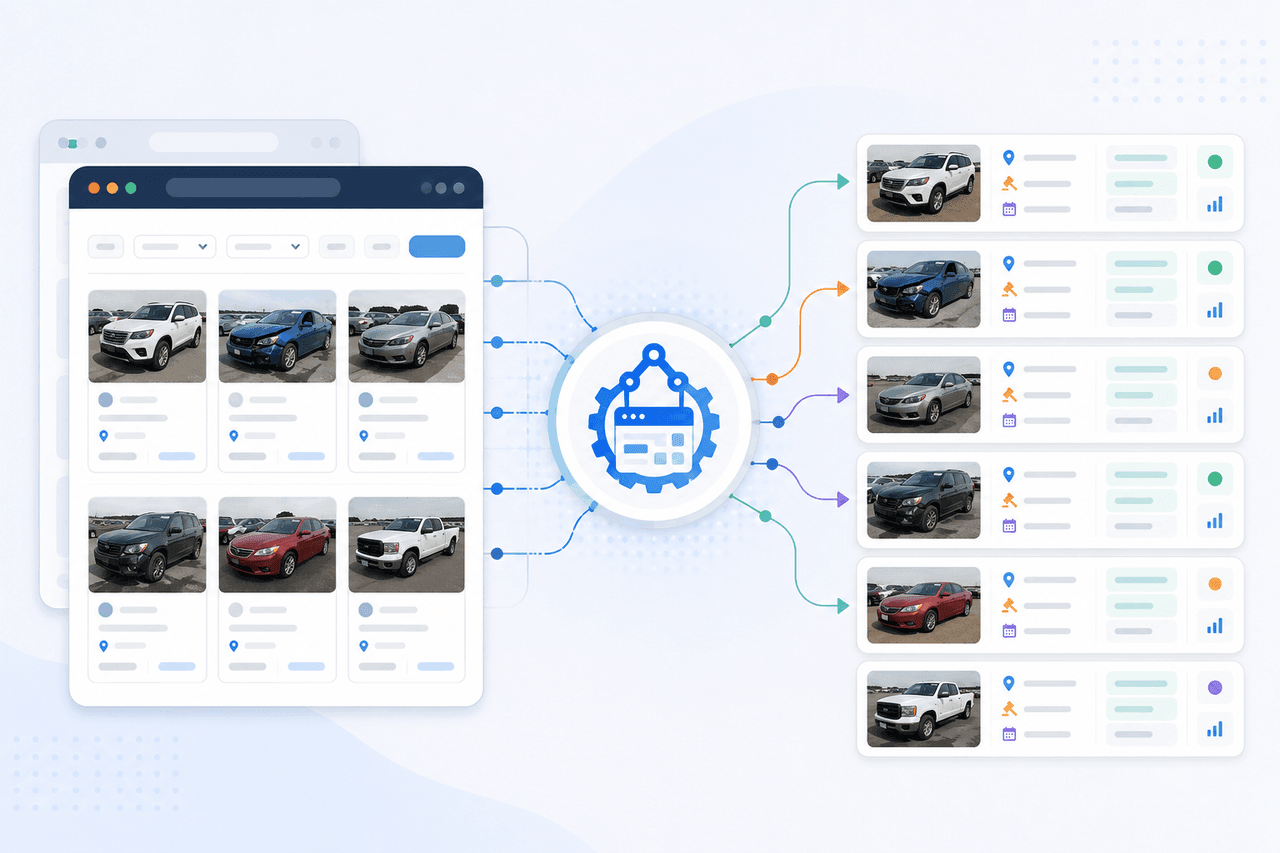
The Operational Problem
Automotive buyers, marketplaces, insurers, and research teams often track public auction search results through screenshots, spreadsheets, and one-off scripts that fall behind as lot status, pricing signals, and availability change.
When vehicle identity, auction context, damage notes, location, and collection timestamps sit in inconsistent formats, comparable analysis and recurring monitoring become fragile across teams and systems.
A managed workflow reviews the approved public search or lot set first, then maps available fields into a maintainable schema so teams can test a representative sample before broader rollout.
What the Copart Public Search Scraper Service Provides
Nenodata reviews representative public search or lot URLs, required vehicle and auction fields, validation rules, refresh needs, and delivery destinations before production collection begins.
Engagements may include vehicle identity, auction and sale context, condition and damage context, pricing signals, location and logistics, source provenance, and collection timestamps when those elements are publicly visible and included in the agreed schema.
This page remains source-specific and does not claim unrestricted coverage or an official Copart relationship. Broader extraction capability remains available through enterprise web scraping services.
Copart vs other auction sources
Use this page for Copart public-search salvage lots. Use LiveAuctioneers for collectible auction lots, or GovDeals for government surplus.
| Source | Best for | Learn more |
|---|---|---|
| Copart public search | Salvage vehicle lots: year, make, model, yard, auction status | This service |
| LiveAuctioneers | Collectible and auction-house lot, bid, and estimate data | LiveAuctioneers |
| GovDeals | US government surplus and municipal auction listings | GovDeals auctions |
Sample Output and Proof
Review an illustrative schema for vehicle, lot, status, location, source URL, and collection-time fields before broader production begins.
Illustrative example
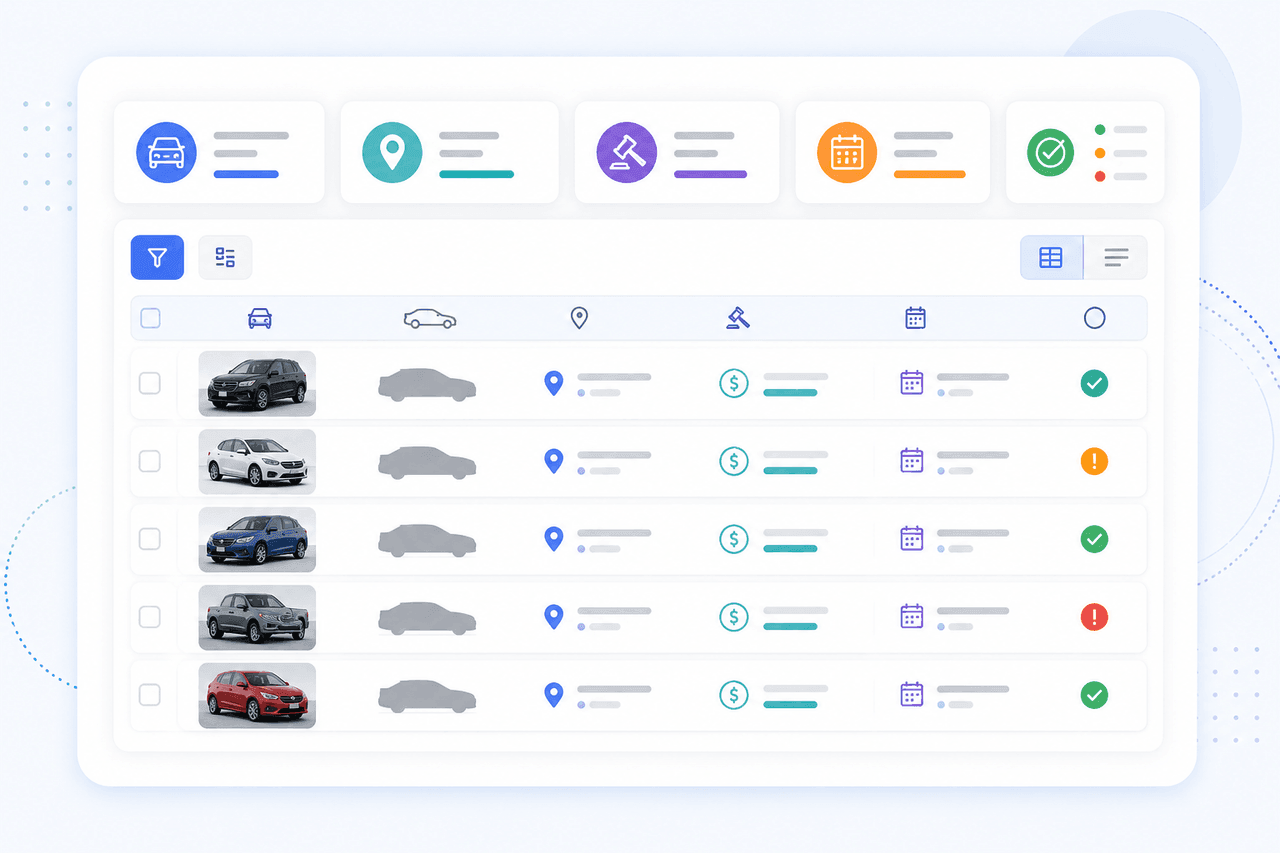
| lot_id | year | make | model | auction_status | location | source_url | collected_at |
|---|---|---|---|---|---|---|---|
| 62840123 | 2018 | Honda | Civic LX | Upcoming | Dallas, TX | https://www.copart.com/lot/62840123 | 2026-08-12T14:22:08Z |
| 62910884 | 2015 | Ford | F-150 XLT | Sold | Houston, TX | https://www.copart.com/lot/62910884 | 2026-08-12T14:22:08Z |
CSV header
lot_id,year,make,model,auction_status,location,source_url,collected_atJSON structure
{
  "lot_id": "62840123",
  "year": 2018,
  "make": "Honda",
  "model": "Civic LX",
  "auction_status": "Upcoming",
  "damage_context": "Front end",
  "pricing_signal": null,
  "location": "Dallas, TX",
  "source_url": "https://www.copart.com/lot/62840123",
  "collected_at": "2026-08-12T14:22:08Z"
}
Scopeable Data Fields and Outputs
Field groups depend on the approved public search or lot set and agreed schema.

Vehicle identity
Year, make, model, and related identity fields where publicly visible and included in scope.
Auction and sale context
Lot identifiers, visible status labels, and related auction-context fields when available on the approved pages.
Condition and damage context
Public condition or damage notes when shown and requested for the engagement.
Pricing signals
Displayed pricing signals when present on the public page and included in the agreed schema.
Location and logistics
Location labels and related logistics context where publicly shown.
Source provenance and timestamps
Source URLs and collection timestamps retained for review and lineage.
Delivery formats
CSV, JSON, Excel, API-ready structures, and scheduled feeds when included in scope.
Use Cases
Vehicle inventory sourcing
Buyers and remarketers screen structured lot and vehicle fields across approved public search sets.
Auction market monitoring
Operators track status and pricing signals for selected vehicle groups without rebuilding manual watchlists.
Comparable-vehicle analysis
Research teams compare similar vehicles across location, condition, and outcome context, including price intelligence solutions where pricing research overlaps.
Parts and salvage planning
Parts and salvage teams review condition and vehicle-identity fields for planning workflows.
Export-market research
Export buyers aggregate location and vehicle attributes for market research across scoped lots.
Marketplace and search-product feeds
Product teams enrich marketplace or search experiences with structured public auction fields when permitted.
Historical auction reporting
Analysts accumulate timestamped observations for reporting dashboards and review libraries.
Insurance and valuation research
Insurance and valuation teams use structured public auction observations as supporting research inputs.
Who This Service Is For
This service is for buyers, remarketers, marketplaces, insurers, valuation analysts, export researchers, and automotive data teams that need structured public vehicle-auction records.
It fits organizations that want managed sample-first scoping and schema design rather than fragile one-off scripts.
It is not positioned as a Copart partnership, endorsement, official API, or unrestricted access product.
How It Works
Four-step managed workflow from source review to structured data delivery.
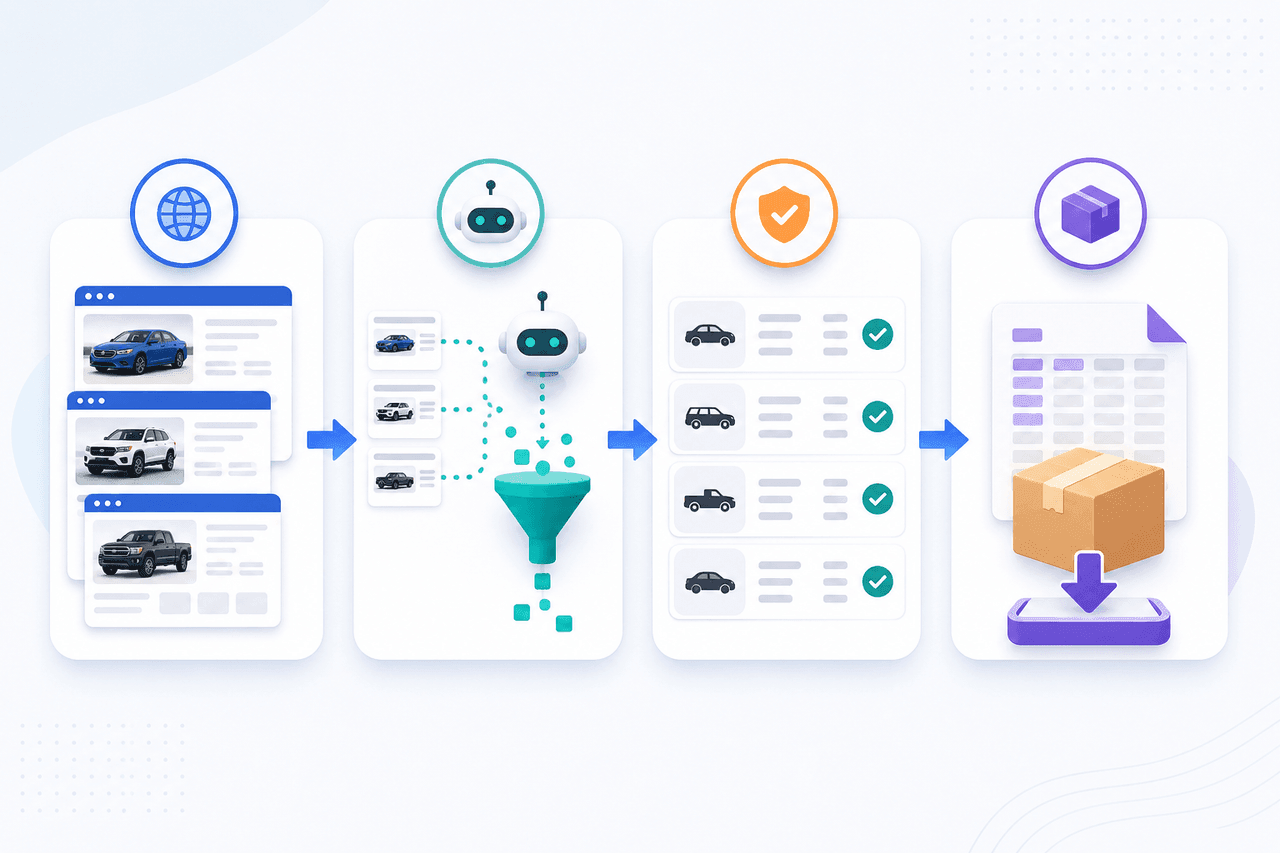
- Step 1
Define requirements and intended use
Share target search or lot sets, required fields, intended use, delivery format, and refresh needs.
- Step 2
Review source and sample
Nenodata reviews the approved public source path and validates a representative sample before broader collection.
- Step 3
Normalize and validate
Records are mapped into the agreed schema with explicit missing-value handling and review exceptions.
- Step 4
Deliver and maintain
Structured outputs are delivered through the confirmed method, with maintenance included when contracted.
Why Choose Nenodata
Source-specific scoping before commitment
Target search or lot sets and collection methods are reviewed before broader production promises are made.
Sample-first schema review
Teams inspect fields, formats, and null handling before approving wider rollout.
Agreed validation rules
Duplicates, missing values, and status exceptions follow documented rules rather than silent cleanup.
Managed maintenance
When included in scope, Nenodata owns agreed handling for source-layout and delivery changes.
Custom delivery planning
Outputs are planned around spreadsheet, feed, database, and analysis systems confirmed for the engagement.
Responsible access boundaries
Work stays limited to agreed publicly visible pages and fields. Restricted sources remain out of scope.
Delivery and Integration
Delivery formats are scoped to the engagement and may include CSV, JSON, Excel, API-ready structures, and scheduled feeds when supported.
Recurring transformation work may use custom data pipelines. Broader portfolio context is available through Nenodata’s data extraction services. An API-ready structure does not automatically mean a hosted customer-facing API.
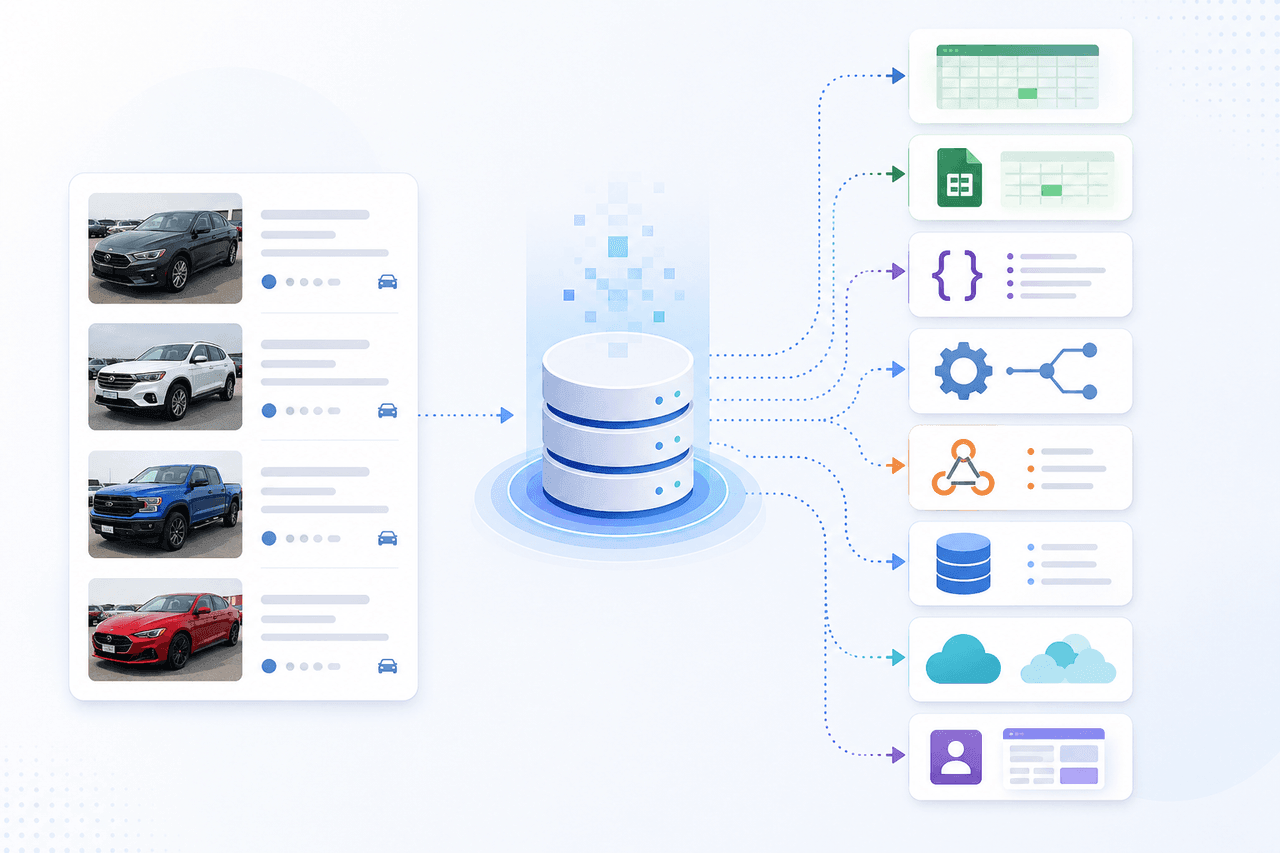
- CSV
- JSON
- Excel
- API-ready structures
- Scheduled feeds
Frequently Asked Questions
Review a Representative Data Scope
Share representative public search or lot URLs, required fields, intended use, and preferred delivery format so Nenodata can scope the next step before broader rollout.
Include source examples, required fields, refresh needs, and business contact details. For packaging context, view pricing.